

Broadband Transformer Design: The Role of 2H5 Material in Signal Integrity
Broadband Transformer Design: The Role of 2H5 Material in Signal Integrity
In the high-stakes sectors of high-speed telecommunications and precision instrumentation, Signal Integrity (SI) is the non-negotiable gold standard of circuit architecture. Whether designing an Ethernet isolation transformer or a radio-frequency (RF) Balun, the primary objective remains the same: the lossless transmission of information across an expansive spectral range. According to the TOMITA September 2024 Catalog, the 2H5 (Mn-Zn) high-permeability material has emerged as the quintessential “precision substrate” engineered specifically for these rigorous demands.
1. High Initial Permeability (μᵢₐc): The Bedrock of Low-Frequency Equilibrium
Broadband transformers face a paradoxical challenge: they must sustain high performance at the lowest frequencies without sacrificing their high-frequency ceiling.
The Low-Frequency Challenge: According to the fundamental law of induction, a transformer’s lower cutoff frequency is dictated by its primary inductance (L). Higher inductance ensures minimal signal attenuation at the lower end of the spectrum.
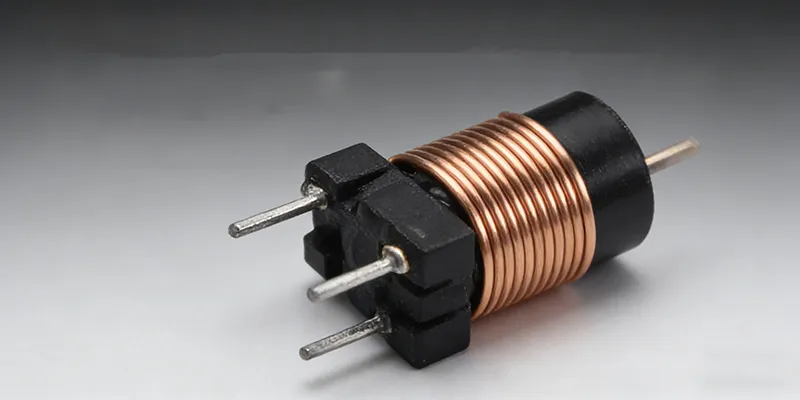
The 2H5 Advantage: TOMITA’s 2H5 material possesses an exceptional initial permeability of 3700 ±25%. This allows engineers to achieve the requisite inductance with significantly fewer winding turns. By reducing the turn count, designers simultaneously diminish parasitic capacitance, which is the primary barrier to extending the upper-frequency limit.
2. The Invisible Saboteurs of SI: Leakage Inductance and Parasitic Capacitance
In the transmission of high-speed digital signals—such as the square waves prevalent in modern networking—the waveform’s rising edge is acutely susceptible to corruption by Leakage Inductance and parasitic capacitance. This degradation manifests as signal Ringing or overshoot.
Tight Magnetic Coupling: Utilizing a high-μᵢₐc material like 2H5 ensures that magnetic flux lines are tightly collimated within the core, maximizing the coupling coefficient between the primary and secondary windings.
Waveform Fidelity: The superior magnetic circuit efficiency of 2H5 drastically suppresses leakage inductance. This maintains the “steepness” of the signal’s rising edge, ensuring a wide, open Eye Diagram and meeting the stringent requirements for Bit Error Rate (BER).
3. Practical 2024 Applications: The Synergy of Toroidal (T-Series) Cores
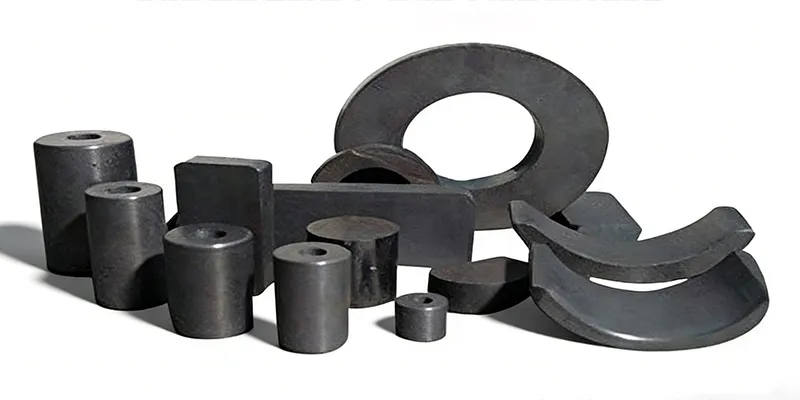
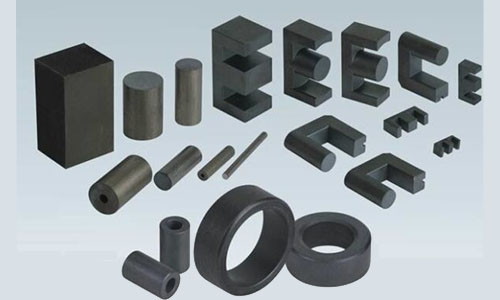
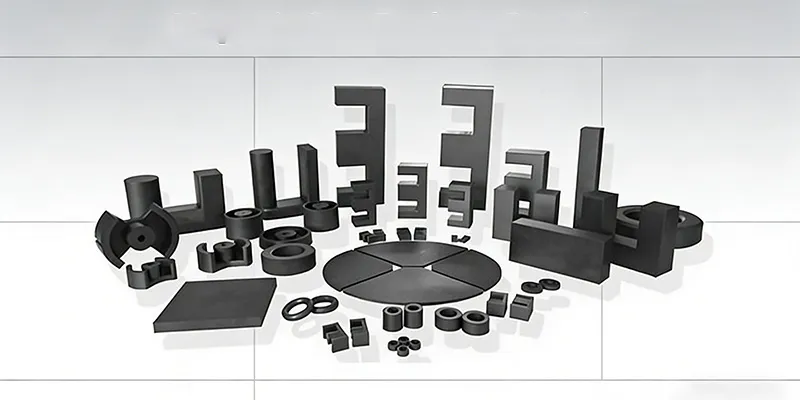
Within the spec sheets of the 2024 catalog, the 2H5 material is frequently synthesized with T (Toroidal) core geometries, creating an optimal tandem for broadband applications.
Geometric Supremacy: Toroidal cores provide a naturally closed magnetic path with no air gap, representing the physical zenith for achieving high inductance and maximum coupling.
Specialized Coatings: TOMITA offers miniature T-cores treated with Epoxy or Parylene coatings. This enhances dielectric strength and creates an ultra-smooth surface. This lubricity protects the delicate signal wires—often with diameters below 0.1mm—from abrasion during high-tension winding, thereby ensuring consistent characteristic impedance throughout the component.
4. Environmental Resilience: Stability from -40°C to +125°C
Modern telecommunications hardware is often subjected to the merciless environmental conditions of outdoor base stations or clandestine industrial deployments.
Thermal Drift Mitigation: The permeability-versus-temperature curve (\mu-T Curve) for the 2H5 material remains remarkably flat across the industrial temperature spectrum.
Global Compatibility: TOMITA’s technical data confirms that signal coupling efficiency remains steadfast regardless of seasonal thermal fluctuations. This ensures that a device deployed in a sub-arctic environment maintains the same data throughput as one in a tropical zone.
5. Heuristics for Engineers: Optimizing Broadband Performance
When navigating the 2H5 “μ – Frequency” curves in the catalog, consider these strategic adjustments:
Determine the Operational Bandwidth: While 2H5 performs flawlessly up to 1MHz, signals with harmonics exceeding 10MHz require careful scrutiny of the complex permeability’s imaginary component (μ") to evaluate potential signal dissipation.
Employ Advanced Winding Techniques: For the absolute limit of bandwidth, combine 2H5 cores with Bifilar winding (winding two wires in parallel). This technique further cancels distributed capacitance, squeezing the maximum possible frequency response out of the material.
Conclusion: Every precise digital pulse relies on the underlying magnetic substrate. By leveraging the high permeability and low dissipation of TOMITA’s 2H5 material, engineers can master the complexities of broadband design, allowing signals to traverse circuits with ethereal fluidity.
Shenzhen Gaorunxin Technology Co., Ltd