

Common Applications of Ferrite Cores in Consumer Electronics
Consumer electronics are one of the largest end markets for ferrite cores. From smartphone chargers to laptops, televisions to gaming consoles, ferrite components appear in nearly every device that converts AC mains power or manages high-speed data signals. Understanding these applications clarifies both the scale of ferrite usage and the performance requirements driving material innovation.
USB Power Delivery and Fast Charging Adapters
Modern gallium nitride (GaN) chargers achieve power densities of 15–30 W/in³ — levels impossible with traditional silicon transistors alone. Ferrite cores in these adapters serve as:
- Planar transformers in the high-frequency LLC or active clamp flyback converter stages (typically 200–500 kHz)
- Output filter inductors for ripple reduction on the USB PD output rail
- Common mode chokes on the AC input for EMI compliance with CISPR 22/32 standards
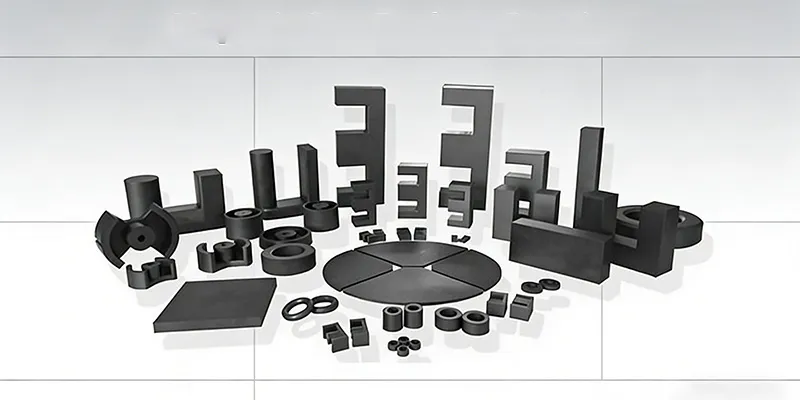
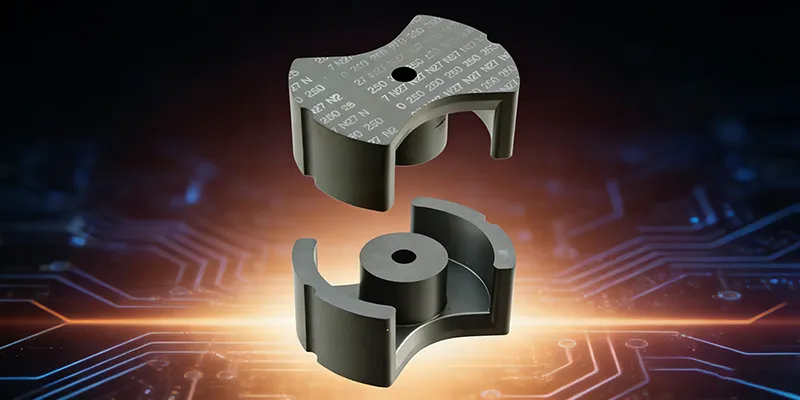
The push for ultra-thin chargers has driven adoption of planar ferrite cores — flat, precision-manufactured cores that enable low-profile transformer construction at 2–3 mm total thickness.
Smartphone and Wearable Device Inductors
Inside smartphones, ferrite core inductors appear in the power management ICs that regulate voltages for the application processor, cellular RF front-end, display, and camera subsystems. These are typically multilayer chip inductors (MLCI) with ferrite cores, selected for:
- Compact 0402/0201 form factors
- Low DCR for efficient power delivery
- Stable inductance under DC bias from load transients
The trend toward higher peak currents in smartphone processors — driven by AI workloads on mobile — is pushing inductor saturation requirements higher, demanding advanced ferrite materials with soft saturation characteristics.
Television and Display Power Supplies
LCD and OLED televisions use flyback transformers with MnZn ferrite cores in their internal power supplies, typically operating at 50–200 kHz. These transformers must meet strict efficiency standards (DOE VI, ErP Lot 26) while handling the standby power requirements of modern smart TVs.
Ferrite cores in television applications are increasingly being optimized for low no-load power consumption — transformer designs that minimize core loss at very light loads, which matters significantly for devices that spend most of their time in standby.
Gaming Consoles and Computing Peripherals
PlayStation, Xbox, and gaming PC power supplies use high-frequency power conversion stages with ferrite transformers operating at 100–500 kHz. The thermal and efficiency demands of 300–500W gaming power supplies make ferrite core selection and thermal management particularly critical.
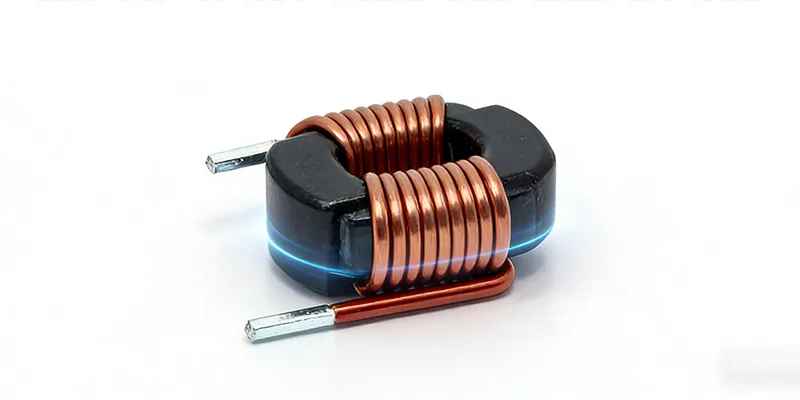
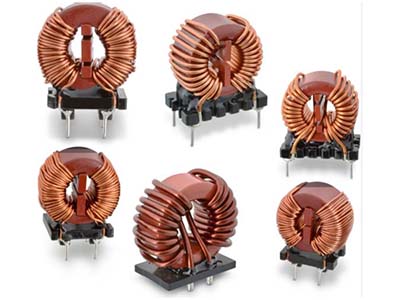
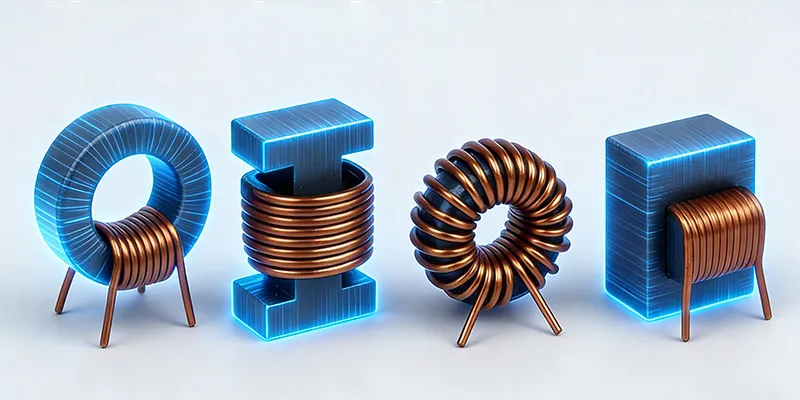
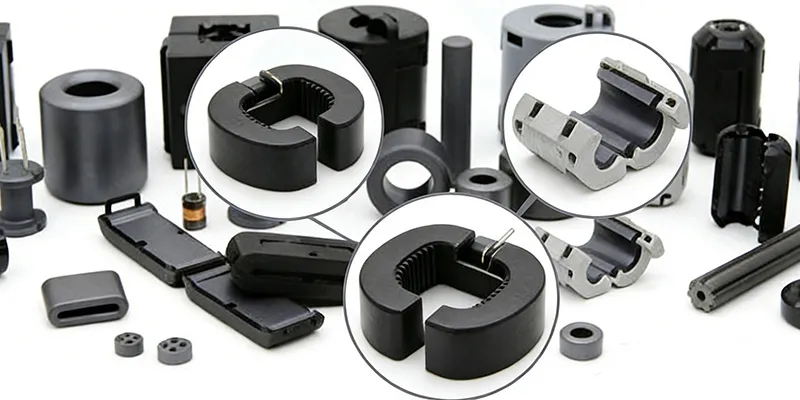
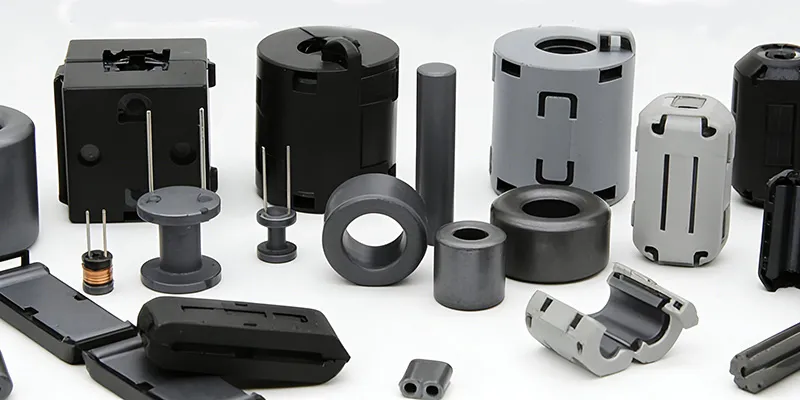
USB hubs, docking stations, and external GPU enclosures all rely on common mode filter chokes with ferrite cores to meet USB 3.x and Thunderbolt EMI requirements. These chokes are typically toroidal or drum-type ferrite constructions rated for 2–3A continuous current.
Audio Equipment
Ferrite cores appear in the power supply sections of audio amplifiers (as power factor correction inductors and filter chokes) and in signal-level audio circuits as EMI suppression beads on digital audio interfaces (S/PDIF, I2S, HDMI ARC). Audiophile-grade components sometimes specify ferrite materials with particularly low distortion characteristics for signal-path applications.
Conclusion
Consumer electronics drive enormous ferrite core demand across a wide variety of form factors and performance levels. From multi-kilowatt TV power supplies to sub-millimeter inductors inside wearables, the common thread is that ferrite materials uniquely balance magnetic performance, cost, and manufacturability at the scales the consumer market demands. As power densities increase and devices become more compact, ferrite innovation continues to push the boundaries of what is possible in consumer power electronics.
Shenzhen Gaorunxin Technology Co., Ltd