

EMI Eradication: Leveraging Ni-Zn Toroidal Cores to Resolve High-Frequency Noise
EMI Eradication: Leveraging Ni-Zn Toroidal Cores to Resolve High-Frequency Noise
In the intricate theater of modern electronic design, Electromagnetic Interference (EMI) persists as the “clandestine assassin.” As data transmission velocities accelerate and switching frequencies ascend, high-frequency noise frequently precipitates systemic anomalies, signal degradation, and failure to satisfy stringent electromagnetic compatibility (EMC) mandates. By examining the T (Toroidal/Ring) Series within the TOMITA portfolio, we can illuminate the methodology for utilizing Nickel-Zinc (Ni-Zn) substrates to precisely sequester and neutralize these deleterious parasitic signals.
1. The Rationale for Ni-Zn (Nickel-Zinc) Material
In the domain of interference mitigation, the electrical resistivity of a substrate dictates its efficacy in noise absorption.
Exceptional Impedance: Unlike Manganese-Zinc (Mn-Zn) variants engineered for power conversion, TOMITA’s Ni-Zn materials—such as the 4A3 and 6D8 series—possess staggering volume resistivity, often exceeding 10⁵ to 10⁸ Ω·cm. At high frequencies, the magnetic ring ceases to behave as a reactive inductor and metamorphoses into a sophisticated “energy transducer.”
Ohmic Dissipation: Rather than reflecting noise back into the source—which can exacerbate systemic oscillations—these materials convert high-frequency interference into negligible thermal energy. This ensures the definitive eradication of voltage spikes and parasitic resonances without introducing secondary signal reflections.
2. T-Series Toroidal Cores: Minimalist Efficiency
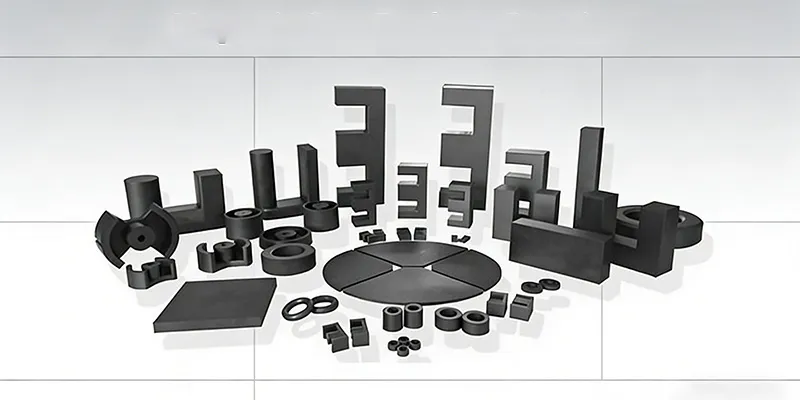
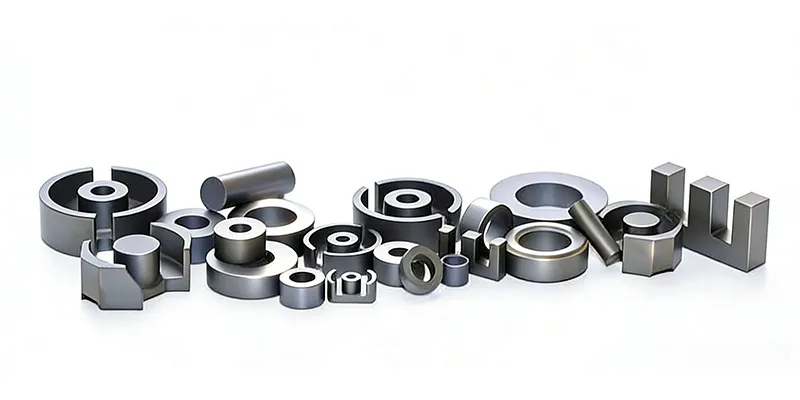
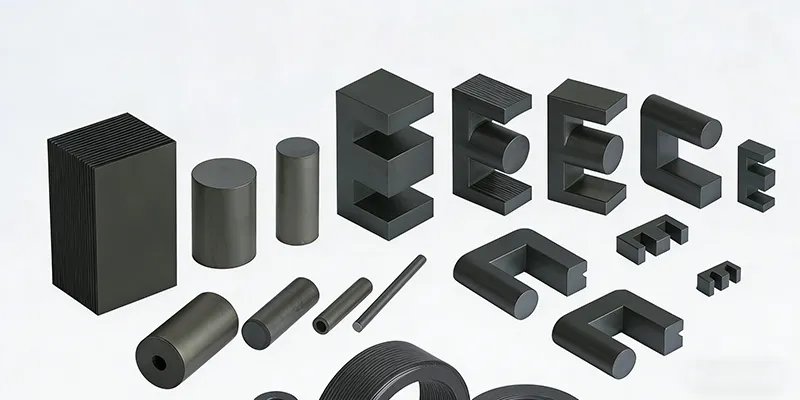
The Toroidal (T-Type) configuration remains the most prevalent architecture for EMI suppression in the TOMITA catalog due to its geometric purity.
Closed Magnetic Flux: The ring-shaped geometry provides a self-contained magnetic circuit. This minimizes leakage flux (stray fields), effectively confining the magnetic field lines within the core. This high coupling efficiency ensures that the maximum amount of noise energy interacts with the dissipative ferrite material.
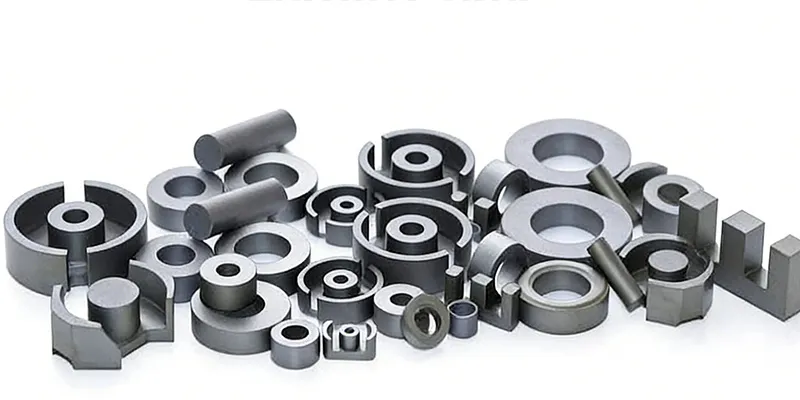
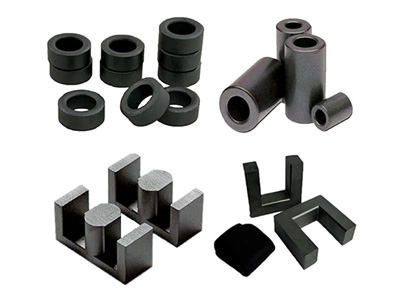
Integrative Versatility: Whether utilized as surface-mount beads on a high-density PCB or as massive “snap-on” suppressors for power and data cables, the T-series offers a dimensional spectrum ranging from sub-millimeter diameters to substantial modules exceeding 50mm.
3. Practical Selection: Interpreting the Impedance-Frequency (Z-f) Curve
Scientific selection transcends mere initial permeability (μᵢₐc). The definitive metric resides in the Impedance-Frequency (Z-f) Curve found in the technical appendix of the TOMITA registry.
The Low-Frequency Threshold: In lower frequency bands, the core exhibits inductive reactance (X), offering negligible impedance to desired signals.
The Resistive Peak: Near the self-resonant frequency, the resistive component (R) of the impedance rises sharply to its zenith.
Strategic Selection Logic: * If interference is concentrated between 10 MHz and 100 MHz, the 4A3 material is optimized for this range.
For ultra-high-frequency noise surpassing 100 MHz to 500 MHz, the 6D8 series provides superior attenuation characteristics.
4. Exemplary Application Contexts
These Ni-Zn components act as the final defense line for sensitive technological ecosystems:
Telecommunication Base Stations: Integrating T-type rings into data transmission lines neutralizes high-frequency common-mode noise, ensuring the Bit Error Rate (BER) remains at its absolute minimum.
Precision Medical Instrumentation: Protecting sensitive analog front-end (AFE) circuitry from the high-frequency “switching hash” generated by nearby Switch-Mode Power Supplies (SMPS).
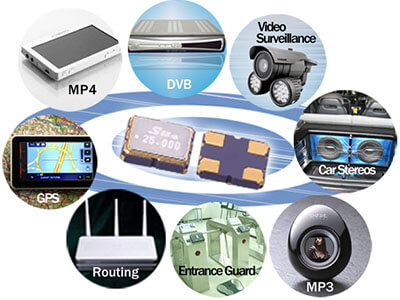
Consumer Electronics: The ubiquitous “cylindrical nodes” found on laptop power bricks or HDMI cables typically house Ni-Zn cores similar to those produced by TOMITA to maintain signal integrity.
5. Engineering Tactics: Augmenting Suppression Efficacy
Should a single magnetic ring prove insufficient for a particularly stubborn interference profile, the TOMITA technical manual suggests three strategic escalations:
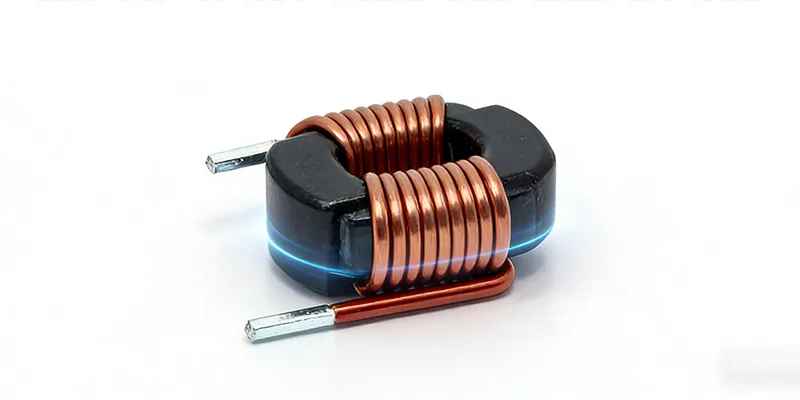
Iterative Winding: Incrementing the number of turns (N) the conductor passes through the core. Since impedance is proportional to the square of the turns (Z ∝ N²), adding just one or two turns can yield an exponential increase in suppression.
Broadband Stacking: Serially deploying two different material grades (e.g., a 4A3 ring paired with a 6D8 variant). This dual-stage filtration covers a significantly wider noise spectrum than a singular component.
Aperture Optimization: Minimize the air gap by selecting a core whose internal diameter (ID) is as close to the cable’s outer diameter as possible. Reducing the spatial clearance enhances the magnetic coupling and the overall Z value.
Conclusion: EMI governance is a science of “prescriptive diagnostics.” By utilizing TOMITA’s exhaustive impedance profiles and high-performance Ni-Zn substrates, engineers can transition away from empirical “trial-and-error” and precisely neutralize the specific frequencies plaguing their designs.
Shenzhen Gaorunxin Technology Co., Ltd