

Inside the Zhuhai Facility: The Protolith of Automotive-Grade Ferrite Quality Control
Inside the Zhuhai Facility: The Protolith of Automotive-Grade Ferrite Quality Control
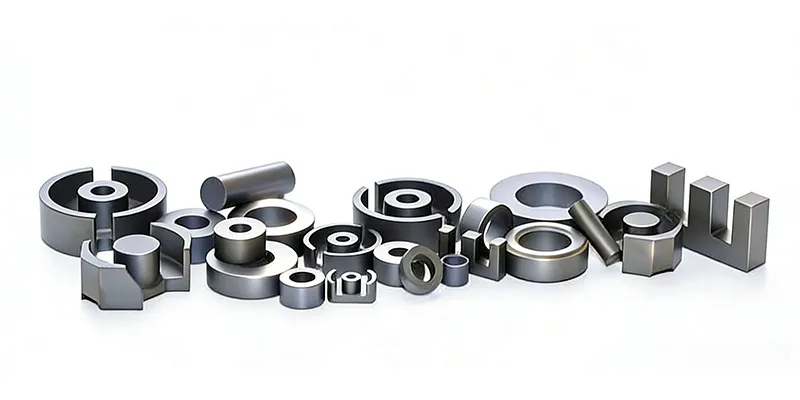
With the cataclysmic surge in New Energy Vehicles (NEV) and the maturation of autonomous locomotion, magnetic components have transitioned from the mundane confines of consumer electronics to the draconian exigencies of Automotive-Grade standards. Within the September 2024 TOMITA Compendium, the ZHUHAI TOMITA plant emerges not merely as a cornerstone of production capacity, but as a global paragon for rigorous quality governance. For procurement specialists and reliability engineers, deciphering how the Zhuhai facility operationalizes the IATF 16949 framework is indispensable for fortifying supply chain integrity.
1. IATF 16949: Beyond Mere Certification
Prominently featured on the inaugural pages of the TOMITA catalog is the Zhuhai factory’s IATF 16949 accreditation. This isn’t a mere administrative badge; it represents the most fastidious quality management architecture in the global mobility sector.
Holistic Lifecycle Traceability: From the inaugural intake of raw particulate matter (Raw Material) to the final hermetic sealing of finished goods, every permutation of the process is tethered to a unique lot identifier. Should a discrepancy arise years post-deployment, the core code acts as a digital forensic key, revealing the precise sintering temperature, the specific tooling utilized, and the granular inspection records of that epoch.
The “Zero Defect” Paradigm: Unlike industrial-grade paradigms that might tolerate a marginal percentage of non-conformity, automotive standards mandate a Zero Defect trajectory. This is achieved through ubiquitous Statistical Process Control (SPC), shifting the focus from mere post-facto inspection to proactive, preventative process mastery.
2. From Powder to Polycrystalline Ceramic: Hardcore Validation
The synthesis of ferrite cores is a delicate alchemy of chemical precision and thermodynamic manipulation. The Zhuhai facility locks in quality through several critical checkpoints:
High-Precision Granulation Monitoring: The particle size distribution of the powder bed is the fundamental determinant of final core density. Zhuhai employs automated granulometric sensors to ensure particulate uniformity, a critical prophylactic measure against the formation of latent internal micro-fissures during the cooling phase.
Atmospheric Sintering Mastery: Manganese-Zinc (Mn-Zn) ferrites exhibit a hypersensitivity to oxygen concentrations. TOMITA utilizes advanced continuous tunnel kilns that maintain a precise thermal equilibrium above 1300°C. By meticulously modulating the oxygen partial pressure curve, the facility ensures that the Bs (Saturation Flux Density) and power loss metrics consistently hit the superlative values advertised in the 2024 catalog.
3. Automated Magnetic Sorting: Eradicating “Invisible Anomalies”
At the terminal stage of production, rudimentary visual inspection is woefully insufficient to detect subterranean deviations in magnetic performance.
100% Magnetic Characterization: Every individual core descending from the production line undergoes an instantaneous, high-speed electromagnetic interrogation. The machinery measures Inductance (L), Quality Factor (Q), and Core Loss (Pcv) within milliseconds.
Mechanical Sequestration: Any component deviating from the rigid catalog tolerances—such as a variance exceeding ±25%—is physically isolated by robotic effectors. This systematic elimination removes human fallibility from the equation, ensuring no “underperforming outliers” ever infiltrate a vehicle’s propulsion inverter or battery management system.
4. Environmental Reliability Testing: Simulating the Vehicle Lifecycle
Before high-performance materials like the 2G8 enter mass production, they must endure a “purgatory” of environmental stressors within the Zhuhai laboratories:
Thermal Shock Resistance: Components are subjected to violent oscillations between -40°C and +150°C. This ensures the ceramic matrix remains structurally sound, resisting the spalling or fracturing that can occur under extreme under-the-hood thermal gradients.
Biased Humidity Exposure: Engineers simulate the oppressive humidity of tropical climates to validate the adhesion of insulative coatings. This testing is paramount for preventing long-term delamination or corrosive ingress that could jeopardize the dielectric integrity of the power system.
5. Procurement Strategy: The Strategic Value of Zhuhai Direct Supply
For the global supply chain landscape of 2026, sourcing directly from the Zhuhai facility offers distinctive competitive advantages:
Logistical Velocity: The facility’s strategic location significantly compresses lead times for Tier 1 automotive suppliers across the Asia-Pacific region.
Engineering Symbiosis: Zhuhai maintains a cohort of Field Application Engineers (FAE) who utilize the 2024 catalog as a baseline to facilitate APQP (Advanced Product Quality Planning) for non-standard, bespoke magnetic solutions.
Ethical Compliance: The facility operates in strict accordance with RoHS, REACH, and the latest ESG (Environmental, Social, and Governance) auditing standards, ensuring your end product meets the global criteria for sustainable manufacturing.
Conclusion: A singular ferrite core, though diminutive in stature, carries the profound weight of passenger safety. ZHUHAI TOMITA seamlessly fuses Japanese artisanal precision with the muscularity of large-scale manufacturing. Behind every data point in the 2024 catalog stands a phalanx of rigorous quality controls, offering a silent, ironclad guarantee of excellence.
Shenzhen Gaorunxin Technology Co., Ltd