

PC-Type Cores: Diversified Specifications for Exacting Industrial Exigencies
PC-Type Cores: Diversified Specifications for Exacting Industrial Exigencies
In the sophisticated realm of magnetic component synthesis, the geometric configuration and dimensional precision of a core dictate the empirical thresholds of an inductor’s performance. The PC-type (Pot Core and its derivatives) manufactured by TOMITA has ascended as the industry benchmark for industrial power supplies, telecommunications filtration, and high-fidelity sensors. This prominence is attributed to its superlative spatial efficiency and unrivaled electromagnetic occlusion. By interrogating the empirical data within the September 2024 TOMITA compendium, we can discern the tripartite core advantages that define this series.
1. Structural Aesthetics: The Rationale for the Pot Core Configuration
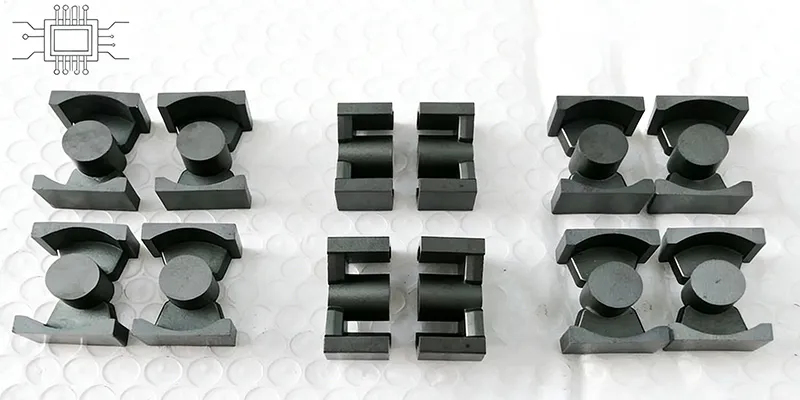
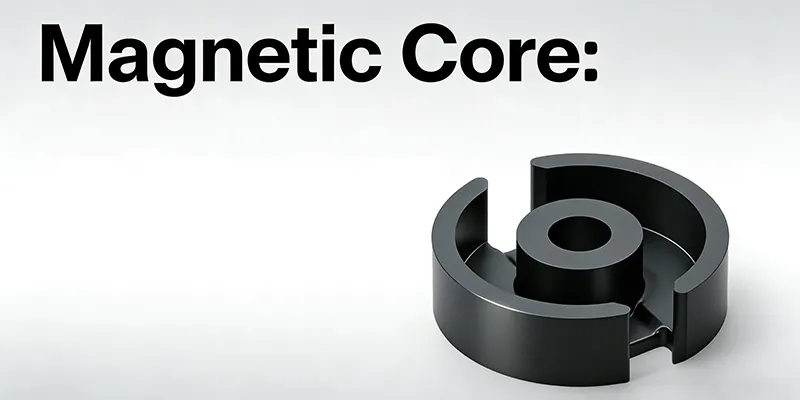
The PC-type architecture traditionally comprises two symmetrical, cup-shaped hemispheroids that envelop the inductive winding entirely within their ferrite sanctum.
Electromagnetic Occlusion: Because the magnetic flux path is almost hermetically sealed, this topography drastically curtails leakage inductance. This minimization of stray fields mitigates Electromagnetic Interference (EMI) across proximal circuitry while simultaneously insulating the internal winding from exogenous phonic disturbances.
Volumetric Efficacy: The Pot Core geometry facilitates the attainment of a maximal effective cross-sectional area (Ae) within a minimal planimetric footprint. Such spatial parsimony is quintessential for power modules necessitating high power density.
2. An Exhaustive Specification Hierarchy: Precision Calibration from A to D
Within the technical folios of the TOMITA catalog, every PC core is accompanied by an intricate matrix of dimensional parameters. Engineers must navigate several critical vectors during the specification phase:
Outer Diameter (A) and Total Height (B): These dimensions govern the volumetric displacement on the PCB and the vertical clearance requirements within the chassis.
Internal Aperture (C1) and Central Post (D): These delineate the available winding window area (Wa). TOMITA has meticulously optimized the central post diameter to harmonize the tension between winding capacity and magnetic saturation thresholds.
Mass (Weight): The catalog provides gravimetric data precise to the decigram, offering indispensable load references for aerospace trajectories or portable instrumentation where every milligram is a functional constraint.
3. Innovation Milestones in the 2024 Compendium: Non-Standard Geometries and Prototyping
Beyond conventional dimensions, the latest TOMITA registry exemplifies a profound cognizance of industrial heterogeneity through several specialized offerings:
Ultraminiature Specifications: The registry enumerates diminutive specimens such as the PC-1.8X1.0 through the PC-5X3, specifically engineered for micro-actuators and audiological electronics.
Substrate Versatility: PC cores can be fabricated using the high-permeability 2H5 (Mn-Zn) substrate to augment inductance, or the low-dissipation 4A3 (Ni-Zn) substrate for high-frequency switching applications.
Bespoke Refinement: The catalog explicitly highlights a “Sample Fabrication” mandate. Whether an application requires a precision-ground Air Gap to forestall DC saturation or idiosyncratic mounting apertures, TOMITA provides exacting mechanical processing to satisfy bespoke blueprints.
4. Implementation Paradigms: From the Laboratory to the Industrial Plant
The PC series serves as a foundational element across diverse high-stakes environments:
High-Precision Filtration: Leveraging the temporal stability of Pot Cores, telecommunications infrastructure achieves remarkably sharp frequency selectivity for signal clarity.
DC-DC Conversion: In industrial automation controllers, compact PC cores facilitate high-frequency switching currents without proliferating deleterious electromagnetic hash.
Precision Isolation Transformers: Within medical monitoring apparatuses, these cores ensure rigorous galvanic isolation and high-fidelity signal transference.
5. Heuristics for Engineering Selection
When navigating the compendium, it is imperative to verify the Fig. (Figure) index associated with each model. Disparate Figure numbers denote variations in terminal slot configurations (e.g., dual or quad-slot designs), which directly influence the exit vectors of the lead wires and the subsequent PCB topology. Furthermore, it is prudent to cross-reference the μᵢₐc Temperature Characteristic Curves. This ensures that the core’s magnetic permeability remains within a stable equilibrium across the device’s projected operational thermal gradient.
Conclusion: A PC-type core is far more than a mere ferrite commodity; it is a testament to precision engineering. Through the 2024 catalog, TOMITA demonstrates its consolidated prowess in morphological diversity, dimensional rigor, and material synergy. Whether your architecture demands blistering high-frequency response or radical miniaturization, the solution resides within this exhaustive specification matrix.
Shenzhen Gaorunxin Technology Co., Ltd