

Pitfall Avoidance Guide: Analyzing Dimensional Tolerances and Mechanical Integrity in Ferrite Cores
Pitfall Avoidance Guide: Analyzing Dimensional Tolerances and Mechanical Integrity in Ferrite Cores
In the high-velocity precision of automated electronic assembly lines, the primary anxieties of engineers often bypass circuit logic, coalescing instead around “physical trauma”—those seemingly minute mechanical discrepancies capable of precipitating catastrophic batch failures. Ferrite cores, categorized as polycrystalline ceramics, possess idiosyncratic physical attributes radically distinct from ubiquitous metallic components. By deciphering the “Standard Tolerance” and technical annotations within the TOMITA September 2024 Catalog, we have synthesized this strategic guide to help you navigate the latent risks inherent in the assembly milieu.
1. The “Obsinate Temperament” of Ceramics: Deciphering Mechanical Fortitude
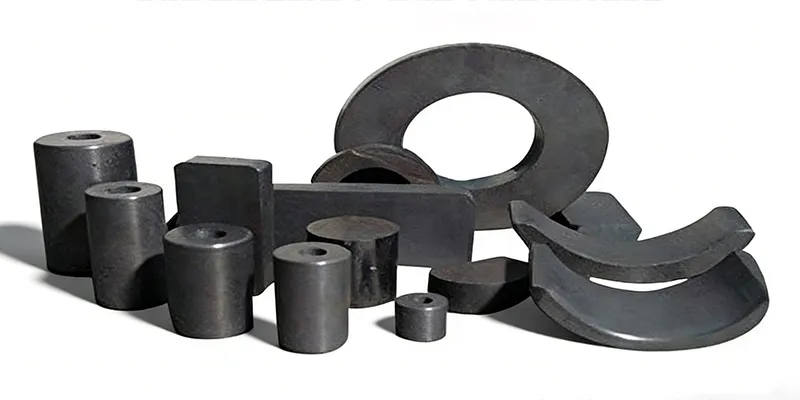
Ferrite cores are synthesized through high-temperature sintering, a process that imbues them with formidable hardness but simultaneous, extreme brittleness.
Assembly Hazards: During automated robotic prehension or press-fit installations, imprecise force modulation can easily induce micro-cracks or complete structural comminution.
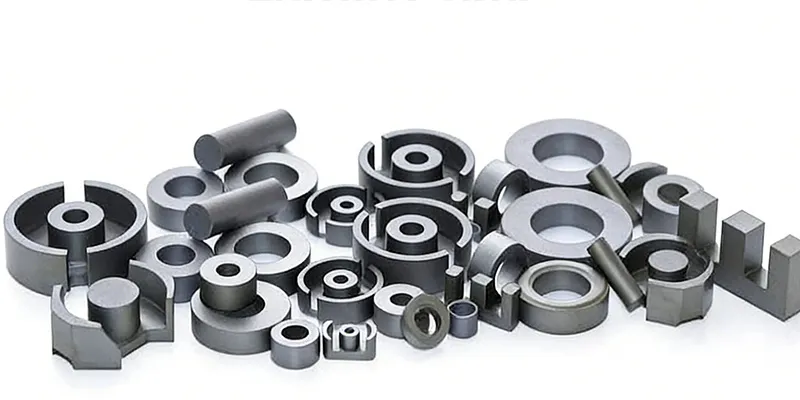
TOMITA’s Processing Recommendations: The catalog strictly defines the edge treatments for both Pot Cores (PC) and Toroidal types. When conceptualizing the companion plastic Bobbin or assembly jigs, engineers must incorporate sufficient “buffer zones” to prevent direct, deleterious metal-on-ceramic contact.
2. The “Vanishing” Inductance: How Tolerances Sabotage the Air Gap
Engineers frequently observe a baffling discrepancy between simulated and empirical inductance (L-values) during final testing. This is typically an artifact of neglected dimensional tolerances.
Critical Parameters: A meticulous review of the PC series dimension tables reveals that height (Dimension B) and center pillar diameter (Dimension D) often possess tolerances of ±0.1mm or greater.
The Cascade Effect: For transformers requiring a calibrated Air Gap, an accumulation of height tolerances where two core halves meet can result in micrometer-scale deviations in gap length. According to fundamental magnetic circuit equations, this minuscule shift can induce an L-value volatility of 10% to 20%.
Strategic Countermeasure: It is advised to specify “Matched Pairs” in the ordering code or utilize TOMITA’s precision grinding services to constrain the tolerances of critical dimensions beyond standard catalog values.
3. Minefields in Automated Winding: Surface Asperity and Burrs
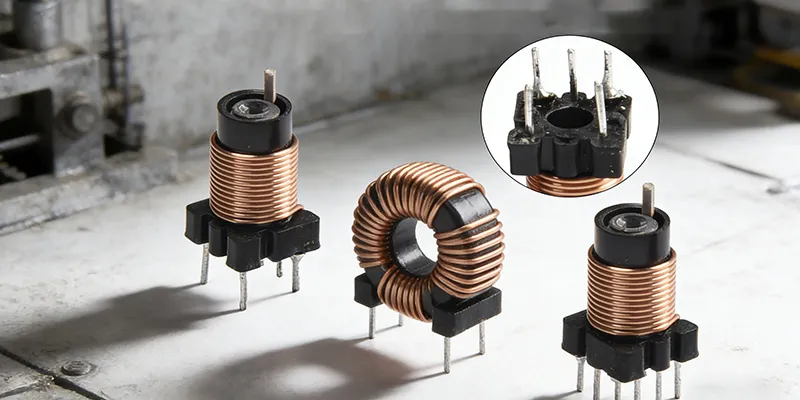
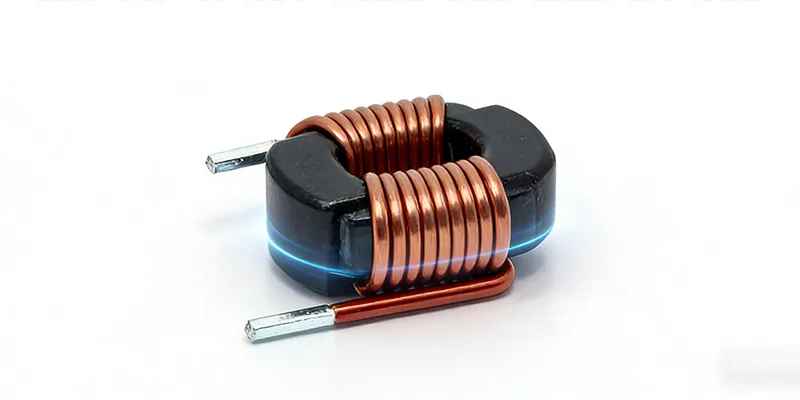
On high-speed automated winding machineries, enameled copper wire traverses the core edges at significant velocities, creating a scenario ripe for insulation failure.
The Risk of Dielectric Breach: If the wire exit slots (demarcated in the catalog Figures) possess imperceptible sintering burrs, they act as microscopic blades, lacerating the wire’s insulation film and inducing inter-turn short circuits.
TOMITA’s Quality Stratagem: TOMITA emphasizes the superlative precision of its molding technology. Their PC-type cores feature smoothed radii (R-angle design) at critical exit points, significantly mitigating the erosion rate of the enameled film during high-tension winding.
4. The Cost of Coercive Fitting: The Inverse Magnetostrictive Effect
This represents a sophisticated physical pitfall: ferrites exhibit Magnetostriction, where their dimensions change during magnetization. Conversely, external mechanical stress inversely alters their magnetic permeability (μᵢₐc).
Phenomenological Description: Utilizing rigid adhesives to “dead-fix” a core, or employing excessively tightened clamps, generates internal stress gradients. These stresses cause a precipitous shift in permeability, rendering the component electrically unrecognizable from its datasheet specifications.
The Solution: We advocate for the utilization of elastomeric agents, such as silicone rubber, for fixation. In TOMITA’s prototype evaluation manuals, it is generally suggested to maintain a certain degree of “mechanical freedom,” ensuring the core does not experience exogenous stress during the inevitable cycles of thermal expansion and contraction.
5. Summary: The Engineer’s Assembly Compendium
Prior to integrating TOMITA cores into large-scale production, ensure your design team audits the following checklist:
Validate the Tolerance Envelope: Verify that your PCB layout and mechanical housing can accommodate the Maximum Dimensions indicated in the catalog, rather than just the nominal values.
Modulate Impact Forces: Confirm that the pressure exerted by vacuum suckers or mechanical grippers on the automation line resides safely within the compressive strength limits of the ferrite ceramic.
Audit Thermal Gradients: The Reflow Soldering temperature profile should strictly adhere to TOMITA’s empirical suggestions to prevent thermal shock-induced “spalling” or fractures.
Conclusion: Respecting the physical essence of the material is the mandatory path toward high-reliability design. TOMITA’s exhaustive specifications offer more than just inductance data; they contain the encrypted physical cipher required for a flawless assembly.
Shenzhen Gaorunxin Technology Co., Ltd