

Precision Detection: The Integral Role of OT Series Cores in Robot Displacement Sensors
Precision Detection: The Integral Role of OT Series Cores in Robot Displacement Sensors
Under the transformative surge of Industry 4.0, the veracity and dexterity of robotics have emerged as the definitive metrics of manufacturing excellence. Whether managing the intricate articulation of a collaborative robot’s joint or the minute displacement compensation of a linear slide, high-precision inductive displacement sensors are the indispensable “nerves” of the system. At the quintessential core of these transducers, TOMITA’s OT Series magnetic cores are performing an irreplacable function in channeling the invisible forces of electromagnetism.
1. The Rationale Behind the OT Series as the “Optimal Solution”
While ubiquitous geometries like toroidal or E-shaped cores offer versatility, they frequently fall short in displacement sensing due to magnetic flux leakage and suboptimal linearity.
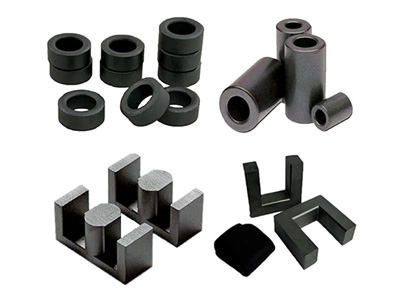
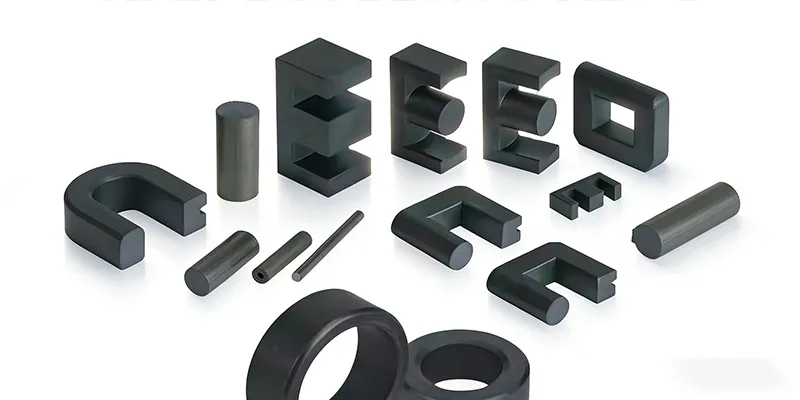
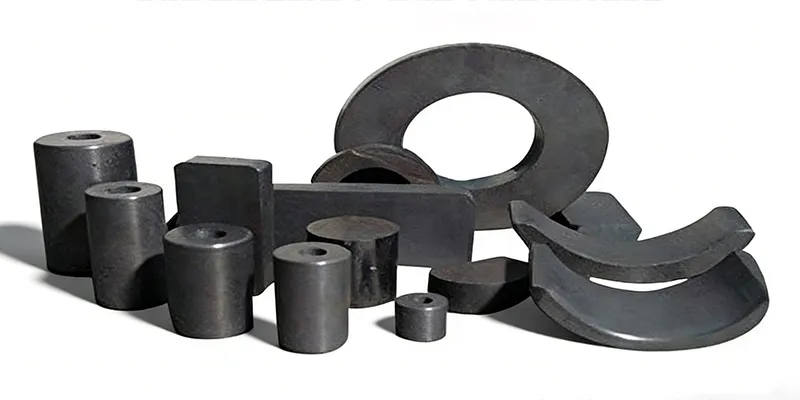
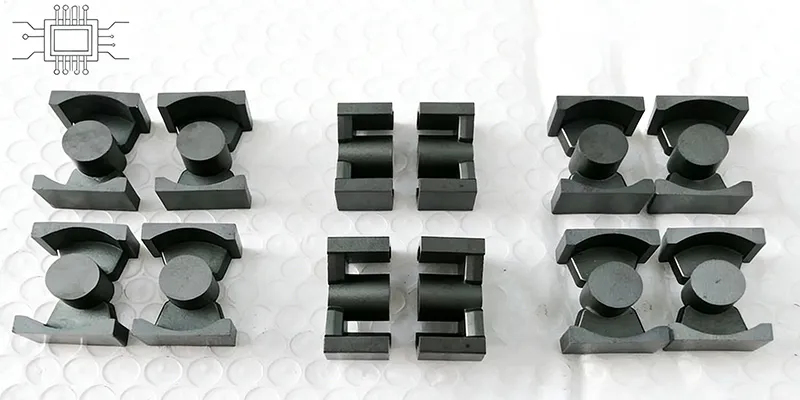
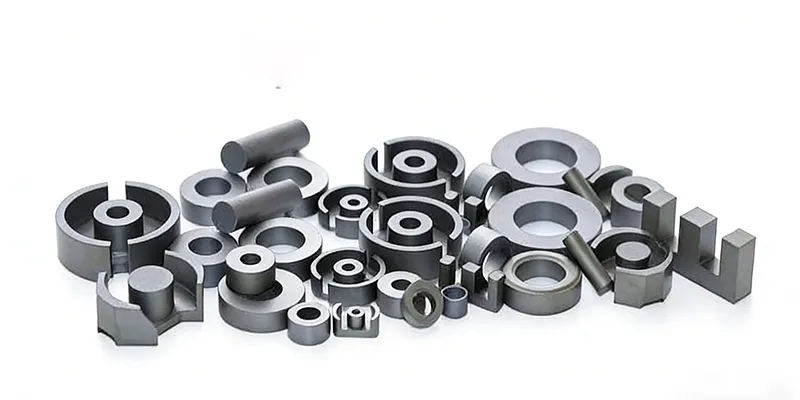
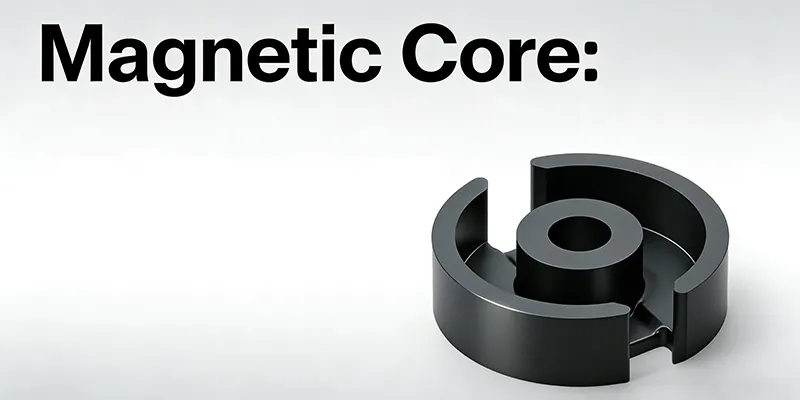
Directional Flux Collimation: The OT series comprises heteromorphic cores specifically architected for sensor topographies. Their idiosyncratic geometry facilitates the extreme compression and directional “projection” of magnetic flux lines toward the sensing interface.
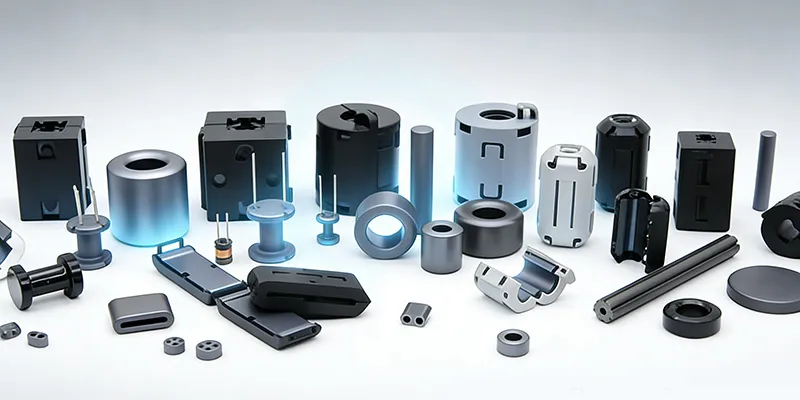
Morphological Versatility: The TOMITA technical registry delineates a vast array of Fig (Figure) configurations, including grooved, perforated, and stepped designs. This ensures a seamless mechanical synthesis with diverse sensor housings, from standard cylindrical M8/M12/M18 enclosures to bespoke rectangular limit switches.
2. Empowering Micrometer-Level Positioning in Robotics
A negligible deviation at a robotic joint can propagate into a significant positional error at the end-effector. OT cores enhance precision through several fundamental material advantages:
Superior Q-Factor Efficacy: These sensors identify target proximity by detecting variations in the oscillatory coil’s energy dissipation. TOMITA’s infinitesimal dissipation factors (tan δ/μᵢₐc) maintain an exceptionally high Quality Factor (Q), empowering the resonant circuit with the sensitivity required to perceive micrometer-scale fluctuations.
Suppression of Thermal Drift: Continuous robotic operation invariably generates caloric energy. The exceptional thermal stability of TOMITA’s ferrite substrates ensures that magnetic permeability remains steadfast despite fluctuating temperatures, preventing “detection drift” and maintaining operational consistency.
3. “Core + Component”: The Strategic Power of Custom Prototypes
Within the TOMITA 2024 compendium, one service stands out for sensor architects: “Bespoke Sample Fabrication Based on Client Blueprints.”
Geometric Breakthroughs: Modern robotics demand hyper-compactness, where standardized OT cores may prove too cumbersome. TOMITA supports the development of non-standard morphologies using precision compression molding, achieving tolerances that were previously considered unattainable.
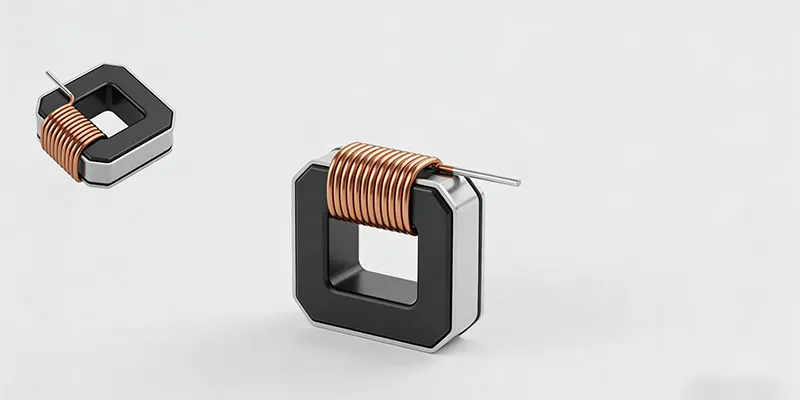
Coil Integration Services: The most arduous phase of sensor assembly is often the winding process. TOMITA provides integrated OT modules—pre-wound and encapsulated. This eliminates the technical hurdles of handling ultra-fine wire and ensures the absolute optimization of the electromagnetic coupling between the core and the winding.
4. Real-World Deployment: From Assembly Lines to Lights-Out Factories
OT-integrated sensors act as the bedrock for several high-stakes robotic environments:
End-Effector Gripping: Sensors utilize OT cores to discern precise grasping force and positional feedback, preventing the accidental crushed-deformation of delicate components.
Autonomous Mobile Robots (AGV/AMR): During the critical phase of autonomous docking with charging stations or obstacle avoidance, OT-backed proximity sensors provide a reliable, short-range protective envelope.
Semiconductor Fabrication: In the draconian cleanliness of a vacuum cleanroom, the non-contact sensing enabled by OT cores prevents the particulate contamination inherent in mechanical friction.
5. Engineering Selection Compendium
When navigating the TOMITA catalog, engineers are advised to cross-reference Fig. Drawings with μᵢₐc Frequency Characteristics:
Spectral Synchronicity: For sensors operating near 100kHz, Mn-Zn substrates are the premier choice. Conversely, for high-speed sensing in the MHz range, the Ni-Zn series should be prioritized to mitigate eddy current losses.
Geometric Consonance: Carefully verify the height of the center pillar and the depth of the wire slot. These dimensions are the primary determinants of your maximum winding capacity and the subsequent inductance ceiling.
Conclusion: If sensors are the “tactile sense” of a robot, then the OT core is the nerve ending that makes that sense acute. Through the synergy of Japanese precision engineering and agile customization, TOMITA’s OT series is catalyzing a global upgrade in robotic perception.
Shenzhen Gaorunxin Technology Co., Ltd