

Striding Toward Miniaturization: How TOMITA’s Micro-Fabrication Empowers Future Devices
In an era where smartphones oscillate toward unprecedented slimness, wearables achieve gossamer-like weights, and medical implants reach microscopic levels of surgical precision, the electronic architect faces a formidable paradox: how to nestle high-performance magnetic components within an increasingly vanished spatial envelope? TOMITA, in its 2024 technical compendium, presents a masterclass in reconciling these divergent demands. The fulcrum of their success lies in a sophisticated suite of Miniaturization Technologies that transcend conventional manufacturing boundaries.
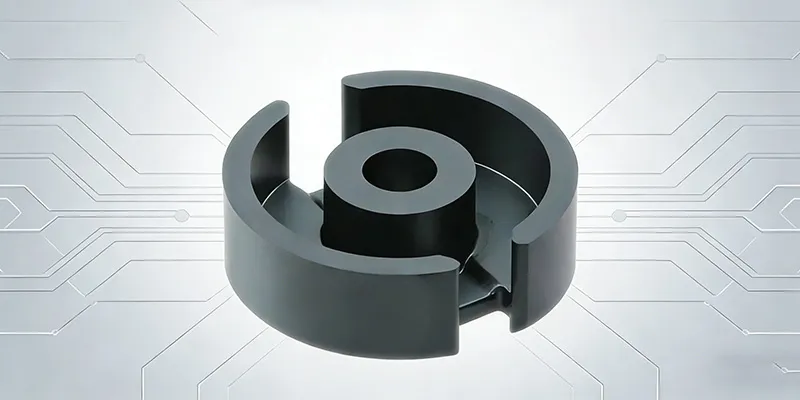
1. Breaking the Threshold: The Engineering Marvel of PC-1.8X1.0
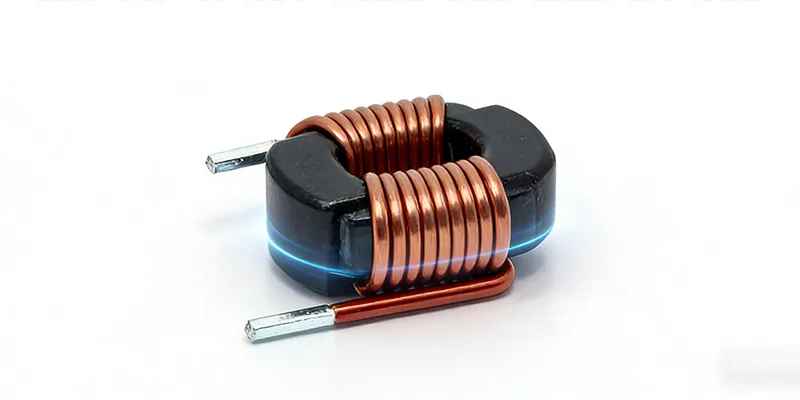
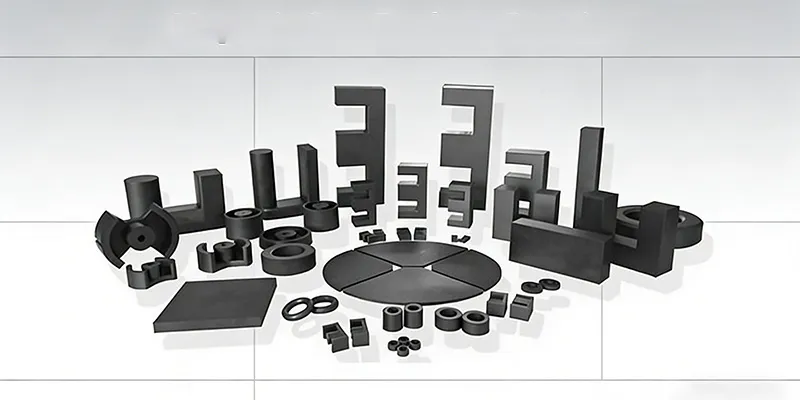
Within the technical lexicon of TOMITA’s "PC Type" cores, certain specifications emerge as radical outliers in the pursuit of the diminutive. The PC-1.8X1.0 model stands as a testament to this microscopic conquest.
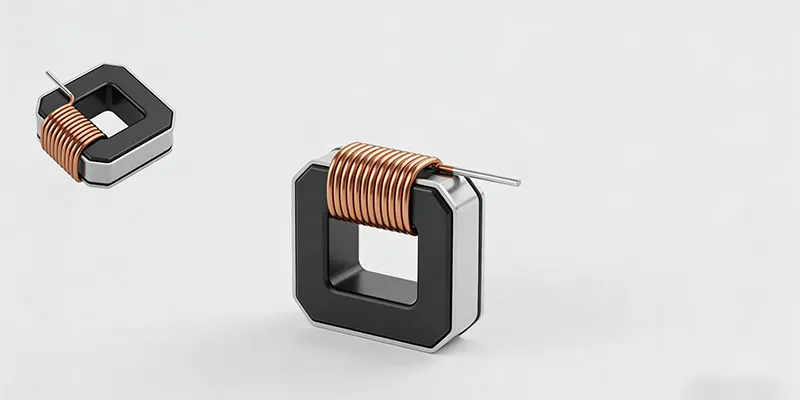
Physical Metrology: This component features an external diameter of a mere 1.8 mm and a height of only 1.0 mm. Such dimensions are scarcely visible to the naked eye, yet they house the magnetic pulse of high-tech devices.
Manufacturing Rigor: Ferrites are essentially brittle ceramic matrices. Subjecting such materials to pressing and sintering at this scale—while mandating dimensional tolerances within a razor-thin ±0.1 mm—requires a near-fanatical precision in mold geometry and thermal gradient control.
Consistently Scalable: Leveraging decades of metallurgical institutional memory, TOMITA ensures that the electromagnetic profile of these micro-cores remains unwavering, even in high-volume production cycles where variability is the enemy of yield.
2. "Large" Material Science for "Small" Dimensions: The Permeability Paradox
Miniaturization is not merely a geometric exercise; it is an exercise in overcoming the laws of physics. According to the fundamental inductance formula, as physical volume atrophies, achieving requisite inductance levels becomes exponentially difficult.
TOMITA’s stratagem involves the deployment of high initial permeability (μiac materials specifically tailored for micro-cores. By utilizing 2H5 or even more advanced Mn-Zn grades, they enable these minuscule cores to generate substantial inductive reactance despite their vestigial volume. For radio-frequency (RF) and telecommunication apparatuses, TOMITA integrates Ni-Zn materials like 6D8 or 4A3, ensuring that signal dissipation remains negligible during high-velocity data transmission.
3. Archetypal Application Landscapes
These micro-cores function as the "invisible artisans" of modern precision electronics, facilitating functionality where space is the ultimate luxury:
Hearing Aids & Medical Monitoring: In medical devices where every cubic millimeter is contested, TOMITA cores provide stable power conversion and filtration for life-critical telemetry.
Smartphones & TWS Earbuds: They are the backbone of RF modules and ultra-compact DC-DC converters, allowing for sleeker chassis designs without sacrificing battery longevity.
Micro-Motors & Actuators: Serving as the electromagnetic nuclei for micro-coils, they drive the intricate mechanical movements in haptic engines and camera stabilization systems.
4. Bespoke Solutions: Sculpting Your Innovation
The TOMITA catalog explicitly highlights their Sample Service, a dedicated pipeline for custom-tailored prototypes that bypass the rigidity of standard inventories.
Rapid Prototyping: Engineers dealing with eccentric spatial configurations or irregular cavities can collaborate directly with TOMITA’s regional offices to develop non-standard micro-geometries.
Coil Winding Synergy: Acknowledging that winding wire onto a 1.8mm core is a task of Sisyphean difficulty for many manufacturers, TOMITA offers comprehensive winding services at their Tottori headquarters and Zhuhai facilities. By delivering finalized, integrated assemblies, they eliminate the logistical friction of micro-assembly for the end customer.
Conclusion: Miniaturization is not a simple act of scaling; it is a profound challenge to the limits of material science and ceramic processing. Through the PC Series, TOMITA proves that "small" can indeed be "mighty." As we pivot toward the next generation of IoT and AI-integrated hardware, these micro-technologies will remain the quiet vanguard of electronic evolution.
Shenzhen Gaorunxin Technology Co., Ltd