

Ultra-Thinning Challenges: Sheet Ferrite Solutions in Slim-Profile Mobile Devices
Ultra-Thinning Challenges: Sheet Ferrite Solutions in Slim-Profile Mobile Devices
By 2026, the architectural landscape of mobile technology—defined by foldable displays, hyper-slim ultrabooks, and bionic wearables—has pushed internal spatial constraints to their absolute nadir. As CPU clock speeds escalate and the integration of 5G/6G modules becomes ubiquitous, electromagnetic interference (EMI) within these parsimonious cavities has reached a fever pitch. The sophisticated thinning technologies detailed in the September 2024 TOMITA Catalog are emerging as the linchpin for achieving Electromagnetic Compatibility (EMC) in these “masterpieces of precision industrial art.”
1. The Zero-Sum Spatial Conflict: From “Blocks” to “Sheets”
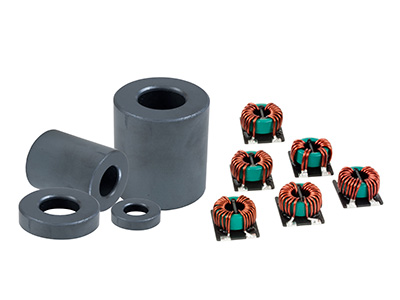
While traditional magnetic cores, such as the PC or E-type geometries, offer peerless performance, their millimeter-scale profiles are prohibitively cumbersome for a foldable smartphone with an aggregate chassis thickness of only a few millimeters.
Flexibility and Ultra-Thinness: TOMITA has pioneered a generation of Ferrite Sheets and ultra-thin bespoke cores that compress the Z-axis profile to an astonishing 0.1mm – 0.5mm.
Conformal Integration: These sheet-like structures possess the versatility of “industrial adhesive tape.” They can be seamlessly laminated onto Flexible Printed Circuits (FPC) or bonded to metal mid-frames, establishing highly efficient magnetic circuits without encroaching upon precious longitudinal space.
2. Near-Field Shielding: Safeguarding “Fragile” Antenna Signals
Within the claustrophobic confines of ultra-thin hardware, the electromagnetic cacophony generated by high-speed digital buses—specifically those connecting processors and memory—threatens to drown out nearby Radio Frequency (RF) antenna signals.
The Absorption Mechanism: Conventional metallic shields often exacerbate the issue via reflection, causing noise to bounce internally and create secondary interference. In contrast, TOMITA’s thin ferrite sheets utilize the imaginary part of complex permeability (μ") to intercept and transmute stray electromagnetic waves into negligible thermal energy.
Signal-to-Noise Ratio (SNR) Optimization: By interposing TOMITA’s customized shielding films between the interference source and the antenna, engineers can drastically elevate call quality and data throughput, ensuring stable connectivity even in high-density RF environments.
3. Practical 2024 Catalog Metrics: Bespoke Parameters for Thin Profiles
When interrogating the catalog for ultra-thin applications, engineers must look beyond basic permeability and focus on specialized specifications:
Flatness Control: For large-surface sheet applications, TOMITA utilizes a proprietary tape-casting (doctor blade) process. This ensures a high degree of surface planarity, preventing the concentrated pressure points that could damage fragile OLED or LCD assemblies during the lamination process.
High-Loss Frequency Targeting: The catalog provides specific material codes tailored to different spectral demands. For example, to neutralize Gigahertz-level CPU clock noise, one must select a material whose loss peak (fr) aligns precisely with the offending frequency, enabling “surgical” noise eradication.
4. Application Paradigms: Foldable Hinges and Wireless Power
The Foldable Axis: The mechanical hinge area is a nexus of ultra-dense signal routing. TOMITA’s thin magnetic materials provide a critical barrier, preventing crosstalk between tightly packed differential signal lines during repeated folding cycles.
Ultra-Slim Wireless Charging: To support wireless power without bloating the device’s silhouette, TOMITA’s ultra-thin magnetic sheets act as a flux-diverting layer. They guide magnetic field lines through the metallic battery housing, maximizing induction efficiency while maintaining a “wafer-thin” aesthetic.
5. Selection Heuristics for Structural Engineers
When consulting the TOMITA technical folio or engaging their application engineers, clarify the following prerequisites to ensure seamless integration:
Adhesive Architecture: Confirm whether the sheets require Adhesive Tape (PSA) backing for high-speed automated assembly.
Dielectric Integrity: Evaluate the need for surface insulation. While ferrite possesses high intrinsic resistivity, extra-thin coatings may be required when placed adjacent to high-voltage power rails.
Mechanical Resilience: For dynamic folding applications, compare the fatigue life of Sintered Sheets versus Composite Magnetic Rubbers with TOMITA’s reliability labs to ensure longevity over hundreds of thousands of cycles.
Conclusion: As electronic devices evolve toward a “paper-thin” reality, magnetic materials must undergo a commensurate metamorphosis. The thinning solutions presented in the 2024 TOMITA Catalog represent more than just a reduction in size; they are a profound dialogue between magnetic physics and material science at the micrometer scale.
Shenzhen Gaorunxin Technology Co., Ltd