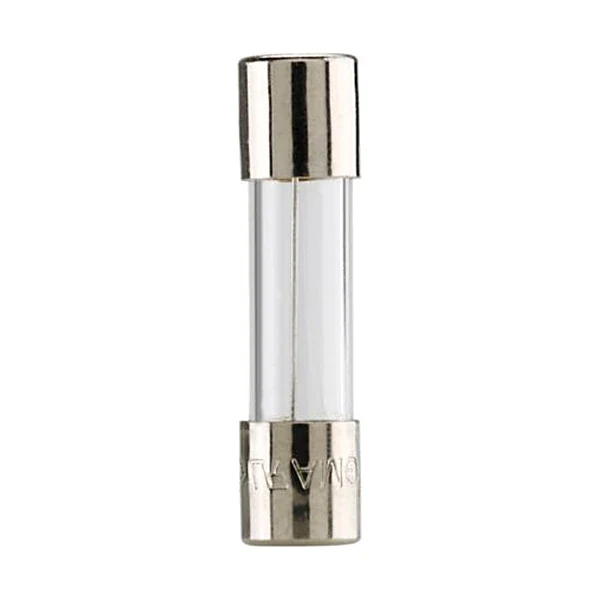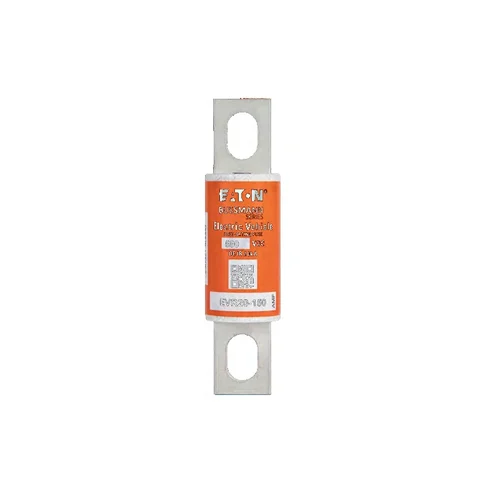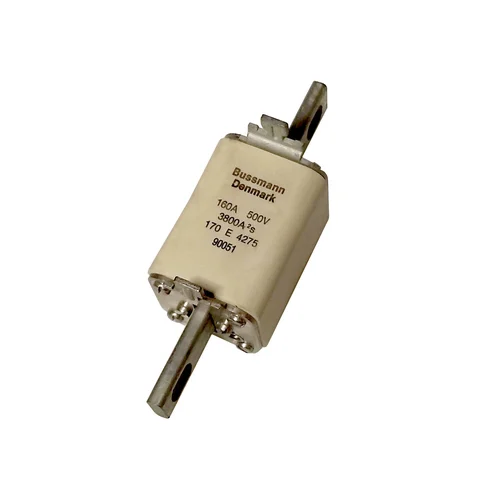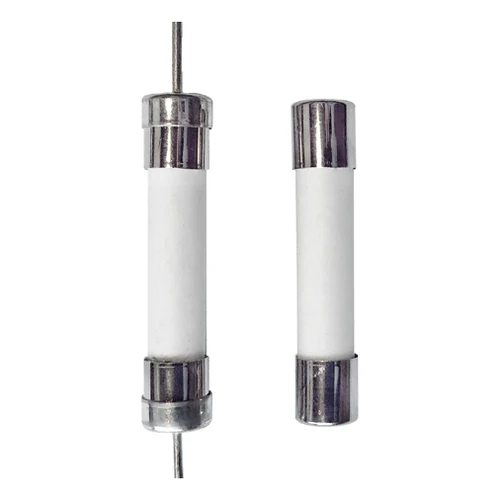
1.25 A 250 Vac Fast-Blow Glass Fuse - Eaton AGC-1-1/4-R
- Product Details
- Download
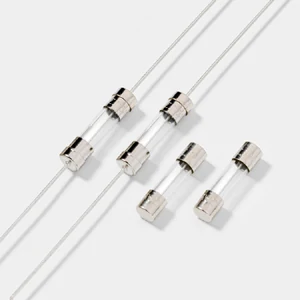
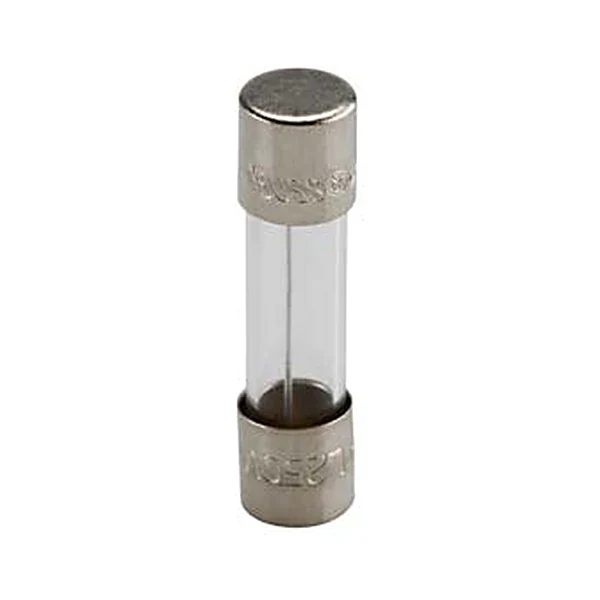
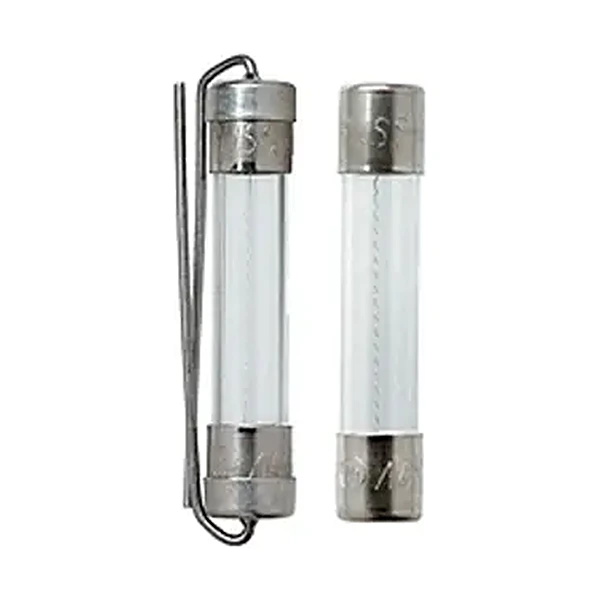
Eaton AGC-1-1/4-R 1.25 A 250 Vac Fast-acting Glass Tube Fuse
Ratings
| Part number | AGC-1-1/4-R |
| Typical DC cold resistance | 0.122 Ω |
| Typical melting I2t | 5.094 A²s |
| Typical voltage drop | 0.222 V |
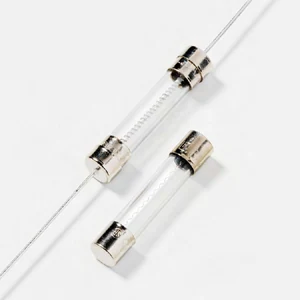
| Body | Glass tube, 1/4 x 1-1/4 in (6.3 x 32 mm) |
| Rated current | 1.25 A (1-1/4 A) |
| AC interrupting rating | 100 A at 250 Vac; 10,000 A at 125 Vac; 1,000 A at 32 Vac |
| End caps | nickel-plated brass |
| Design standard | UL 248-14 |
| Voltage rating | 250 Vac |
| Element | single element |
Interpreting the Data
Read the row from the right: The typical cold resistance is 0.122 Ω, which is what the circuit sees before the element warms. Melting takes 5.094 A²s, so a fault has to deliver that much energy before the element even starts to go. At rated current the drop across it is 0.222 V. The ratings on the left set the conditions under which those figures apply.
Part Number Breakdown
AGC is the family, 1-1/4 is the ampere rating written as a fraction: 1 and 1/4 reads as 1.25 A. The trailing -R is the RoHS suffix, not part of the rating. Optionally a packaging prefix such as BK- or BK1- is added in front, which changes the quantity per box and nothing else.
Behaviour Under Load
The element in a fast-acting tube is a straight wire, sometimes with a small forming to tune the curve. Its job is to open before the downstream part is damaged, which on a resistive load is a simple race between the fuse and the semiconductor - and the fuse wins because it has far less thermal mass.
Sizing Context
Once the rating passes a few amps the holder becomes part of the specification. A clip rated for the current but worn loose adds resistance exactly where the fuse is hottest, and the combination fails earlier than either part would.
The step below is AGC-1-R at 1 A, the step above is AGC-1-1/2-R at 1.5 A. Between the three the body, the end caps and the breaking capacity are identical; only the element changes, so the choice is the load current and nothing else.
Replacement Notes
AGC is the fast-acting half of the MDL/AGC pair. Putting an AGC into a motor circuit that was engineered around MDL will nuisance-trip on every start, and the usual response - fitting a bigger AGC - removes the protection the circuit was designed for.
At 1.25 A the part is a direct replacement for any other 3AG fuse of the same rating and the same speed, regardless of maker. The body size is standardised; the only things that must match are the ampere rating, the speed and the voltage.
What Is Certified
UL Listed and CSA certified (Guide JDYX, File E19180).
The approvals are listed per current band rather than for the family as a whole. A certificate that covers one rating does not automatically cover the next one along, so a submittal has to quote the file number against the exact rating being fitted.
UL Listed and CSA certified (Guide JDYX, File E19180).
Note that Listed and Recognised are different claims: Listed means the part is a complete device, Recognised means it is a component for use inside one. Mixing the two in a bill of materials is a common source of confusion at audit.
Practical Questions
Is the ampere rating a continuous rating?
It is the current the fuse will carry indefinitely at 25 °C without opening. In a hot enclosure the usable current is lower, which is why fuses are normally derated to about 75 % of the rating in a sealed box.
Why does the table list several breaking capacities?
Because the fuse is asked to interrupt different currents at different voltages. The 250 Vac figure is usually the smallest and the 32 V figure the largest, since a low voltage is much easier to break than a high one.
Do I need to derate for temperature?
In a sealed enclosure, yes - about 75 % of the rating is the usual working figure. The rating assumes still air at 25 °C, and a fuse that sits at 60 °C will open earlier than the label suggests.
Design note: the ratings above are Technical Data 2543. Verify the exact rating, the voltage at which the breaking capacity applies, and the certificate for this current before release.
Shenzhen Gaorunxin Technology Co., Ltd
Online message
Shenzhen Gaorunxin Technology Co., Ltd