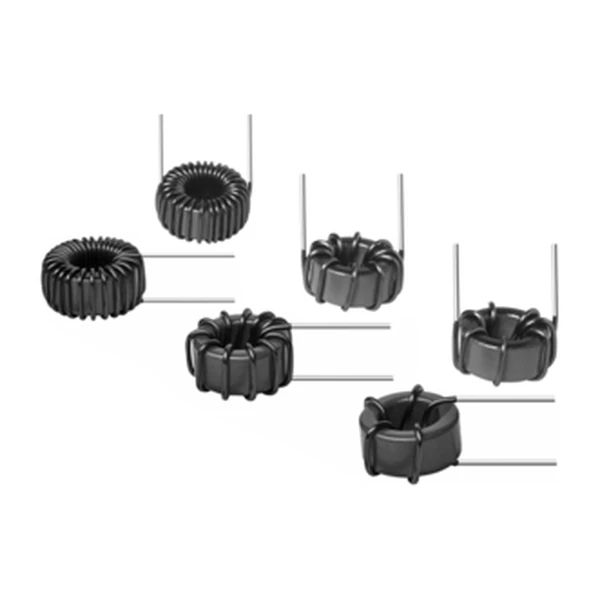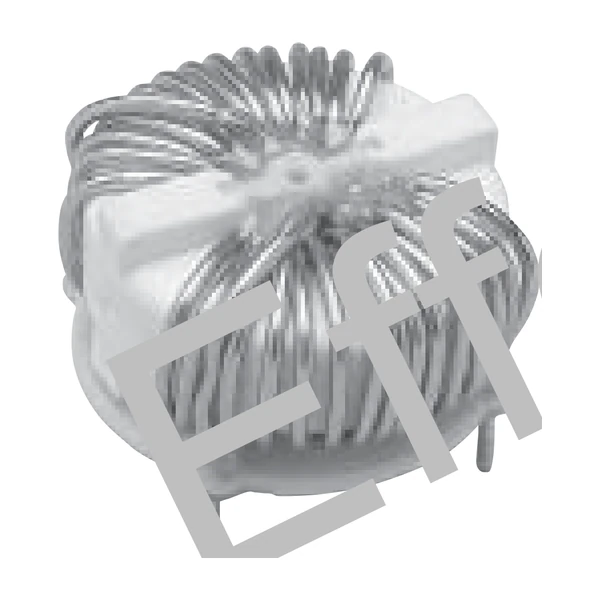
Eaton CMT4-1-R - 5.4 mH 2 A Common Mode Choke
- Product Details
- Download
Eaton CMT4-1-R - 5.4 mH 2 A Common Mode Choke
Key Specifications
| Parameter | Value |
|---|---|
| Orderable part number | CMT4-1-R |
| Open circuit inductance (1-2), minimum | 5.4 mH |
| Open circuit inductance (4-3), minimum | 5.4 mH |
| Irms, maximum | 2 A |
| DCR typical @ 20 °C (1-2) | 120 mOhm |
| DCR typical @ 20 °C (4-3) | 120 mOhm |
| Mounting | Through-hole, 4 pins |
| Flammability | UL94V-0 |
| Operating temperature | -40 °C to +125 °C |
| RoHS | Compliant (-R suffix) |
The Figures Explained
Off-line supplies need a choke that will take the full AC line current without saturating, and still present a high impedance to the noise that tries to leave through the mains lead. That is the CMT.
The rated current is the RMS line current at the stated temperature rise, and the inductance is what remains under that current. A common-mode choke does not see differential DC, so saturation is not the usual failure mode here - heating is.
The two windings are measured separately, (1-2) and (4-3), because a mismatch between them turns common-mode noise into differential noise - which the X-cap then has to absorb.
Positioning in the Range
CMT is a through-hole common-mode choke for the AC input of an off-line supply, with attenuation up to 68 dB and inductance from 0.53 mH to 66 mH. It sits ahead of the bridge and stops switching noise from travelling back down the mains lead.
- Typical applications: Off-line power supplies, EMI filters, AC input of switching regulators, DC-DC converters, computer/TV/audio equipment.
- Eaton marked this series discontinued effective 1 March 2016 or while inventory lasts - treat it as a service part for existing designs, not a new-design choice.
- Data sheet 4312.
Sizing and Layout Notes
5.4 mH is in the middle of the range of what this series covers. Moving up in inductance costs DCR and saturation current; moving down buys both, at the price of ripple.
Thermal design is not optional here. The rated current assumes a 40 °C rise with the part in free air on a stated pad; inside a closed box, on a thin board, next to a hot IC, that assumption is gone.
Frequently Asked Questions
What is the current rating based on?
The RMS line current at the rated temperature rise. Inrush and fault current are separate questions and are not covered by that number.
Can I use it on a DC line?
Only if the DC current is well below the rated value - DC biases the core and eats the inductance. Common-mode chokes are specified for AC line current in opposing directions.
Does it filter differential noise?
Not by design. The leakage inductance does provide a small differential impedance, but it is a by-product; use an X-capacitor and a differential choke for that.
Design note: rated for RMS line current, not inrush. The choke sits upstream of the bridge and downstream of the fuse - size the fuse first.
Mechanical Dimensions

Dimensional drawing and recommended PCB pad layout from the Eaton data sheet. Tolerances and pad dimensions are as printed on the drawing; check the outline against your layout before release.
Shenzhen Gaorunxin Technology Co., Ltd
Online message
Shenzhen Gaorunxin Technology Co., Ltd