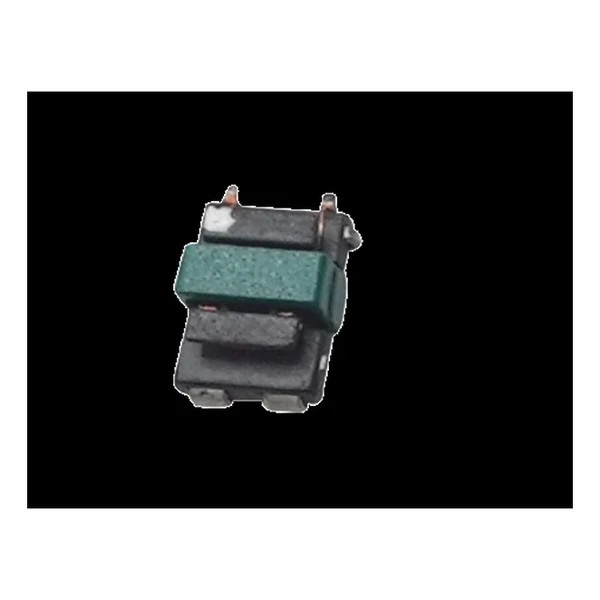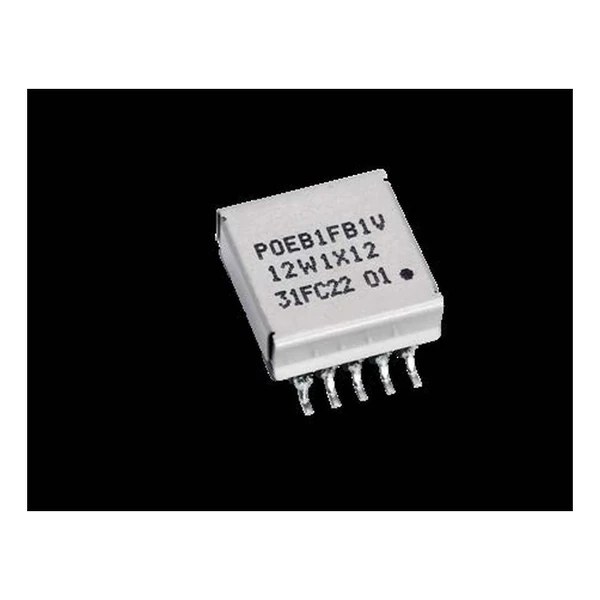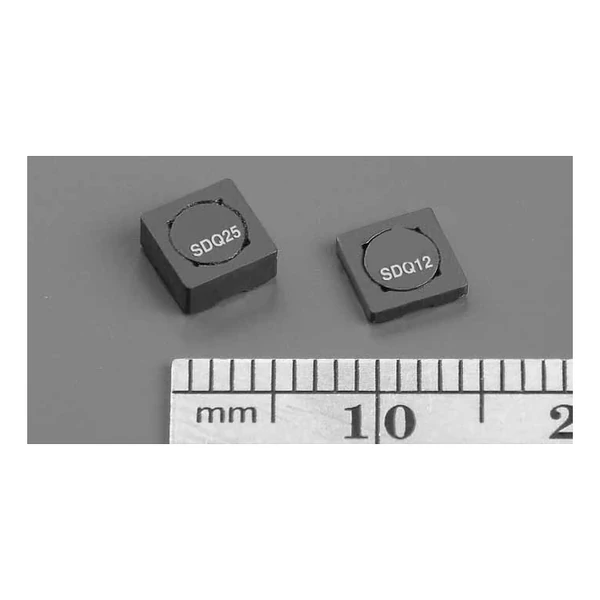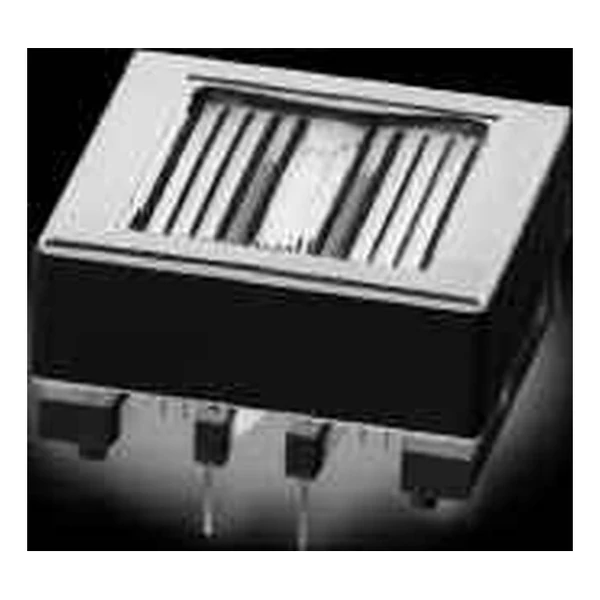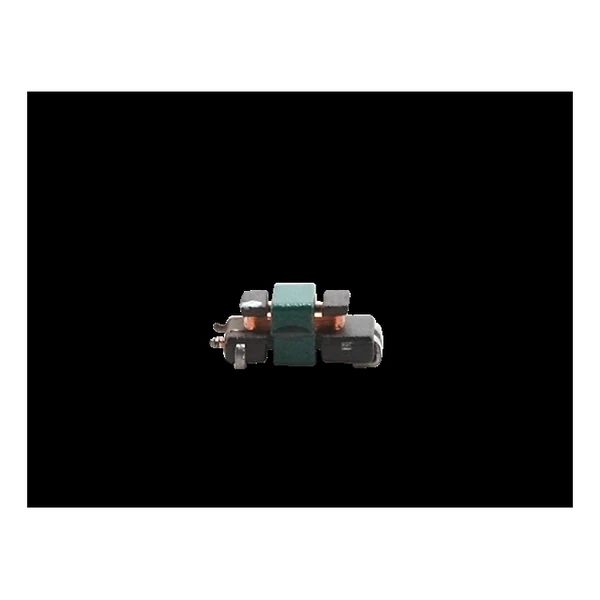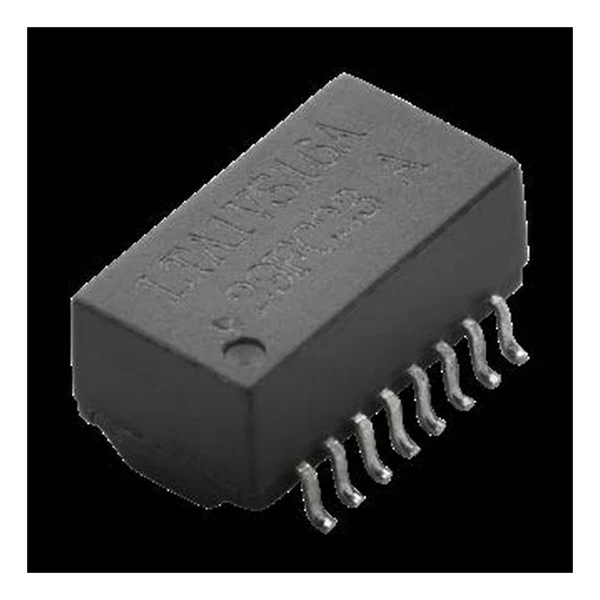
Eaton CTX110609-R CCFL Inverter Transformer, 6 W
- Product Details
- Download
Eaton CTX110609-R CCFL Inverter Transformer, 6 W
Specification Table
| Parameter | Value |
|---|---|
| Orderable part number | CTX110609-R |
| Lamp power | 6 W |
| Primary inductance Lp | 20 uH |
| Turns ratio Ns/Np | 100 |
| DCR primary maximum | 132 mOhm |
| DCR secondary maximum | 176 Ohm |
| Primary voltage maximum | 13 V |
| Secondary voltage maximum | 1340 V |
| Secondary current maximum | 0.011 A rms |
| Primary voltage, abnormal | 23 V |
| Secondary voltage, abnormal | 2000 V |
| Package | See dimension drawing in the data sheet |
| Mounting | Surface mount |
| Operating temperature | 0 C to +70 C |
| Qualification | Commercial grade |
| RoHS | Compliant, -R suffix |
| Data sheet | Eaton Technical Data 4303 |
Outline drawing, winding arrangement and recommended pad layout are on
page 2 of Eaton Technical Data 4303; the package line above gives the body size where
the data sheet states it.
What the Numbers Mean
The tube needs roughly 1000 to 1500 V to strike and a few milliamps to run, so the secondary winding carries many turns of fine wire. That is why the secondary DCR is quoted in hundreds of ohms while the primary DCR is a fraction of an ohm.
A 100:1 ratio with 13 V across the primary puts 1300 V on the secondary at full drive, against a tube strike requirement of roughly 1000 to 1500 V.
The rated 0.011 A rms into 1340 V is about 14.7 VA of lamp power, which is why the secondary winding is the thermal limit rather than the core.
Within the CTX110609 family this is item 1 of 1 in the Eaton catalogue.
Positioning in the Range
The CCFL range covers 2.5 W to 6 W lamps in two case sizes, with turns ratios from 50:1 to 100:1 and secondary voltages up to 2000 V under abnormal conditions.
- The secondary runs at over 1 kV. Creepage, potting and the lead dress are part of the design, not details to fix later.
- Typical applications: ccfl power supplies.
- Design note: choose on turns ratio and abnormal voltage first, then check the lamp power against the Pout rating.
Frequently Asked Questions
Why is the secondary DCR so high?
The secondary has many turns of very fine wire to reach 1300 V or more. Resistance scales with turns and inversely with wire area, so a high-ratio secondary inevitably has tens or hundreds of ohms.
What does the Pout rating mean?
It is the lamp power the part is designed for, which sets the core size and the wire gauge. Running a 2.5 W part at 6 W will overheat the winding even if the voltage rating is met.
What does the Pout rating mean?
It is the lamp power the part is designed for, which sets the core size and the wire gauge. Running a 2.5 W part at 6 W will overheat the winding even if the voltage rating is met.
Shenzhen Gaorunxin Technology Co., Ltd
Online message
Shenzhen Gaorunxin Technology Co., Ltd