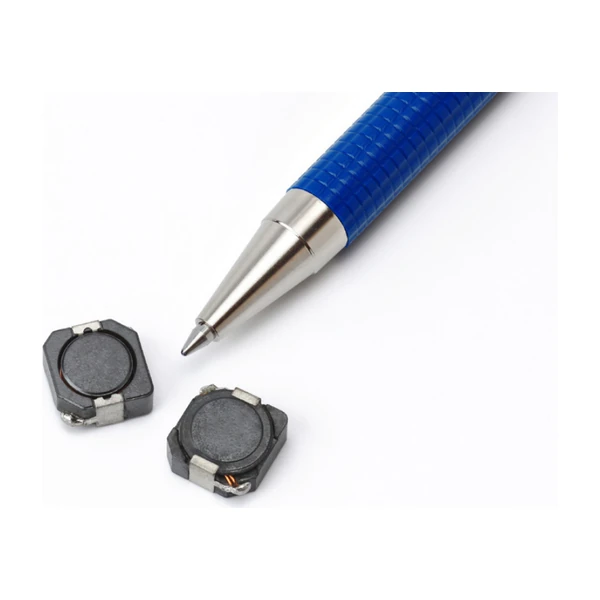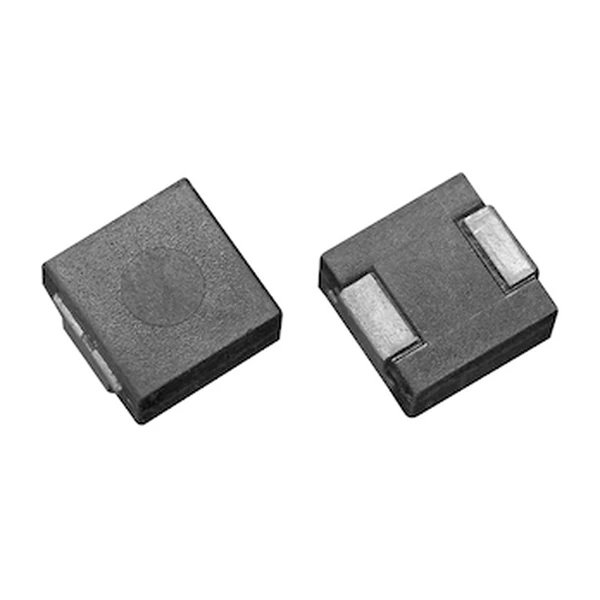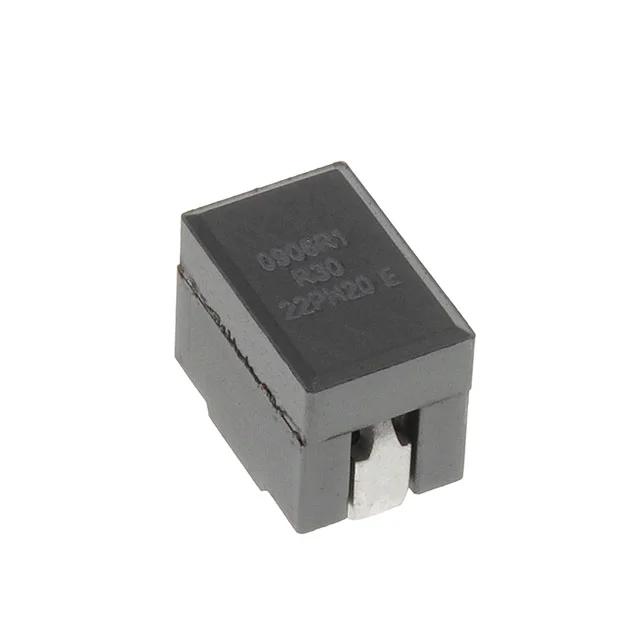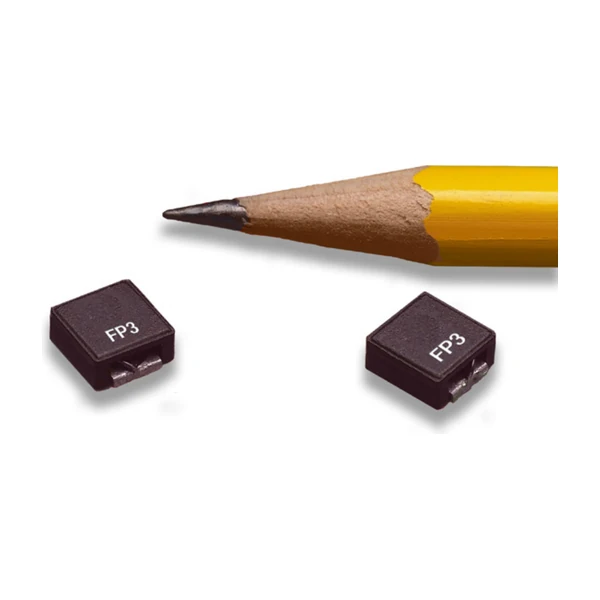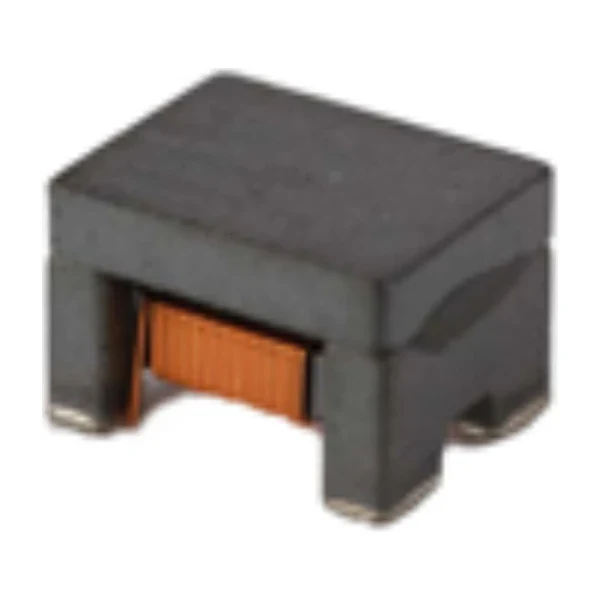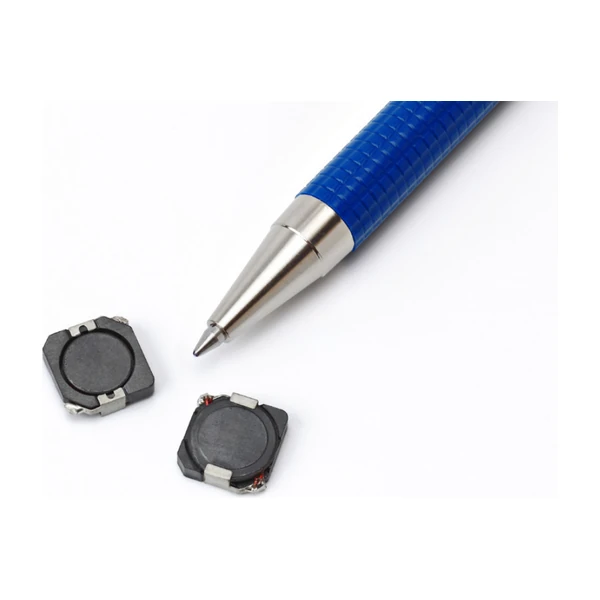
Eaton DR1030-8R2-R 8.2 uH Shielded Drum Core Inductor
- Product Details
- Download
Eaton DR1030-8R2-R 8.2 uH Shielded Drum Core Inductor
Electrical Specifications
| Parameter | Value |
|---|---|
| Orderable part number | DR1030-8R2-R |
| Rated inductance | 8.2 uH ±20% |
| Open circuit inductance (OCL) | 8.4 uH |
| Irms (40 °C rise) | 3.3 A |
| Isat | 3.54 A |
| DCR typical @ 20 °C | 28.4 mOhm |
| DCR maximum @ 20 °C | 34.1 mOhm |
| K-factor (Bp-p = K x L x dI) | 8 |
| Package | 10.5 x 10.3 mm footprint, 3.0 mm height |
| Mounting | Surface mount |
| Operating temperature | -40 °C to +125 °C |
| Qualification | Commercial grade |
| RoHS | Compliant (-R suffix) |
How to Read These Ratings
A drum core inductor is a coil wound on a bobbin inside a ferrite pot, and the pot is what makes it usable on a switching board: the field stays inside the core instead of spraying across the PCB. That shielding is the difference between a rail that passes emissions and one that needs another filter stage.
At 28.4 mOhm this is a part where the winding, not the core, decides the temperature rise. The data sheet quotes the typical and the maximum separately for a reason: build your budget on the maximum.
Isat is the peak current for approximately 35% rolloff at +25 °C. In a buck converter the inductor current peaks at the top of the ripple, so the peak - not the average - is the number that has to stay below Isat with margin for the transient.
What This Family Is For
The DR1030 is the low-profile member of the 10.5 x 10.3 mm DR family. Eaton builds the same 10.5 x 10.3 footprint in three heights - 3.0, 4.0 and 5.0 mm - and the height is what you trade for current. The 3.0 mm part fits under a shield can or into a slim chassis; for the same inductance the taller versions will carry more current.
- Typical applications: LED/LCD backlighting, HDTV, server and desktop power supplies, notebook regulators, graphics cards, point-of-load modules.
- At 3.0 mm this is the thermally tightest of the three heights - check the self-heating at the current you actually need before banking on the headline Irms figure.
- Data sheet 4132.
Sizing and Layout Notes
8.2 uH sits in the middle of the range, and the trade at that point is explicit: 28.4 mOhm of DCR against 3.54 A of saturation headroom.
Efficiency is set by where you sit on the loss curve, and the curve moves with switching frequency. A part that is excellent at 300 kHz can be mediocre at 1 MHz with the same current, because the core loss term takes over.
Frequently Asked Questions
How is it mounted?
Surface mount, reflow compatible and J-STD-020 compliant. The pad layout on the data sheet is the one the ratings were measured on.
Is Isat a thermal limit?
No. Isat is where the core starts to saturate and the inductance falls by the stated percentage. Temperature is governed by Irms and the board, separately.
Is the "-R" suffix important?
Yes - it denotes the RoHS-compliant build. The same inductance without it is a different ordering code.
Design note: use the maximum DCR for the loss budget, keep the peak current below Isat with margin for the transient, and remember the 40 °C rise assumes free air on the recommended pad.
Mechanical Dimensions

Dimensional drawing and recommended PCB pad layout from the Eaton data sheet. Tolerances and pad dimensions are as printed on the drawing; check the outline against your layout before release.
Shenzhen Gaorunxin Technology Co., Ltd
Online message
Shenzhen Gaorunxin Technology Co., Ltd