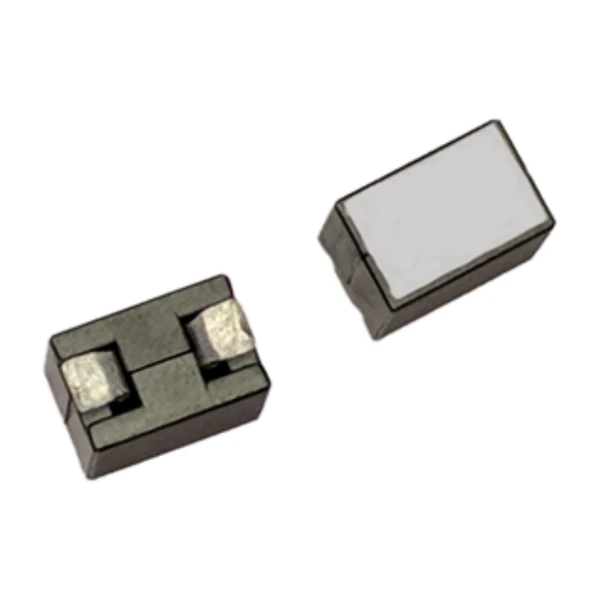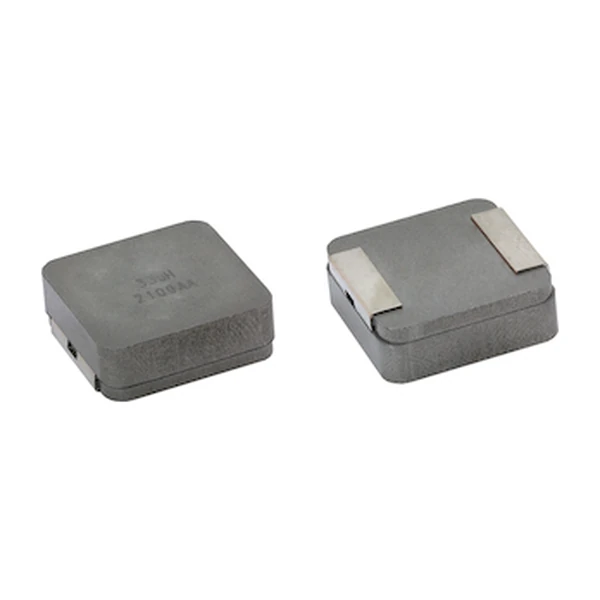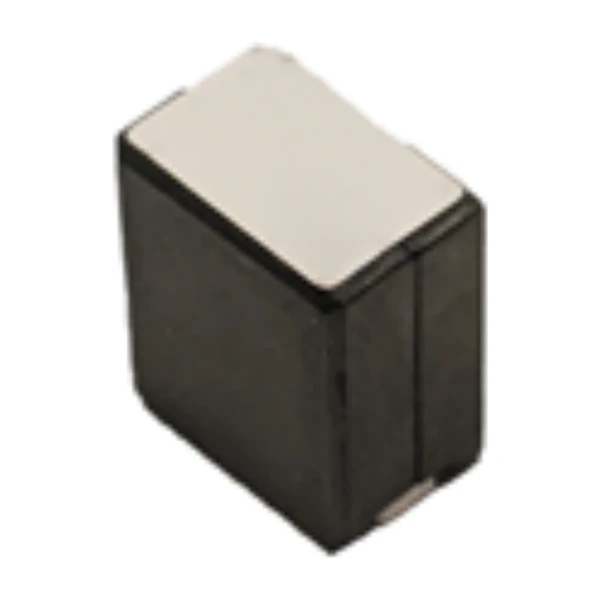
Eaton DR1050-181-R - 180 uH 1.18 A Shielded Inductor
- Product Details
- Download
Eaton DR1050-181-R - 180 uH 1.18 A Shielded Inductor
Ratings at a Glance
| Parameter | Value |
|---|---|
| Orderable part number | DR1050-181-R |
| Rated inductance | 180 uH ±20% |
| Open circuit inductance (OCL) | 184 uH |
| Irms (40 °C rise) | 1.18 A |
| Isat | 1.08 A |
| DCR typical @ 20 °C | 273 mOhm |
| DCR maximum @ 20 °C | 341 mOhm |
| K-factor (Bp-p = K x L x dI) | 1.26 |
| Package | 10.5 x 10.3 mm footprint, 5.0 mm height |
| Mounting | Surface mount |
| Operating temperature | -40 °C to +125 °C |
| Qualification | Commercial grade |
| RoHS | Compliant (-R suffix) |
The Figures Explained
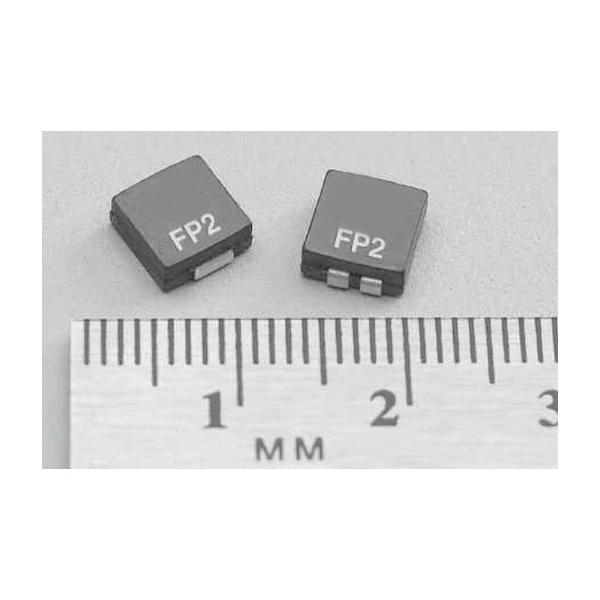
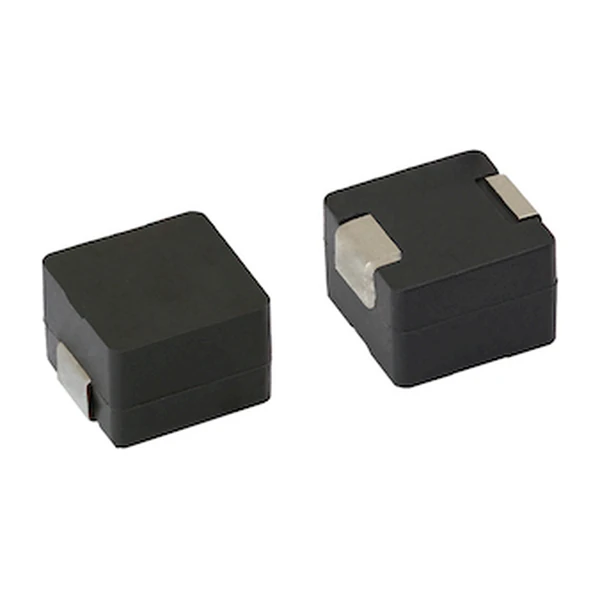
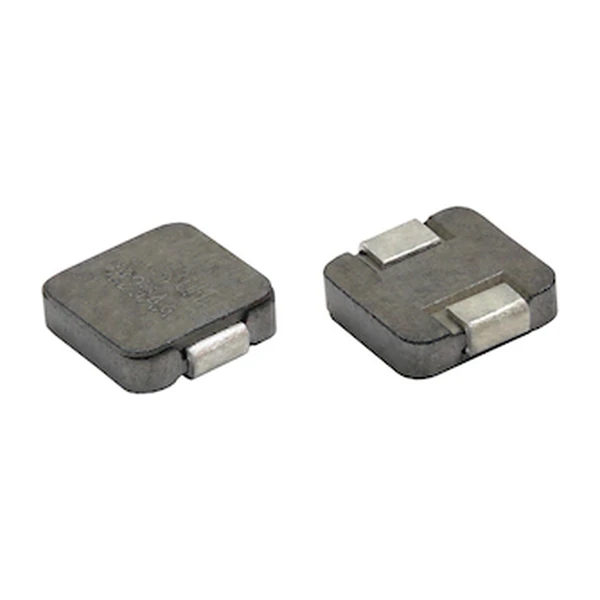
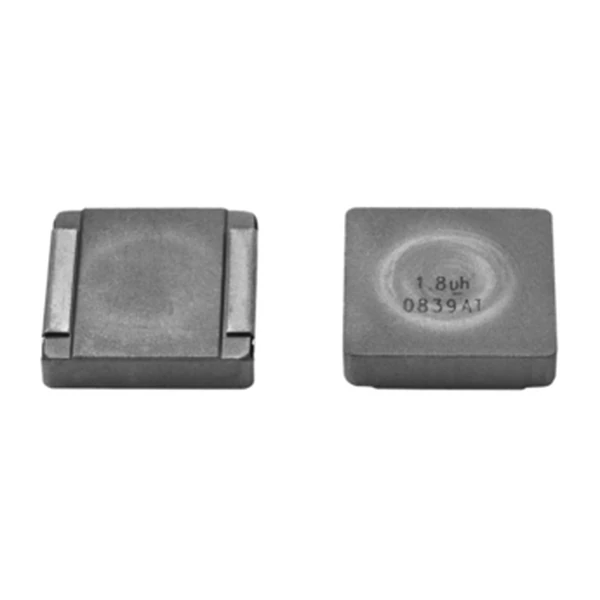
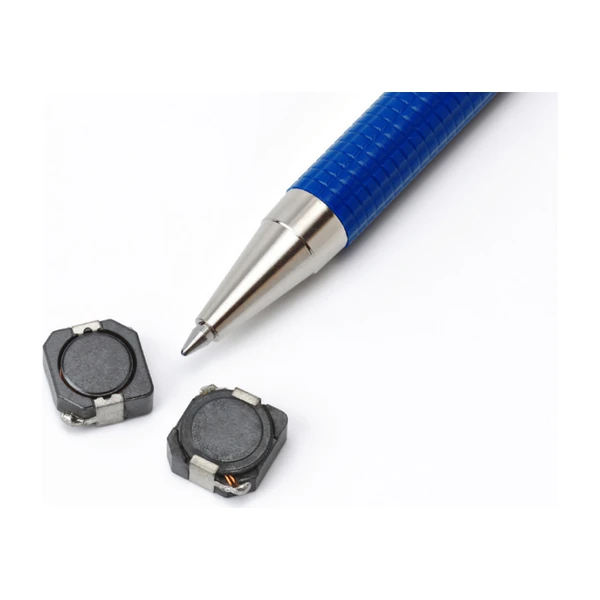
The drum core is the workhorse of DC-DC magnetics. It is cheap to build, it saturates in a predictable way, and with a ferrite shield over the winding it can be placed within a few millimetres of an IC without the field coupling into the die.
Copper loss grows with the square of the current, so 273 mOhm matters most at full load. At half the rated current the winding loss drops to a quarter - which is why the part looks oversized for a light-load profile.
Saturation degrades with temperature on ferrite. Isat is the peak current for approximately 35% rolloff at +25 °C, and the hot value is the one that matters under a hood or inside a sealed enclosure.
What This Family Is For
The DR1050 is the tallest of the 10.5 x 10.3 mm family, and the one that reaches 1000 uH. Where the 3.0 mm part runs out of copper, the 5.0 mm body keeps the winding cool enough to hold its rating.
- Typical applications: Server and desktop power supplies, LED/LCD backlighting, graphics cards, point-of-load modules, printers and peripherals.
- The extra height buys current, not saturation - check Isat separately, because a taller core does not automatically mean a higher flux limit.
- Data sheet 4139.
Sizing It Into a Design
At 180 uH this part is in the middle of the family. The winding that produces that inductance is also what sets the 273 mOhm DCR - more turns, thinner wire, more resistance.
The loss budget is the whole story with a power inductor: core loss grows with frequency and flux swing, copper loss grows with current, and the two meet at a different point for every inductance in the series.
Frequently Asked Questions
Is the "-R" suffix important?
Yes - it denotes the RoHS-compliant build. The same inductance without it is a different ordering code.
What is the difference between OCL and rated inductance?
OCL is measured at zero DC bias. The rated inductance is the value the part still has at its rated current, and that is what the ripple calculation needs.
What is the difference between OCL and rated inductance?
OCL is measured at zero DC bias. The rated inductance is the value the part still has at its rated current, and that is what the ripple calculation needs.
Design note: use the maximum DCR for the loss budget, keep the peak current below Isat with margin for the transient, and remember the 40 °C rise assumes free air on the recommended pad.
Mechanical Dimensions

Dimensional drawing and recommended PCB pad layout from the Eaton data sheet. Tolerances and pad dimensions are as printed on the drawing; check the outline against your layout before release.
Shenzhen Gaorunxin Technology Co., Ltd
Online message
Shenzhen Gaorunxin Technology Co., Ltd