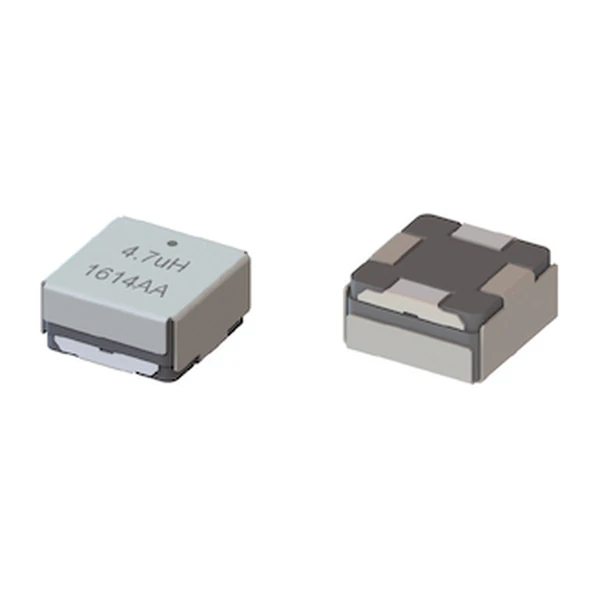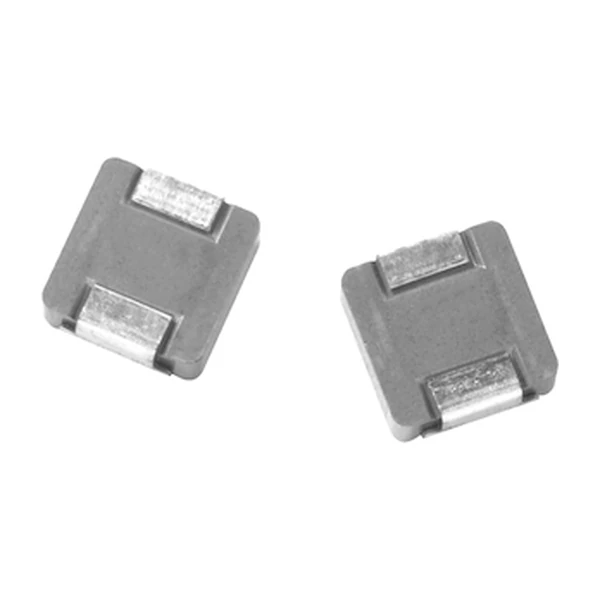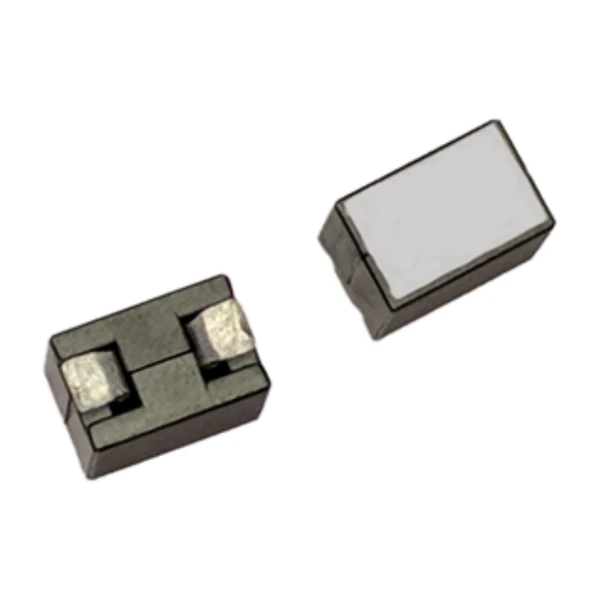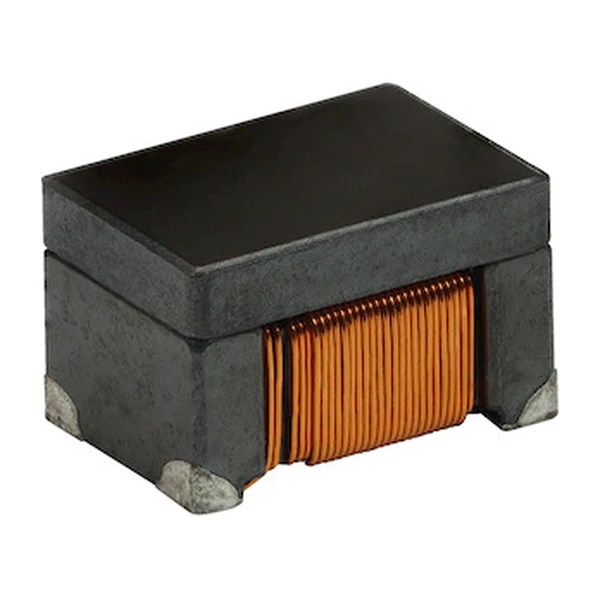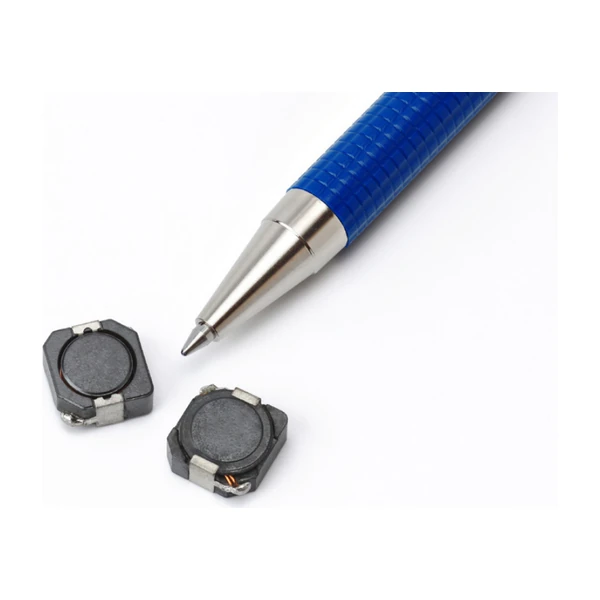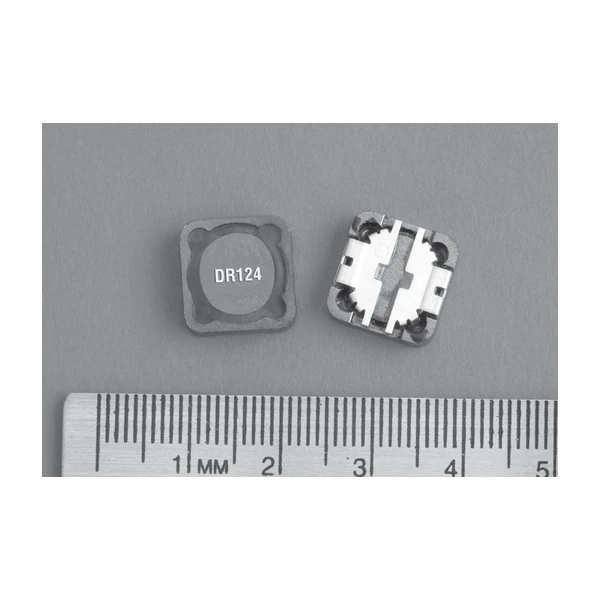
Eaton DR124-120-R 4.96 A Saturation Shielded Inductor 12 uH
- Product Details
- Download
Eaton DR124-120-R 4.96 A Saturation Shielded Inductor 12 uH
Ratings at a Glance
| Parameter | Value |
|---|---|
| Orderable part number | DR124-120-R |
| Rated inductance | 12 uH ±20% |
| Open circuit inductance (OCL) | 11.5 uH |
| Irms (40 °C rise) | 4.1 A |
| Isat | 4.96 A |
| DCR typical @ 20 °C | 31.7 mOhm |
| DCR maximum @ 20 °C | 38 mOhm |
| K-factor (Bp-p = K x L x dI) | 3.5 |
| Package | 12.5 x 12.5 x 4.5 mm |
| Mounting | Surface mount |
| Operating temperature | -40 °C to +125 °C |
| Qualification | Commercial grade |
| RoHS | Compliant (-R suffix) |
What the Numbers Mean
A drum core inductor is a coil wound on a bobbin inside a ferrite pot, and the pot is what makes it usable on a switching board: the field stays inside the core instead of spraying across the PCB. That shielding is the difference between a rail that passes emissions and one that needs another filter stage.
DCR 31.7 mOhm is the conduction loss: at the rated current it dissipates about 0.53 W, and that heat has to leave through the terminals and the board.
Isat is the peak current for approximately 25% rolloff at +25 °C. In a buck converter the inductor current peaks at the top of the ripple, so the peak - not the average - is the number that has to stay below Isat with margin for the transient.
What This Family Is For
The DR124 is the 4.5 mm low-profile member of the 12.5 mm DR family: 0.47 uH to 1000 uH in a body that stays under 5 mm, with current up to 24.4 A. It is the part you reach for when the board is thin but the rail is not small.
- Typical applications: Notebook power, LCD panels, desktop and servers, DVD players, DC-DC converters, buck/boost/forward/resonant topologies, noise filtering.
- Frequency range is quoted to 1 MHz - above that the core loss climbs faster than the ripple benefit, and the DCR is no longer the dominant term.
- Data sheet 4141.
Sizing and Layout Notes
Choose 12 uH when the ripple target is in the middle of the design window: the DCR stays at 31.7 mOhm and the saturation limit at 4.96 A leaves the transient room it needs.
Efficiency is set by where you sit on the loss curve, and the curve moves with switching frequency. A part that is excellent at 300 kHz can be mediocre at 1 MHz with the same current, because the core loss term takes over.
Frequently Asked Questions
What is the difference between OCL and rated inductance?
OCL is measured at zero DC bias. The rated inductance is the value the part still has at its rated current, and that is what the ripple calculation needs.
Can I run it above the rated current?
Briefly, if the peak stays below Isat and the average heating stays within the temperature rise the board can actually remove. There is no built-in protection.
Can I run it above the rated current?
Briefly, if the peak stays below Isat and the average heating stays within the temperature rise the board can actually remove. There is no built-in protection.
Design note: use the maximum DCR for the loss budget, keep the peak current below Isat with margin for the transient, and remember the 40 °C rise assumes free air on the recommended pad.
Mechanical Dimensions

Dimensional drawing and recommended PCB pad layout from the Eaton data sheet. Tolerances and pad dimensions are as printed on the drawing; check the outline against your layout before release.
Shenzhen Gaorunxin Technology Co., Ltd
Online message
Shenzhen Gaorunxin Technology Co., Ltd