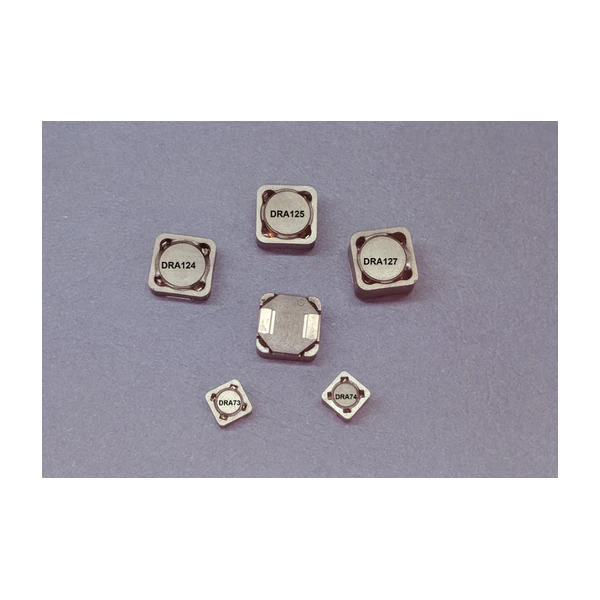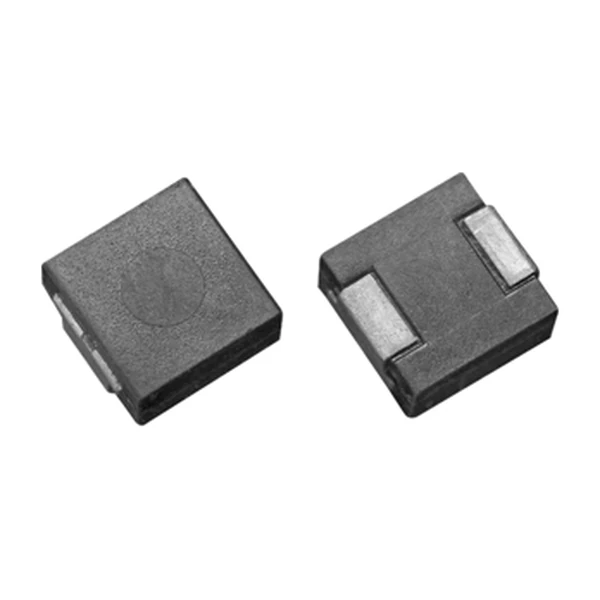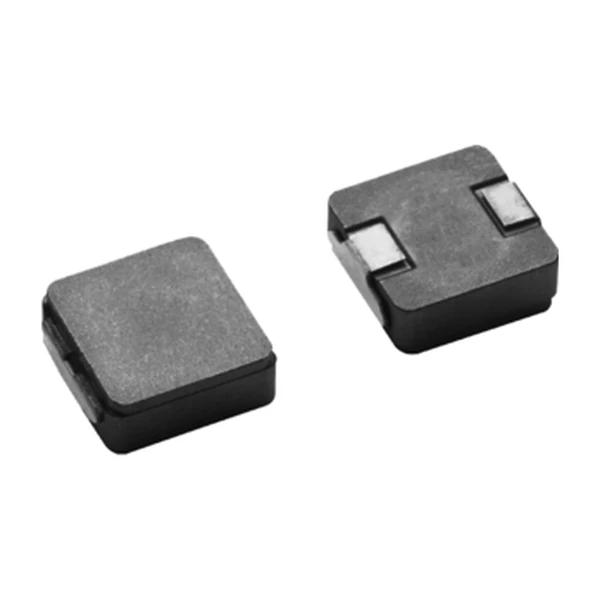
Eaton DR74-150-R Shielded Drum Core, 15 uH uH 63.7 mOhm
- Product Details
- Download
Eaton DR74-150-R Shielded Drum Core, 15 uH uH 63.7 mOhm
Ratings at a Glance
| Parameter | Value |
|---|---|
| Orderable part number | DR74-150-R |
| Rated inductance | 15 uH ±20% |
| Open circuit inductance (OCL) | 16.1 uH |
| Irms (40 °C rise) | 2.11 A |
| Isat | 2.48 A |
| DCR typical @ 20 °C | 63.7 mOhm |
| Volt-microsecond rating | 12.7 V-us |
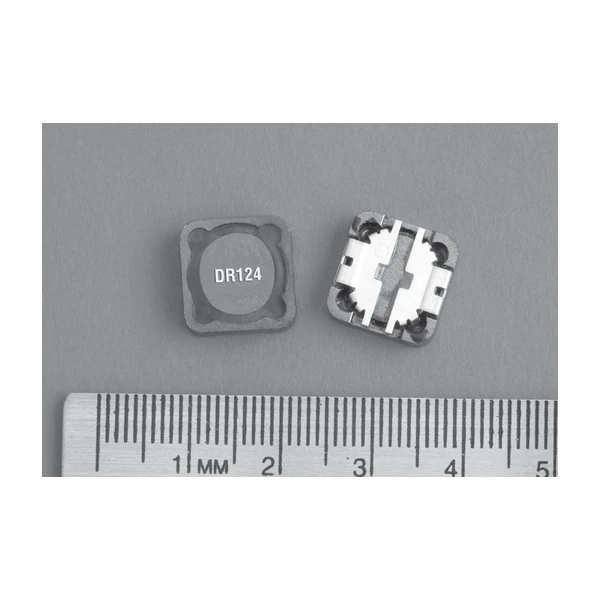
| Package | 7.6 x 7.6 mm footprint, 4.35 mm max height |
| Mounting | Surface mount |
| Operating temperature | -40 °C to +125 °C |
| Qualification | Commercial grade |
| RoHS | Compliant (-R suffix) |
How to Read These Ratings
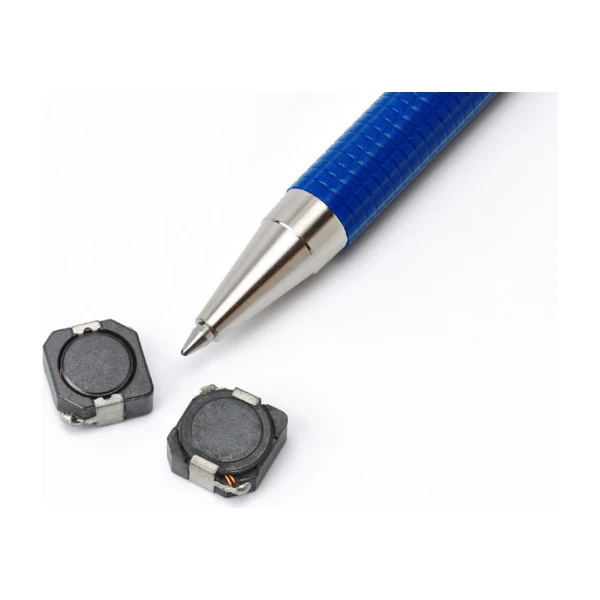
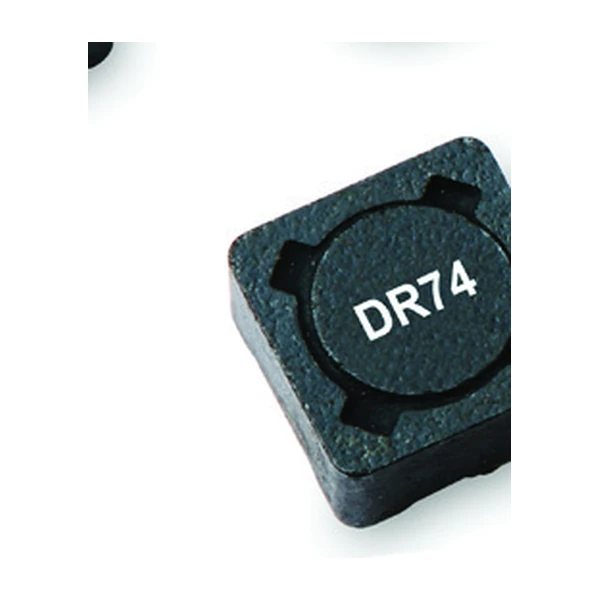
This is a surface-mount drum core with a ferrite shield. The winding sits in a pot core so the flux path closes through ferrite rather than through air, which raises the inductance for a given winding and keeps the radiated field small enough to sit next to a sensitive node.
Copper loss grows with the square of the current, so 63.7 mOhm matters most at full load. At half the rated current the winding loss drops to a quarter - which is why the part looks oversized for a light-load profile.
Saturation degrades with temperature on ferrite. Isat is the peak current for approximately 30% rolloff at +20 °C, and the hot value is the one that matters under a hood or inside a sealed enclosure.
Positioning in the Range
DR74 uses the same 7.6 x 7.6 mm pad as DR73 but stands 4.35 mm tall instead of 3.55 mm. The extra height is what allows the higher current ratings in this size class without changing the land pattern.
- Typical applications: Desktop and servers, DVD and media players, portable devices, LCD panels, DC-DC converters, buck and boost stages.
- Because the footprint matches DR73, a current upgrade can be a straight swap - verify the clearance above the part before you commit to the taller body.
- Data sheet 4315.
Sizing and Layout Notes
Choose 15 uH when the ripple target is in the middle of the design window: the DCR stays at 63.7 mOhm and the saturation limit at 2.48 A leaves the transient room it needs.
The loss budget is the whole story with a power inductor: core loss grows with frequency and flux swing, copper loss grows with current, and the two meet at a different point for every inductance in the series.
Frequently Asked Questions
What is the difference between OCL and rated inductance?
OCL is measured at zero DC bias. The rated inductance is the value the part still has at its rated current, and that is what the ripple calculation needs.
What is the difference between OCL and rated inductance?
OCL is measured at zero DC bias. The rated inductance is the value the part still has at its rated current, and that is what the ripple calculation needs.
What is the difference between OCL and rated inductance?
OCL is measured at zero DC bias. The rated inductance is the value the part still has at its rated current, and that is what the ripple calculation needs.
Design note: use the maximum DCR for the loss budget, keep the peak current below Isat with margin for the transient, and remember the 40 °C rise assumes free air on the recommended pad.
Mechanical Dimensions

Dimensional drawing and recommended PCB pad layout from the Eaton data sheet. Tolerances and pad dimensions are as printed on the drawing; check the outline against your layout before release.
Shenzhen Gaorunxin Technology Co., Ltd
Online message
Shenzhen Gaorunxin Technology Co., Ltd