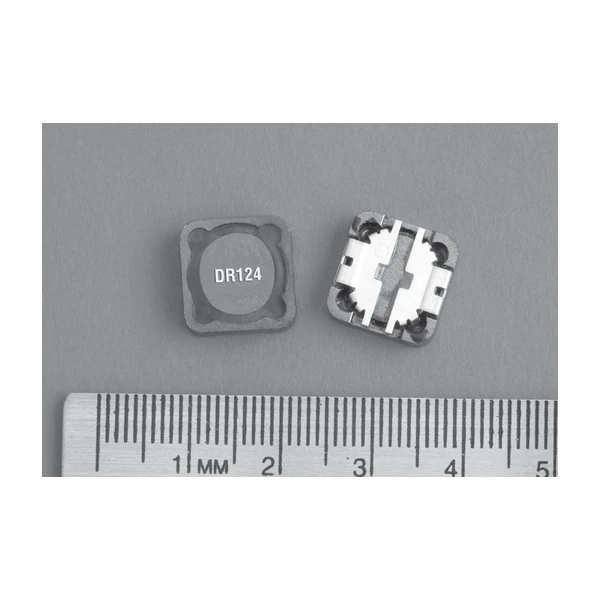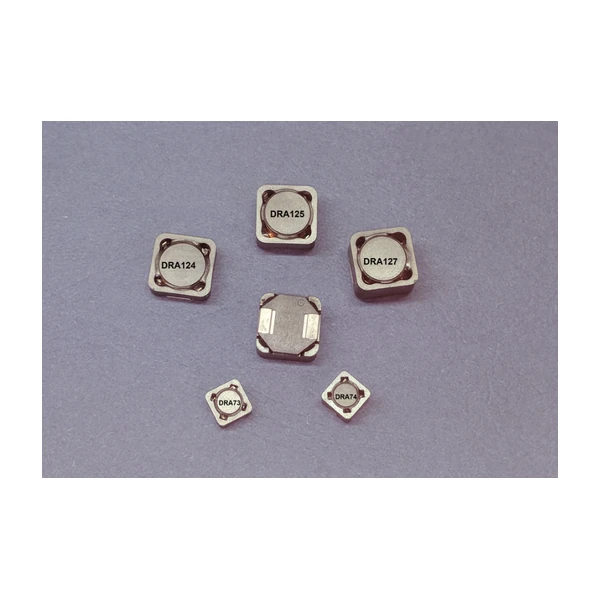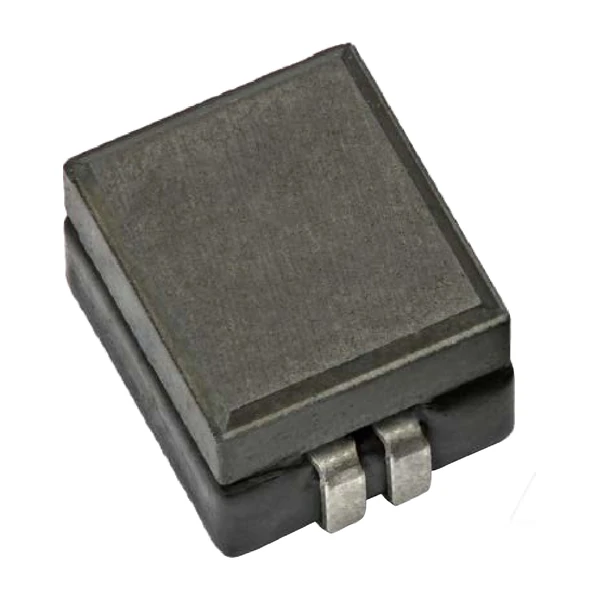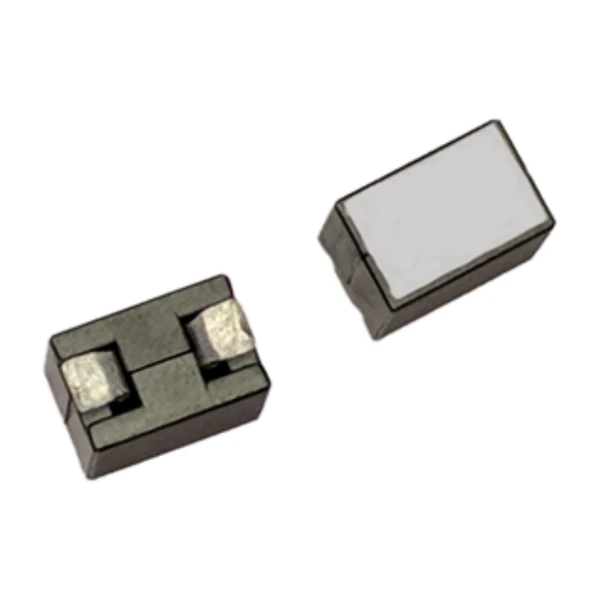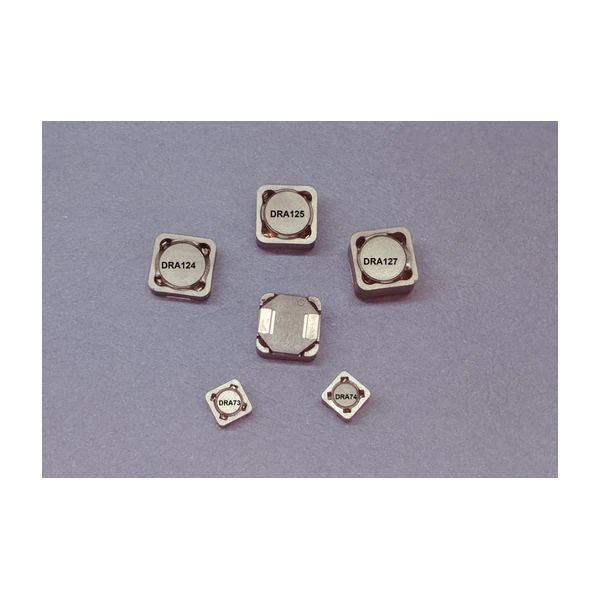
Eaton DRA124-100-R Automotive Shielded Inductor 6.16 A
- Product Details
- Download
Eaton DRA124-100-R Automotive Shielded Inductor 6.16 A
Electrical Specifications
| Parameter | Value |
|---|---|
| Orderable part number | DRA124-100-R |
| Rated inductance | 10 uH ±20% |
| Open circuit inductance (OCL) | 10.4 uH |
| Irms (40 °C rise) | 3.67 A |
| Isat1 (30% rolloff @ +25 °C) | 6.16 A |
| Isat2 (40% rolloff @ +125 °C) | 4.93 A |
| DCR typical @ 20 °C | 31 mOhm |
| DCR maximum @ 20 °C | 38 mOhm |
| K-factor (Bp-p = K x L x dI) | 39.4 |
| Package | 12.5 x 12.5 mm footprint |
| Mounting | Surface mount |
| Operating temperature | -40 °C to +165 °C |
| Qualification | AEC-Q200 |
| RoHS | Compliant (-R suffix) |
How to Read These Ratings
AEC-Q200 is the entry ticket, not the destination. This part is qualified to the automotive standard and rated to 165 °C ambient plus self-heating, in a shielded drum core built to survive shock and vibration rather than a laboratory bench.
Thermal margin in a module is not the same as thermal margin on a bench. The ratings assume a mounting condition; the enclosure, the potting and the neighbouring components change it.
Isat1 is the 30% rolloff point at +25 °C, Isat2 the 40% rolloff at +125 °C. In a buck converter the inductor current peaks at the top of the ripple, so the peak - not the average - is the number that has to stay below Isat with margin for the transient.
Series Positioning
DRA124 is the low-profile 12.5 mm AEC-Q200 part. It brings the current capability of the large size into a body that still fits under a module cover.
- Typical applications: Automotive body electronics, LED lighting, ADAS, infotainment, DC-DC modules.
- AEC-Q200 covers the qualification, not the application: the vibration and thermal profile of the actual mounting point still decides the service life.
- Data sheet 4319.
Putting It to Work
At 10 uH this part is in the middle of the family. The winding that produces that inductance is also what sets the 31 mOhm DCR - more turns, thinner wire, more resistance.
Thermal design is not optional here. The rated current assumes a 40 °C rise with the part in free air on a stated pad; inside a closed box, on a thin board, next to a hot IC, that assumption is gone.
Frequently Asked Questions
Why are there two Isat values?
The first is the 30% roll-off point at +25 °C, the second is the 40% roll-off at +125 °C. Hot ferrite saturates earlier, so the second number is the one to use at temperature.
What is the operating temperature?
-40 °C to +165 °C, ambient plus self-temperature rise. That covers under-hood modules with margin for the rise.
Can I use it in a non-automotive design?
Yes, and people do when they need the vibration and temperature headroom. You pay for the qualification you may not need.
Design note: the 165 °C rating is ambient plus self-heating. Close the loss budget at the hot corner, with the maximum DCR and the hot Isat figure.
Mechanical Dimensions

Dimensional drawing and recommended PCB pad layout from the Eaton data sheet. Tolerances and pad dimensions are as printed on the drawing; check the outline against your layout before release.
Shenzhen Gaorunxin Technology Co., Ltd
Online message
Shenzhen Gaorunxin Technology Co., Ltd