Eaton DRA125-151-R AEC-Q200 Shielded Inductor, 150 uH
- Product Details
- Download
Eaton DRA125-151-R AEC-Q200 Shielded Inductor, 150 uH
Ratings at a Glance
| Parameter | Value |
|---|---|
| Orderable part number | DRA125-151-R |
| Rated inductance | 150 uH ±20% |
| Open circuit inductance (OCL) | 150 uH |
| Irms (40 °C rise) | 1.41 A |
| Isat1 (30% rolloff @ +25 °C) | 1.79 A |
| Isat2 (40% rolloff @ +125 °C) | 1.43 A |
| DCR typical @ 20 °C | 273 mOhm |
| DCR maximum @ 20 °C | 330 mOhm |
| K-factor (Bp-p = K x L x dI) | 9.5 |
| Package | 12.5 x 12.5 mm footprint |
| Mounting | Surface mount |
| Operating temperature | -40 °C to +165 °C |
| Qualification | AEC-Q200 |
| RoHS | Compliant (-R suffix) |
Reading the Data Sheet
Under-hood and in-module electronics see temperature cycling, vibration and long service life. The DRA/DRAP/DRAQ parts are built for that: AEC-Q200, wider temperature range, and mechanical features that keep the part attached.
At 165 °C the copper resistivity is about 60% higher than at 20 °C, so the DCR in the table is optimistic at the hot corner - budget the loss accordingly.
Saturation degrades with temperature on ferrite. Isat1 is the 30% rolloff point at +25 °C, Isat2 the 40% rolloff at +125 °C, and the hot value is the one that matters under a hood or inside a sealed enclosure.
Series Positioning
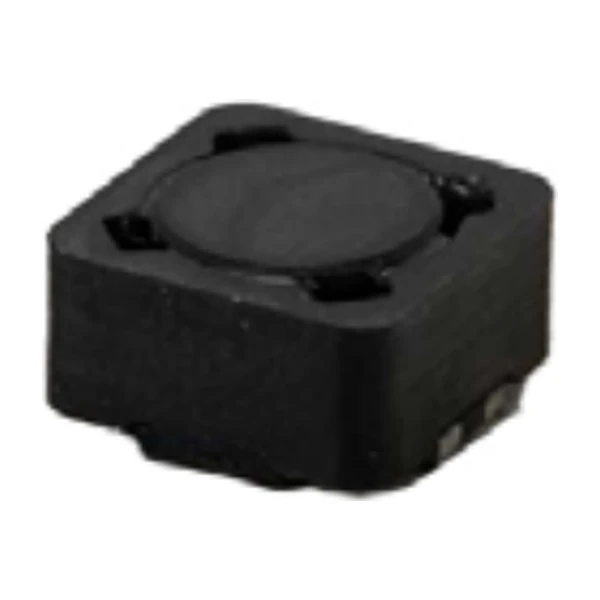
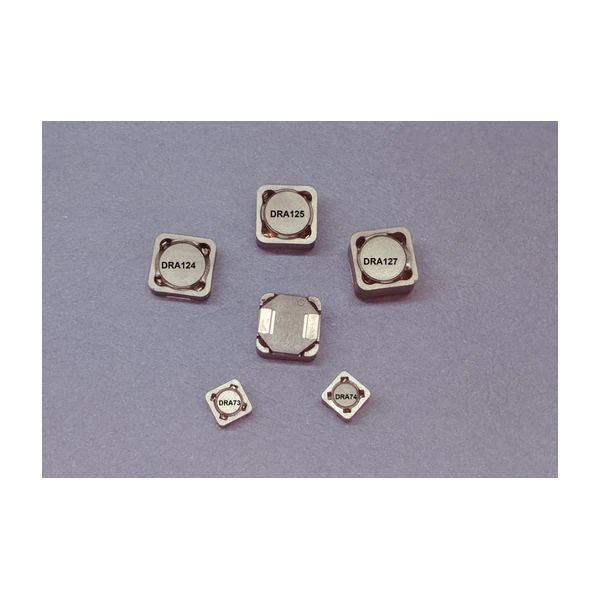
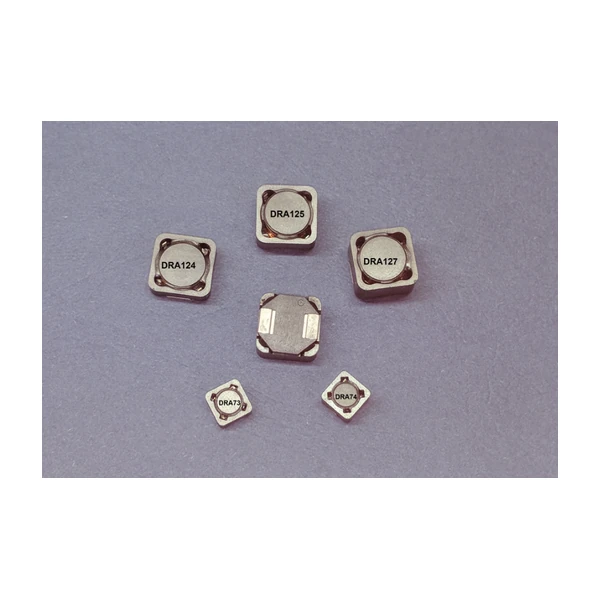
DRA125 is the 12.5 mm AEC-Q200 part at mid height - more current than DRA124, same footprint, so an upgrade does not force a board respin.
- Typical applications: Automotive DC-DC converters, body control modules, LED lighting, ADAS, infotainment supplies.
- Shielding matters in a module full of radios and sensors: the closed drum keeps the field in, but the layout still has to keep the hot loop small.
- Data sheet 4319.
Putting It to Work
150 uH sits in the middle of the range, and the trade at that point is explicit: 273 mOhm of DCR against 1.79 A of saturation headroom.
Thermal design is not optional here. The rated current assumes a 40 °C rise with the part in free air on a stated pad; inside a closed box, on a thin board, next to a hot IC, that assumption is gone.
Frequently Asked Questions
Can I use it in a non-automotive design?
Yes, and people do when they need the vibration and temperature headroom. You pay for the qualification you may not need.
Can I use it in a non-automotive design?
Yes, and people do when they need the vibration and temperature headroom. You pay for the qualification you may not need.
How does it differ from the commercial DR part of the same size?
The electrical shape is similar, the qualification, the temperature range and often the terminal construction are not. Do not assume drop-in equivalence.
Design note: the 165 °C rating is ambient plus self-heating. Close the loss budget at the hot corner, with the maximum DCR and the hot Isat figure.
Mechanical Dimensions

Dimensional drawing and recommended PCB pad layout from the Eaton data sheet. Tolerances and pad dimensions are as printed on the drawing; check the outline against your layout before release.
Shenzhen Gaorunxin Technology Co., Ltd
Online message
Shenzhen Gaorunxin Technology Co., Ltd