Eaton DRA73-471-R Automotive Drum Core Inductor 470 uH
- Product Details
- Download
Eaton DRA73-471-R Automotive Drum Core Inductor 470 uH
Key Specifications
| Parameter | Value |
|---|---|
| Orderable part number | DRA73-471-R |
| Rated inductance | 470 uH ±20% |
| Open circuit inductance (OCL) | 473 uH |
| Irms (40 °C rise) | 0.33 A |
| Isat1 (30% rolloff @ +25 °C) | 0.35 A |
| Isat2 (40% rolloff @ +125 °C) | 0.28 A |
| DCR typical @ 20 °C | 2670 mOhm |
| DCR maximum @ 20 °C | 3200 mOhm |
| K-factor (Bp-p = K x L x dI) | 15.2 |
| Package | 7.6 x 7.6 mm footprint |
| Mounting | Surface mount |
| Operating temperature | -40 °C to +165 °C |
| Qualification | AEC-Q200 |
| RoHS | Compliant (-R suffix) |
How to Read These Ratings
AEC-Q200 is the entry ticket, not the destination. This part is qualified to the automotive standard and rated to 165 °C ambient plus self-heating, in a shielded drum core built to survive shock and vibration rather than a laboratory bench.
At 165 °C the copper resistivity is about 60% higher than at 20 °C, so the DCR in the table is optimistic at the hot corner - budget the loss accordingly.
Isat1 is the 30% rolloff point at +25 °C, Isat2 the 40% rolloff at +125 °C. In a buck converter the inductor current peaks at the top of the ripple, so the peak - not the average - is the number that has to stay below Isat with margin for the transient.
Where This Series Fits
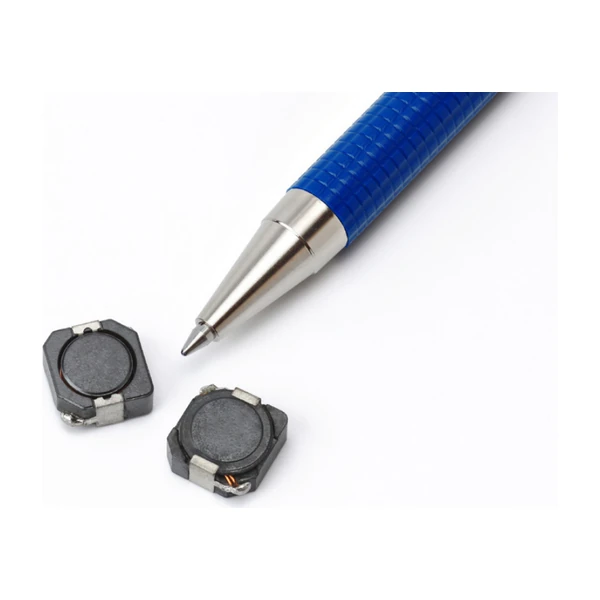
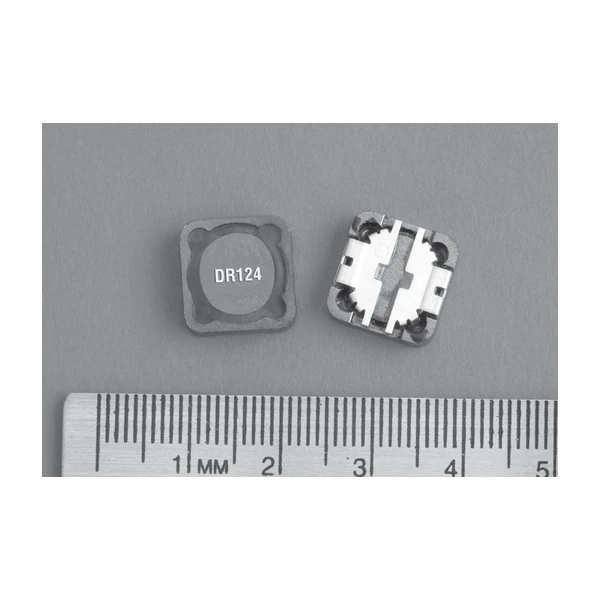
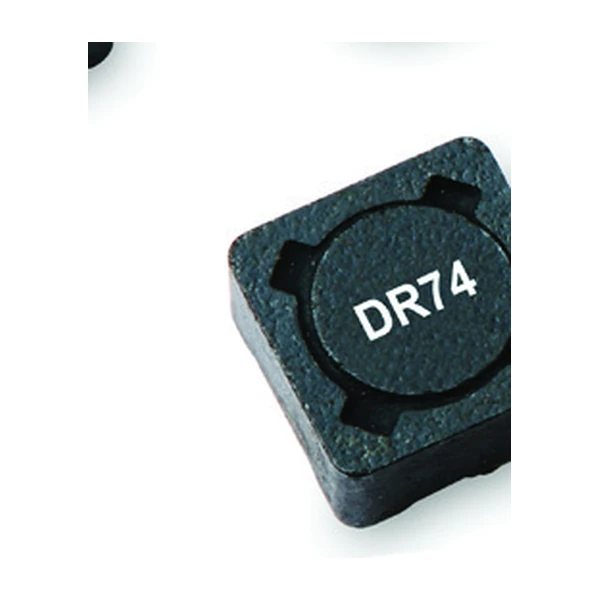
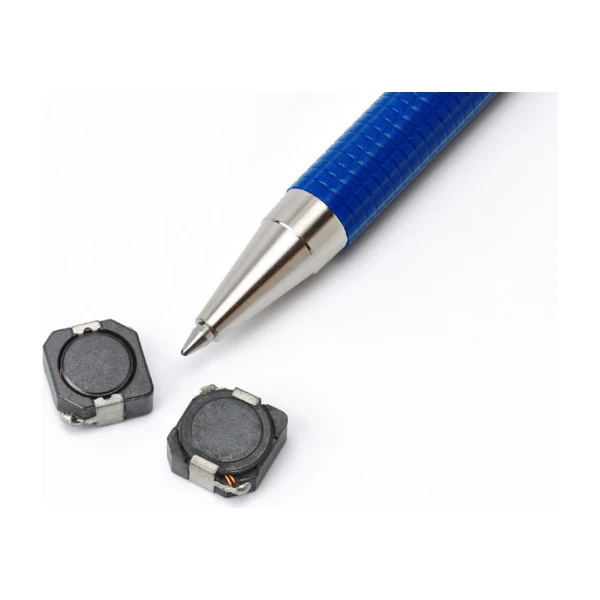
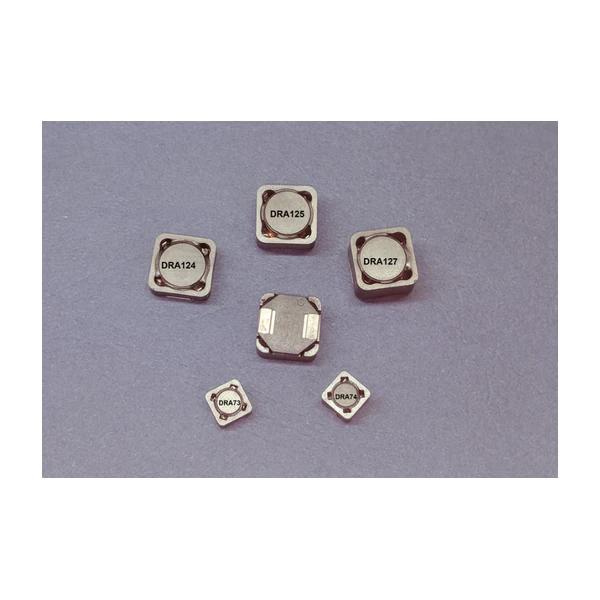
DRA73 is the smallest AEC-Q200 part in the DRA range: a 7.6 x 7.6 mm shielded drum core qualified to 165 °C ambient plus self-heating, built for shock and vibration rather than for a benign bench supply.
- Typical applications: Body electronics, LED lighting, HVAC controllers, door and seat modules, ADAS and infotainment supplies.
- The 165 °C rating covers ambient plus self-temperature rise - the loss budget still has to close at the hot corner, not at 25 °C.
- Data sheet 4319.
Design Notes
470 uH is in the middle of what this series covers. Moving up in inductance costs DCR and saturation current; moving down buys both, at the price of ripple.
Efficiency is set by where you sit on the loss curve, and the curve moves with switching frequency. A part that is excellent at 300 kHz can be mediocre at 1 MHz with the same current, because the core loss term takes over.
Frequently Asked Questions
How does it differ from the commercial DR part of the same size?
The electrical shape is similar, the qualification, the temperature range and often the terminal construction are not. Do not assume drop-in equivalence.
How does it differ from the commercial DR part of the same size?
The electrical shape is similar, the qualification, the temperature range and often the terminal construction are not. Do not assume drop-in equivalence.
How does it differ from the commercial DR part of the same size?
The electrical shape is similar, the qualification, the temperature range and often the terminal construction are not. Do not assume drop-in equivalence.
Design note: the 165 °C rating is ambient plus self-heating. Close the loss budget at the hot corner, with the maximum DCR and the hot Isat figure.
Mechanical Dimensions

Dimensional drawing and recommended PCB pad layout from the Eaton data sheet. Tolerances and pad dimensions are as printed on the drawing; check the outline against your layout before release.
Shenzhen Gaorunxin Technology Co., Ltd
Online message
Shenzhen Gaorunxin Technology Co., Ltd