Eaton ECMS1V0704-272-R Common-Mode Choke 2,700 Ohm, 1 A
- Product Details
- Download
Eaton ECMS1V0704-272-R Common-Mode Choke 2,700 Ohm, 1 A
Electrical Specifications
| Parameter | Value |
|---|---|
| Orderable part number | ECMS1V0704-272-R |
| Impedance minimum @ 100 MHz | 2,000 Ohm |
| Impedance typical @ 100 MHz | 2,700 Ohm |
| DCR maximum @ +25 °C | 63 mOhm |
| Rated current maximum | 1 A |
| Rated voltage maximum | 80 Vdc |
| Insulation resistance minimum | 10 MOhm |
| Package | 8.0 x 6.5 mm footprint, 3.8 mm height, up to 15 A |
| Mounting | Surface mount |
| Operating temperature | -40 °C to +125 °C |
| Qualification | Commercial grade |
| RoHS | Compliant (-R suffix) |
Dimensions and Pad Layout

Drawings from the Eaton data sheet: mechanical outline with rated mm dimensions, recommended PCB pad layout, and winding schematic. Tolerances and pad tolerances are stated on the drawing itself.
What the Numbers Mean
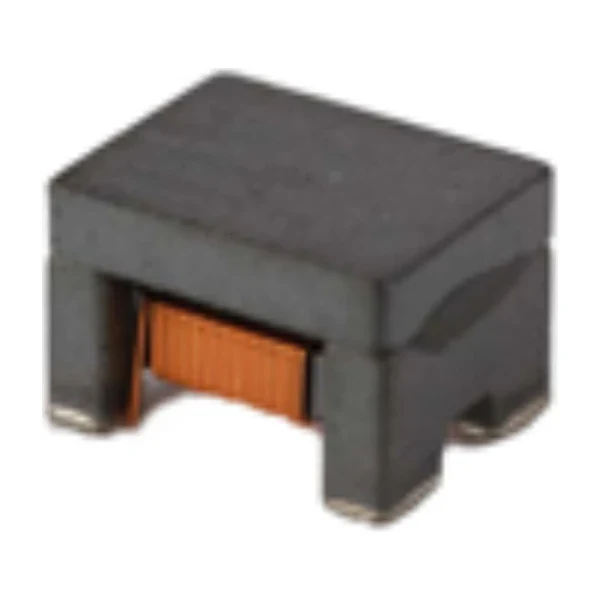
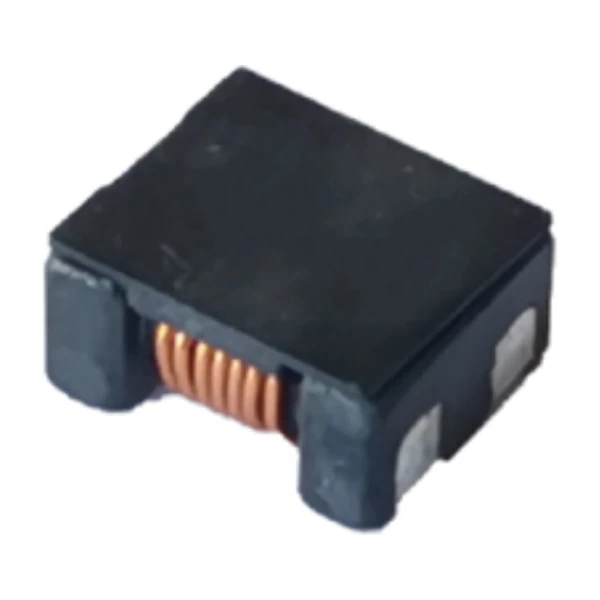
The part sits on a DC input or a power lead and does one thing: it presents a high impedance to noise travelling in the same direction on both lines, and almost none to the useful current flowing in opposite directions. The square closed core is what makes the impedance high at the frequencies that matter for conducted emissions.
Impedance is quoted at 100 MHz with the windings in parallel - the frequency band where switching harmonics actually radiate. The minimum column is the guaranteed production limit; the typical column is what most parts deliver.
The DCR sits in the power path, so every milliohm is loss on the supply lines: 63 mOhm maximum at 1 A is a deliberate trade the family makes against impedance in the same footprint.
At 63 mOhm the winding dominates the loss budget at load. The moulded construction spreads that heat into the body, but the board the part sits on still decides the actual temperature rise.
What This Family Is For
ECMS is the surface-mount common-mode family for battery-powered, renewable energy, smart meter and industrial equipment: high-frequency filtering on a closed square core, with current ratings up to 15 A across the three footprints.
- Typical applications: battery backup, renewable energy products, smart meters, LED lighting, industrial IoT, motion controls, power supplies, medical equipment.
- The rated current is a maximum for the winding; at high ambient the thermal budget, not the current column, decides the safe operating point.
- Data sheet ELX1112; footprint 8.0 x 6.5 mm footprint, 3.8 mm height, up to 15 A.
Sizing It Into a Design
Frequently Asked Questions
What does the impedance number mean?
It is the impedance the choke presents to common-mode noise at 100 MHz, measured with the windings in parallel at +25 °C. The minimum is the guaranteed value; the typical is the centre of the distribution.
Will it filter differential noise?
Only through leakage; common-mode chokes are not differential filters. Pair with an X-capacitor for differential noise.
Why is there a rated voltage for a choke?
The maximum working voltage on the lines the choke sits between. Exceeding it stresses the winding insulation.
Design note: pick the impedance from the noise band you need to attenuate, then verify the rated current covers the DC on both lines combined.
Mechanical Dimensions

Dimensional drawing and recommended PCB pad layout from the Eaton data sheet. Tolerances and pad dimensions are as printed on the drawing; check the outline against your layout before release.
Shenzhen Gaorunxin Technology Co., Ltd
Online message
Shenzhen Gaorunxin Technology Co., Ltd