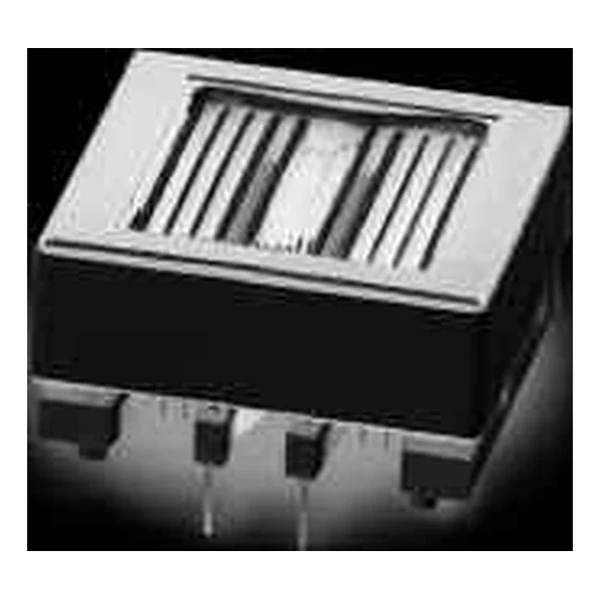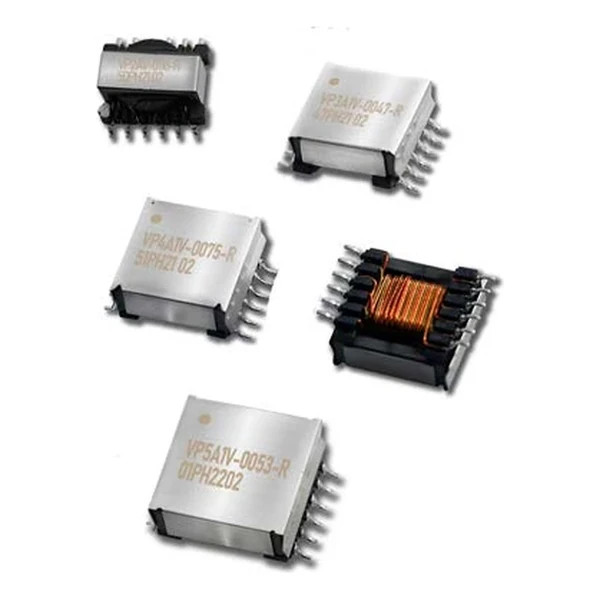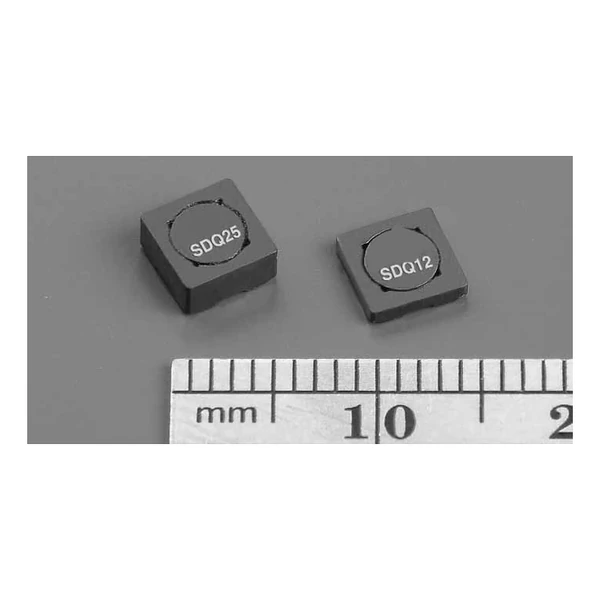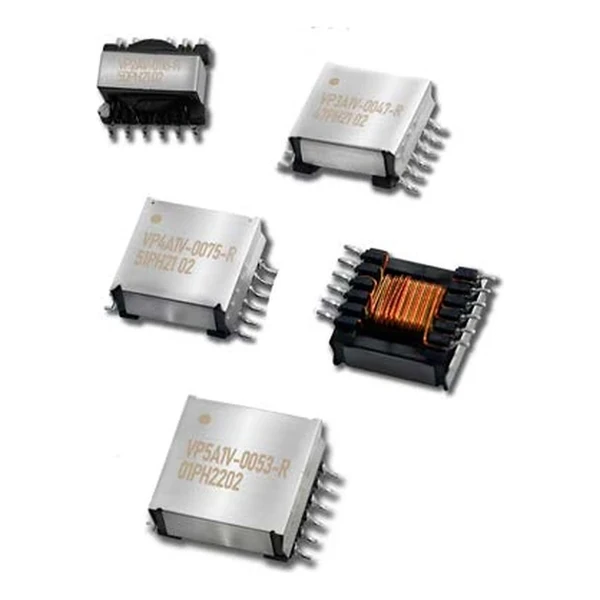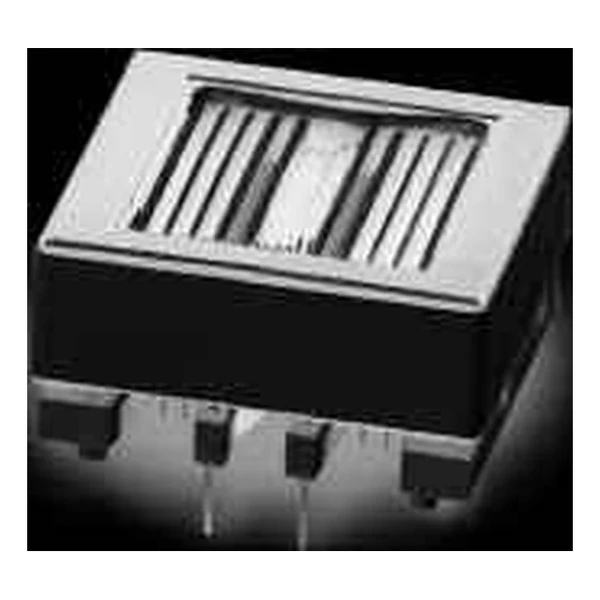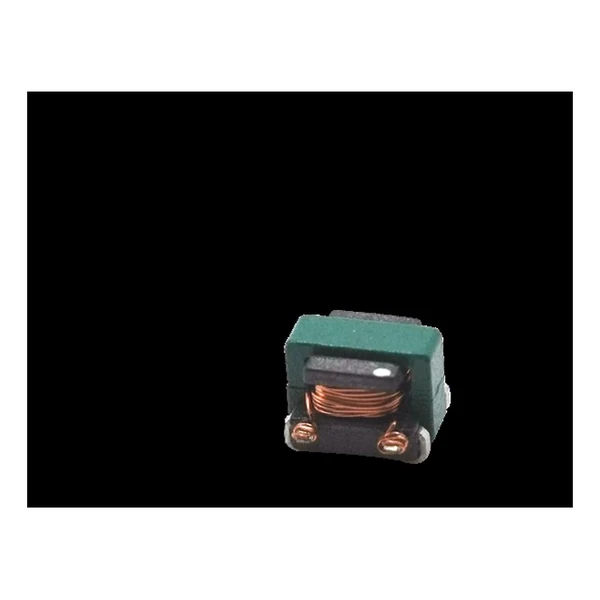
Eaton ECST1V0504-1070-R SMT Current Transformer 70:1
- Product Details
- Download
Eaton ECST1V0504-1070-R SMT Current Transformer 70:1
Electrical Specifications
| Parameter | Value |
|---|---|
| Orderable part number | ECST1V0504-1070-R |
| Turns ratio secondary:primary | 70:1 |
| Secondary inductance minimum | 400 uH |
| DCR secondary maximum | 4.6 Ohm |
| DCR primary reference | 3 mOhm |
| Hi-pot primary to secondary | 500 Vac |
| Sensed current maximum | 7 A |
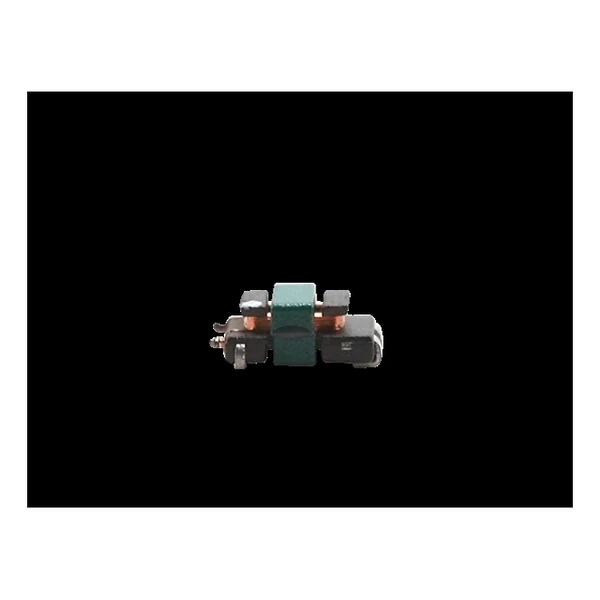
| Package | 4.8 x 3.65 x 3.55 mm |
| Mounting | Surface mount |
| Operating temperature | -40 C to +125 C |
| Qualification | Commercial grade |
| RoHS | Compliant, -R suffix |
| Data sheet | Eaton Technical Data ELX1185 |
Outline drawing, winding arrangement and recommended pad layout are on
page 2 of Eaton Technical Data ELX1185; the package line above gives the body size where
the data sheet states it.
The Figures Explained
Current sense transformers are chosen on ratio and on the volt-second capability of the secondary, because the output is a current into a burden, not a voltage source. The isolation rating between primary and secondary is what makes the part safe to use on the line side.
With a 70:1 ratio, a 10 A primary current becomes 0.143 A in the secondary. Across a 50 ohm burden that is 7.14 V, which is what the controller actually sees.
The secondary winding of 400 uH with 4600 mOhm of resistance sets both the low-frequency corner and the signal loss; both move if you change the burden resistor.
Within the ECST1V0504 family this is item 6 of 9 in the Eaton catalogue.
Where This Series Fits
The ECST and ECSTA ranges cover 7 A to 15 A of primary current in EE4.4 to EE8.3 packages, with turns ratios from 20:1 to 200:1.
- Never operate with the secondary open. Terminate into the burden resistor before applying primary current.
- Typical applications: switching power supplies; feedback control; overload sensing; load drop/shut down detection.
- Design note: the burden resistor and the secondary inductance set the bandwidth. Size the resistor first.
Frequently Asked Questions
Why must the secondary be terminated?
The part is a current source. Left open, the secondary voltage rises until the core saturates or the insulation breaks down; the burden resistor is part of the circuit, not an optional extra.
What defines the low-frequency limit?
The secondary inductance and the burden resistance form a high-pass corner. Below it the output droops, which is why the inductance is quoted at a stated test frequency.
Is the part AEC-Q200 qualified?
The ECSTA versions are; the ECST versions are the commercial equivalents with the same electrical ratings.
Shenzhen Gaorunxin Technology Co., Ltd
Online message
Shenzhen Gaorunxin Technology Co., Ltd