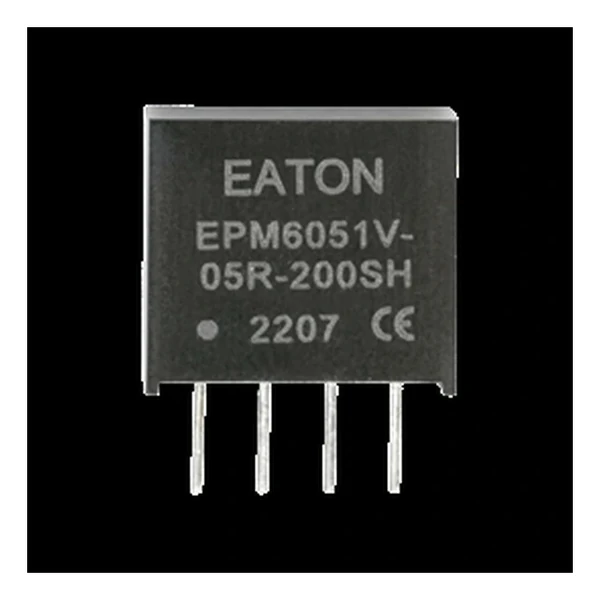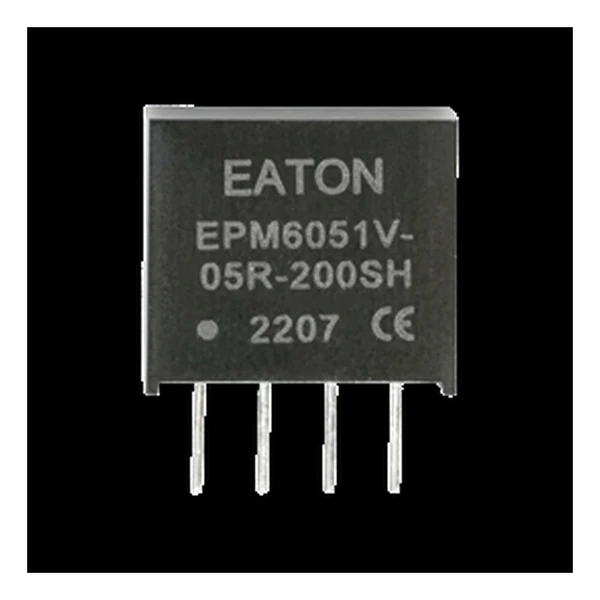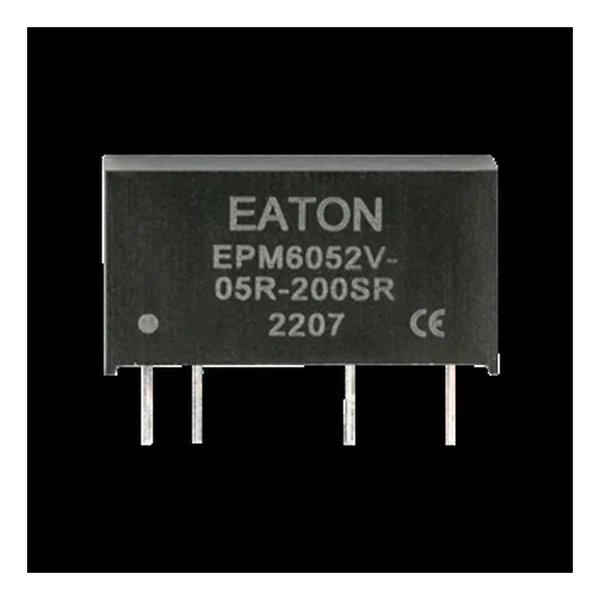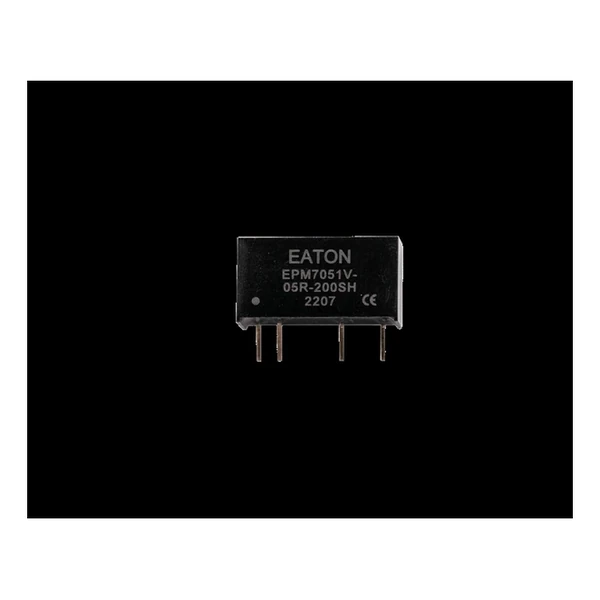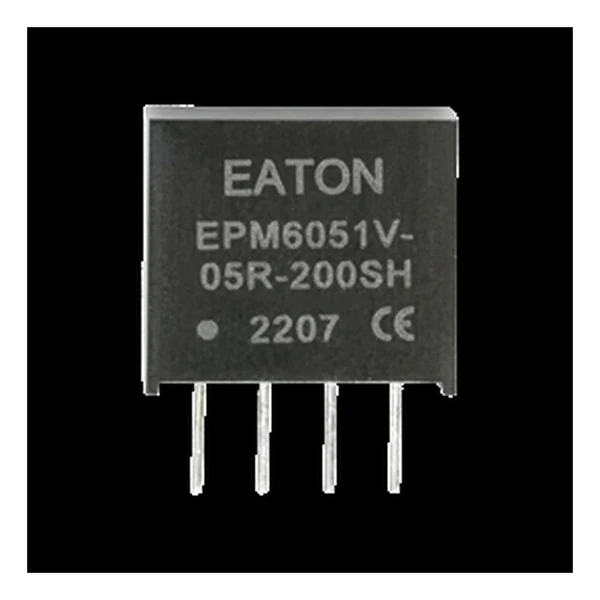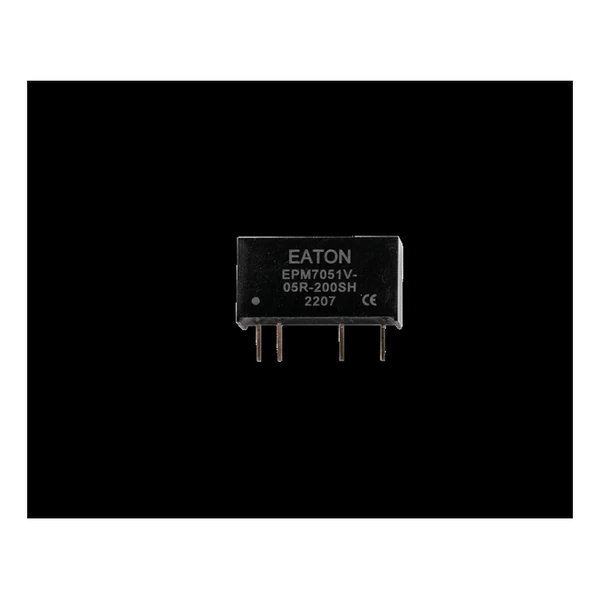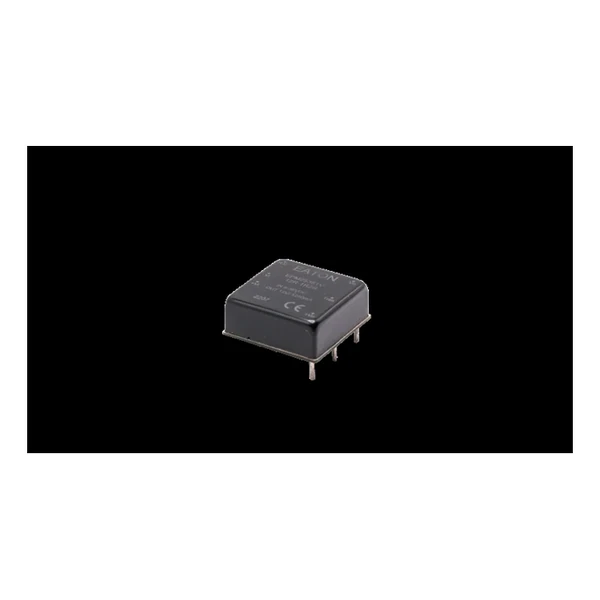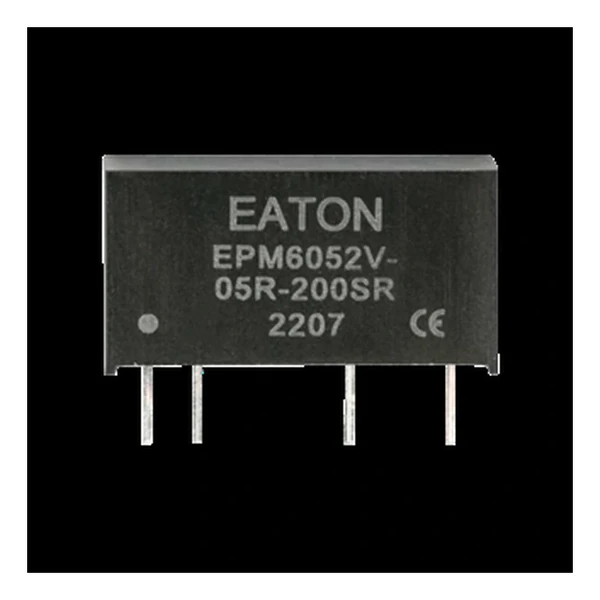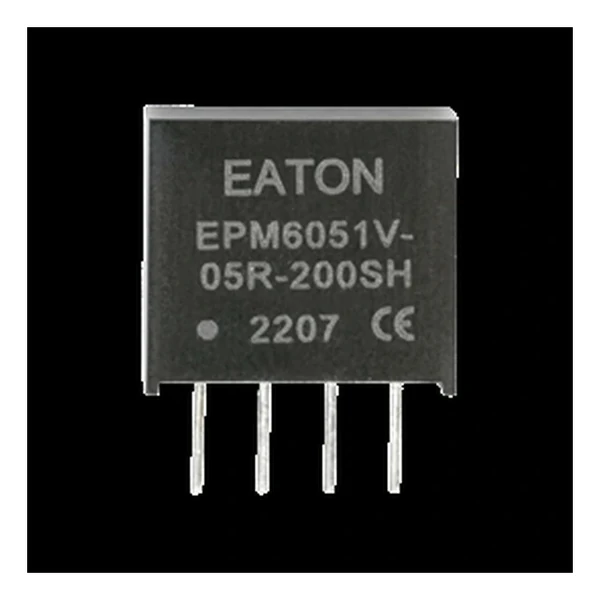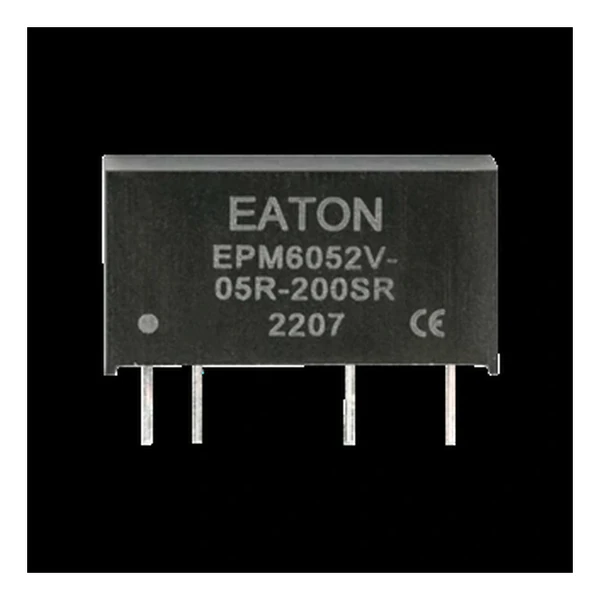
Eaton EPM6122V-12R-084SR 1 W DC-DC Module, 12V Input
- Product Details
- Download
Eaton EPM6122V-12R-084SR 1 W DC-DC Module, 12V Input
Key Specifications
| Parameter | Value |
|---|---|
| Orderable part number | EPM6122V-12R-084SR |
| Input voltage range | 12 Vdc |
| Output voltage | 12 Vdc |
| Output current at full load | 84 mA |
| Output power | 1.01 W |
| Efficiency, minimum | 77 % |
| Efficiency, typical | 80 % |
| Capacitive load, maximum | 470 uF |
| Isolation voltage | 3 kVdc |
| Package | SIP |
| Operating temperature | -40 °C to +100 °C |
| Qualification | Industrial |
| RoHS | Compliant |
| Data sheet | Eaton Technical Data ELX1163 |
Mechanical drawing, derating curve and application circuits are on the
following pages of Eaton Technical Data ELX1163.
Reading the Data Sheet
This is the dual-output version of the standard 1 W isolated module: same pin pitch, same isolation barrier, two rails out. The output current is quoted per rail, and the total still has to stay inside the watt rating.
At 1.008 W out and 80 % typical efficiency the module dissipates about 0.25 W. That is the number the thermal design has to carry, not the output power.
Positioning in the Range
The dual-output range mirrors the single-output parts: 5, 12 and 24 V inputs, ±3.3 V to ±15 V outputs, 1 W total.
- Unbalanced loads move the opposite rail. Size the negative rail load before fixing the capacitor values.
Frequently Asked Questions
How good is the negative rail?
Cross regulation is quoted as a percentage: the negative rail moves when only the positive rail is loaded. For a symmetric load it tracks well; for a single-sided load, budget for the cross-regulation figure.
What is the difference between the R and H suffix?
The isolation voltage option: R is the standard barrier, H is the higher isolation version. The electrical ratings are the same.
How good is the negative rail?
Cross regulation is quoted as a percentage: the negative rail moves when only the positive rail is loaded. For a symmetric load it tracks well; for a single-sided load, budget for the cross-regulation figure.
Shenzhen Gaorunxin Technology Co., Ltd
Online message
Shenzhen Gaorunxin Technology Co., Ltd