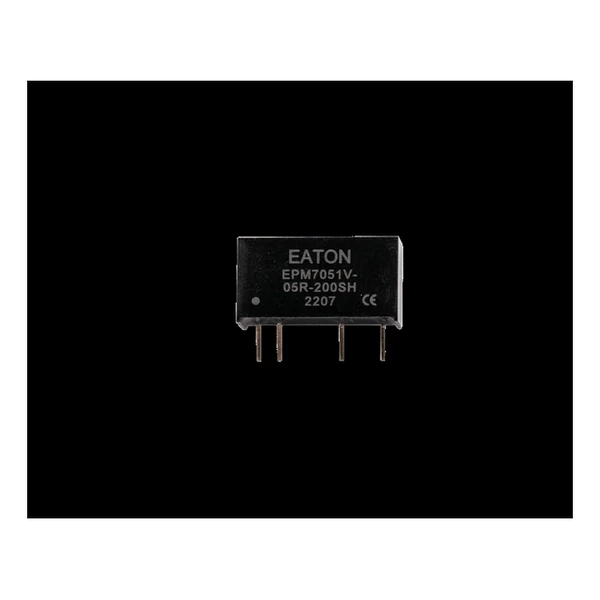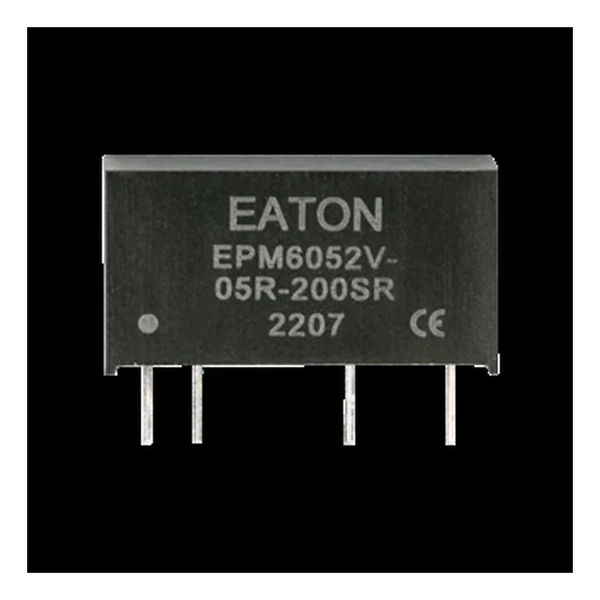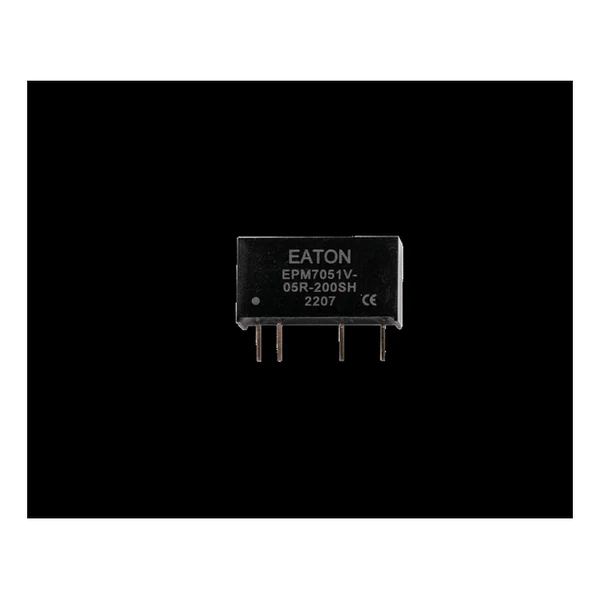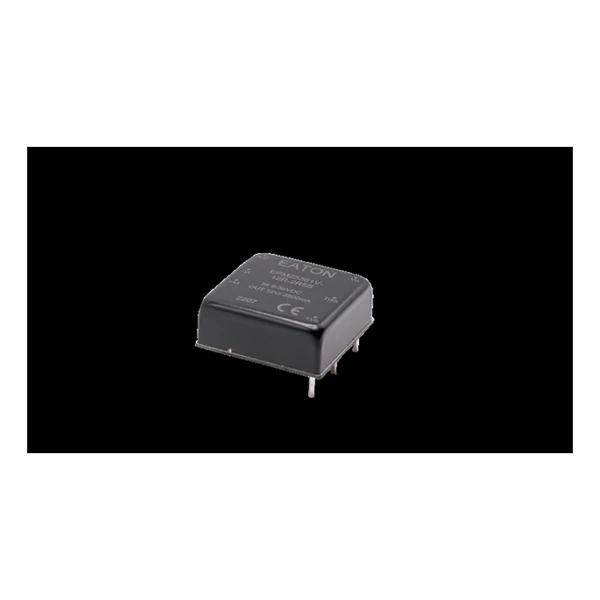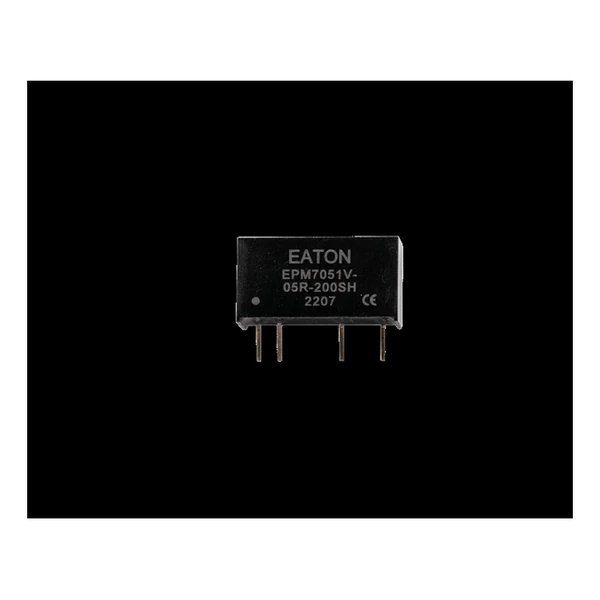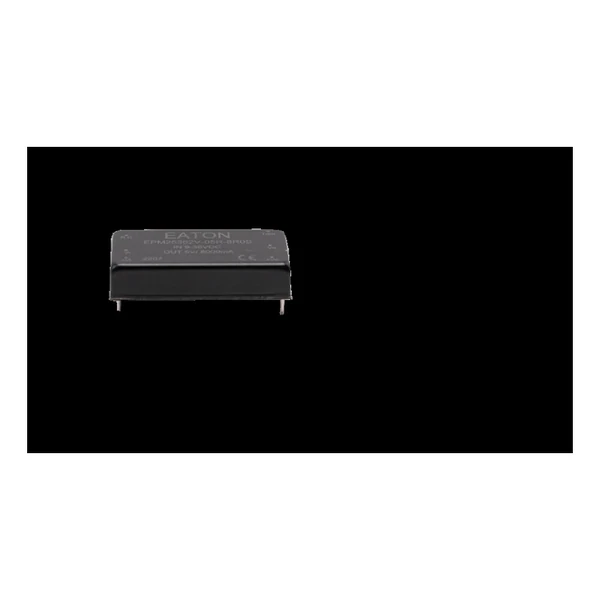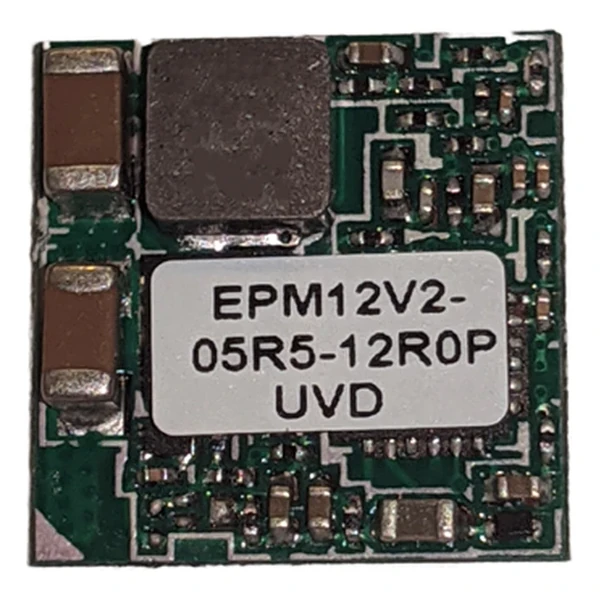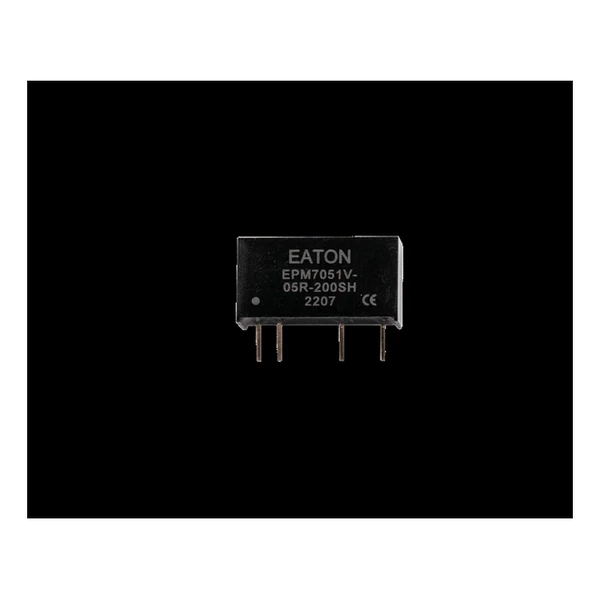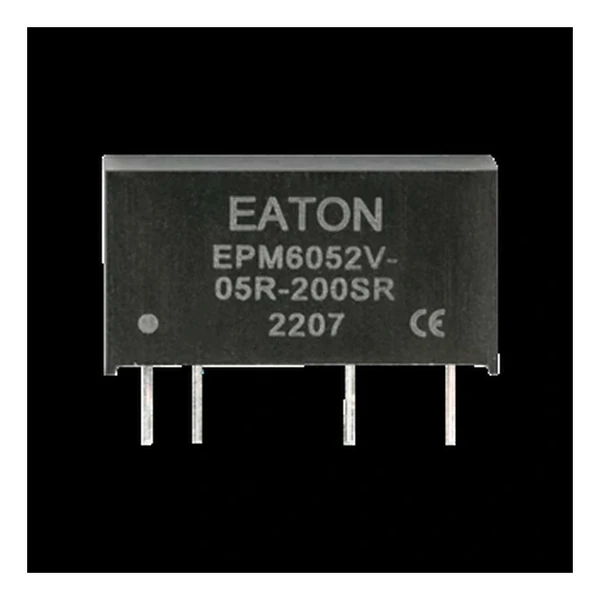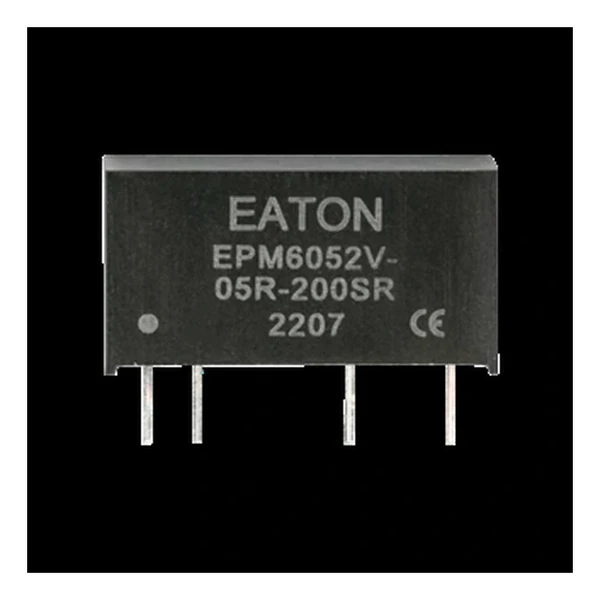
Eaton EPM6122V-3R3-303SR 1 W Dual Output DC-DC Converter
- Product Details
- Download
Eaton EPM6122V-3R3-303SR 1 W Dual Output DC-DC Converter
Electrical Specifications
| Parameter | Value |
|---|---|
| Orderable part number | EPM6122V-3R3-303SR |
| Input voltage range | 12 Vdc |
| Output voltage | 3.3 Vdc |
| Output current at full load | 303 mA |
| Output power | 1 W |
| Efficiency, minimum | 76 % |
| Efficiency, typical | 79 % |
| Capacitive load, maximum | 1500 uF |
| Isolation voltage | 3 kVdc |
| Package | SIP |
| Operating temperature | -40 °C to +100 °C |
| Qualification | Industrial |
| RoHS | Compliant |
| Data sheet | Eaton Technical Data ELX1163 |
Mechanical drawing, derating curve and application circuits are on the
following pages of Eaton Technical Data ELX1163.
Reading the Data Sheet
This is the dual-output version of the standard 1 W isolated module: same pin pitch, same isolation barrier, two rails out. The output current is quoted per rail, and the total still has to stay inside the watt rating.
At 0.9999 W out and 79 % typical efficiency the module dissipates about 0.27 W. That is the number the thermal design has to carry, not the output power.
Series Positioning
The dual-output range mirrors the single-output parts: 5, 12 and 24 V inputs, ±3.3 V to ±15 V outputs, 1 W total.
- Unbalanced loads move the opposite rail. Size the negative rail load before fixing the capacitor values.
Frequently Asked Questions
What is the difference between the R and H suffix?
The isolation voltage option: R is the standard barrier, H is the higher isolation version. The electrical ratings are the same.
Is the total power 1 W per rail or in total?
In total. The current rating is per rail, but the sum of both rails times their voltages has to stay inside the watt rating.
How good is the negative rail?
Cross regulation is quoted as a percentage: the negative rail moves when only the positive rail is loaded. For a symmetric load it tracks well; for a single-sided load, budget for the cross-regulation figure.
Shenzhen Gaorunxin Technology Co., Ltd
Online message
Shenzhen Gaorunxin Technology Co., Ltd