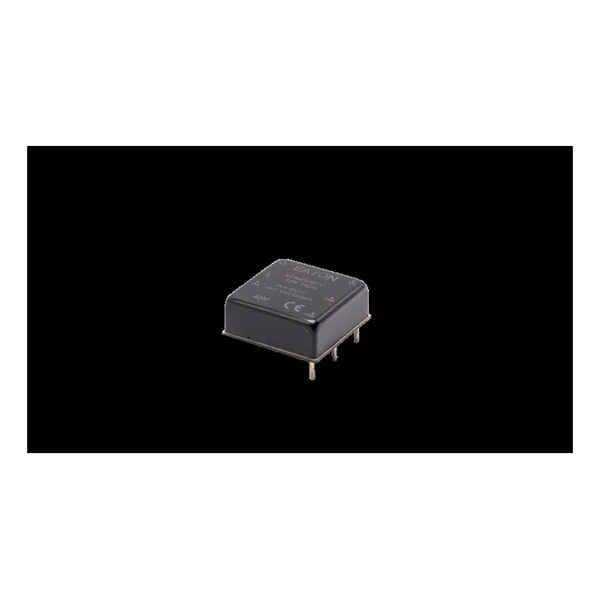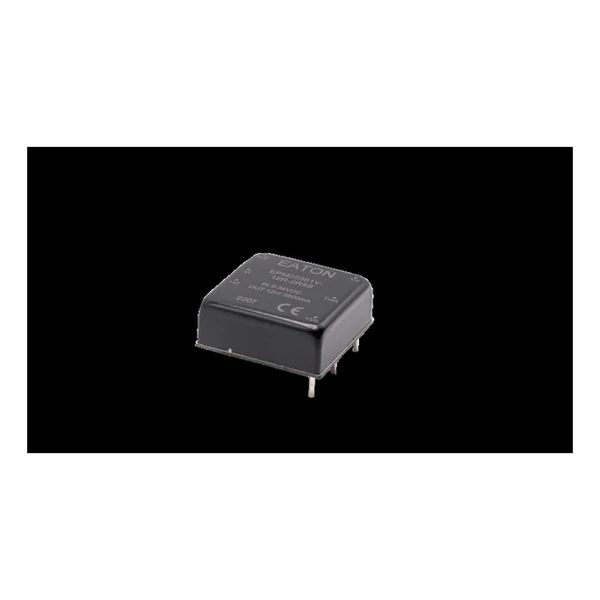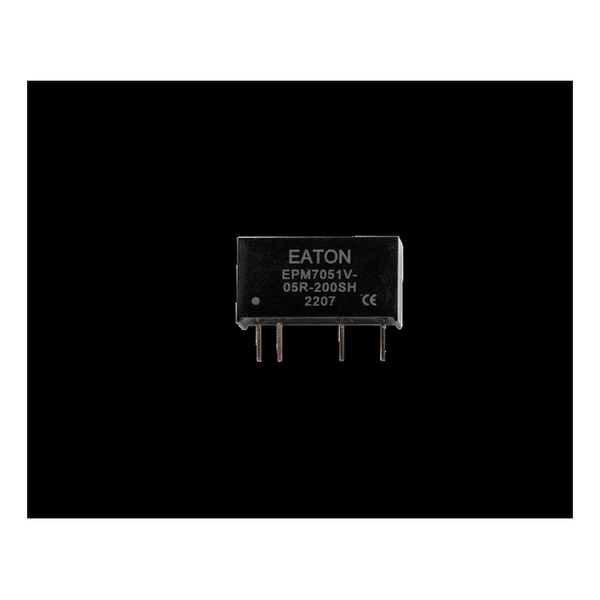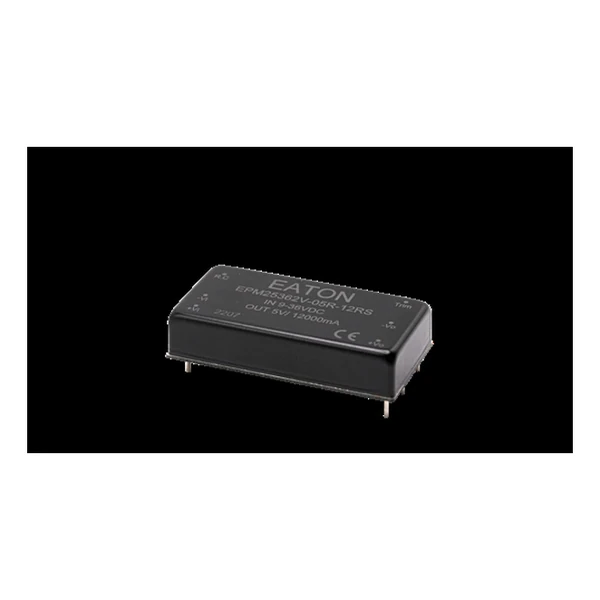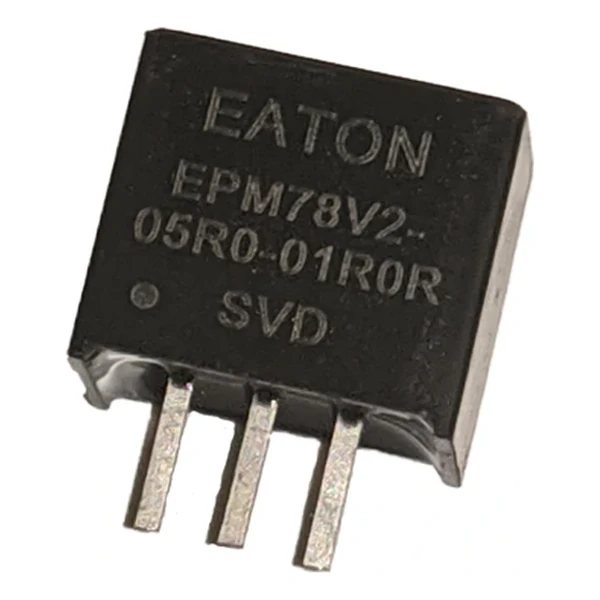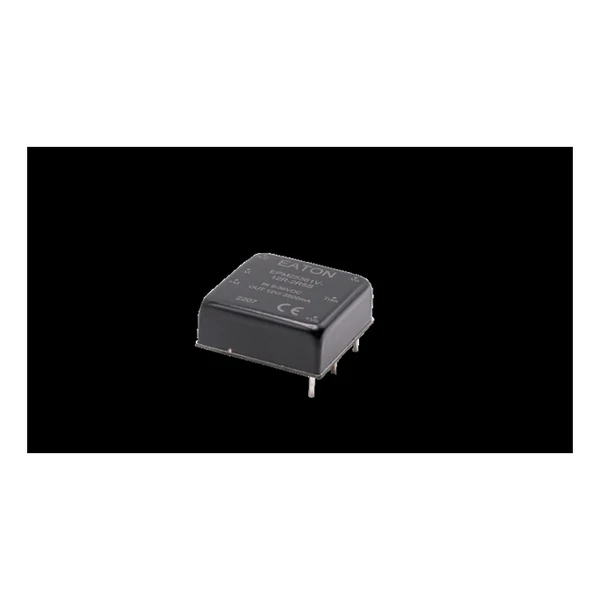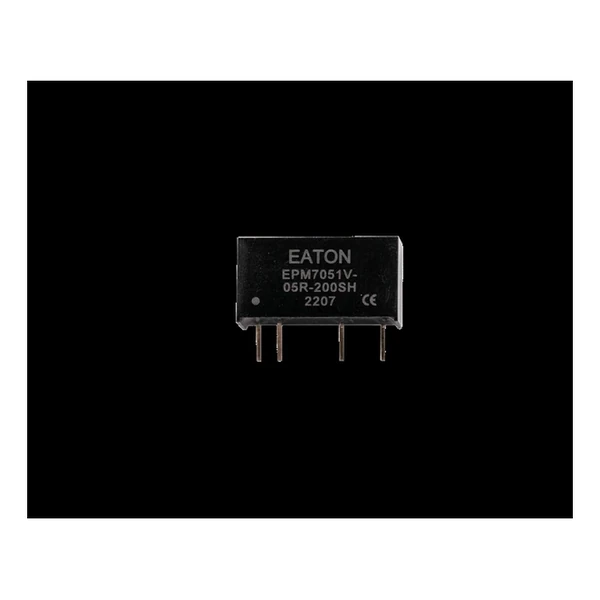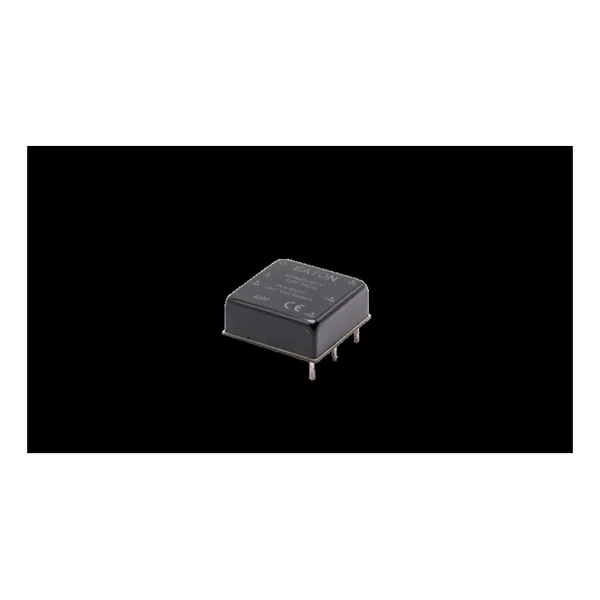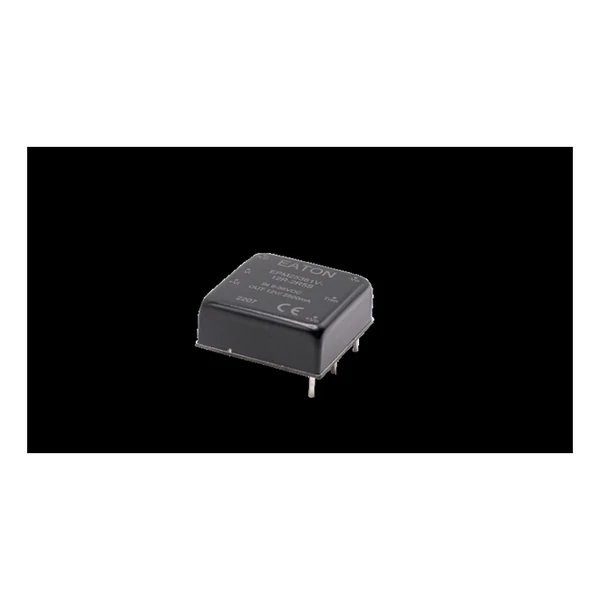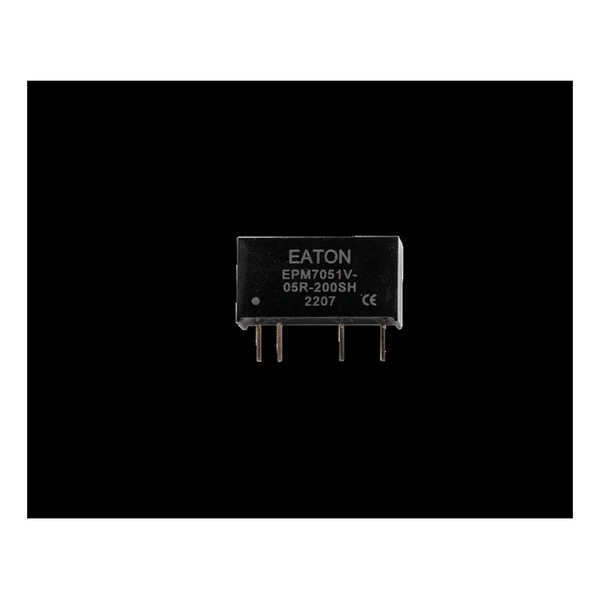
Eaton EPM7241V-15R-067SH Isolated Converter 15V Out
- Product Details
- Download
Eaton EPM7241V-15R-067SH Isolated Converter 15V Out
Ratings at a Glance
| Parameter | Value |
|---|---|
| Orderable part number | EPM7241V-15R-067SH |
| Input voltage range | 24 Vdc |
| Output voltage | 15 Vdc |
| Output current at full load | 67 mA |
| Output power | 1.01 W |
| Efficiency, minimum | 77 % |
| Efficiency, typical | 80 % |
| Capacitive load, maximum | 220 uF |
| Isolation voltage | 4 kVdc |
| Package | SIP |
| Operating temperature | -40 °C to +100 °C |
| Qualification | Industrial |
| RoHS | Compliant |
| Data sheet | Eaton Technical Data ELX1164 |
Mechanical drawing, derating curve and application circuits are on the
following pages of Eaton Technical Data ELX1164.
What the Numbers Mean
A one-watt isolated DC-DC module in a SIP or DIP footprint: 5, 12 or 24 V in, single or dual output out, with galvanic isolation between the two sides. It is the part that breaks a ground loop or floats a gate driver supply when a full converter would be overkill.
At 1.005 W out and 80 % typical efficiency the module dissipates about 0.25 W. That is the number the thermal design has to carry, not the output power.
Where This Series Fits
The 1 W isolated range covers 5, 12 and 24 V inputs with single or dual outputs from 3.3 V to 15 V, in SIP and DIP packages with standard or high isolation.
- The isolation barrier is only as good as the board creepage around it. Check the pad spacing, not just the module rating.
Frequently Asked Questions
Can the output be paralleled?
Not directly. Two isolated modules will not share current without droop sharing or a series resistor, because their output voltages differ by the tolerance band.
What does the isolation voltage mean in practice?
It is the test voltage the barrier withstands, not a continuous working voltage. For reinforced insulation you also need the creepage on the board, which the module cannot provide on its own.
Does it need external capacitors?
The data sheet recommends input and output capacitors to meet the ripple figure. The module runs without them, but not to specification.
Shenzhen Gaorunxin Technology Co., Ltd
Online message
Shenzhen Gaorunxin Technology Co., Ltd