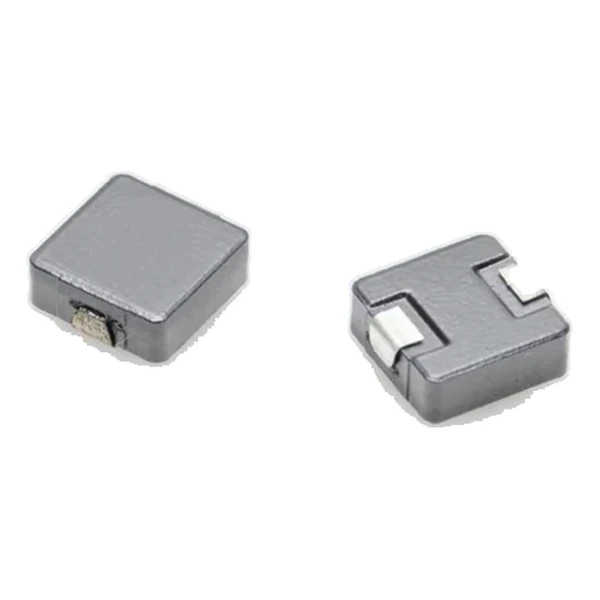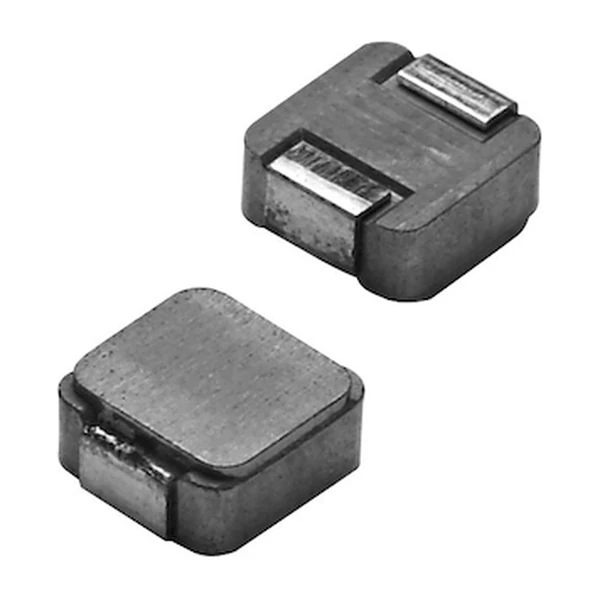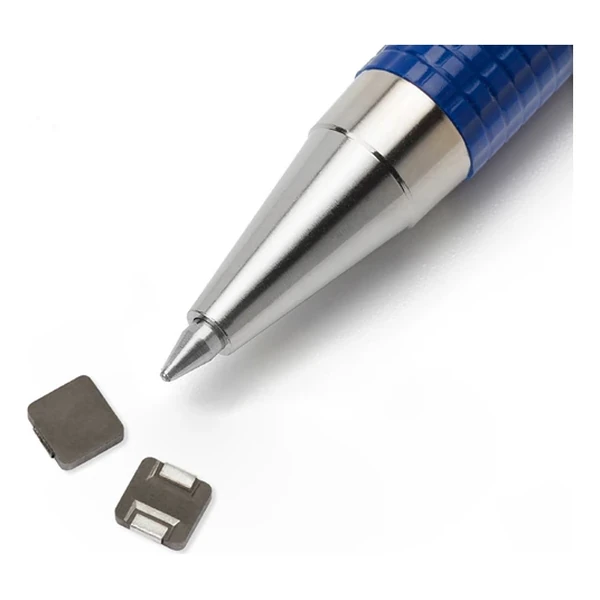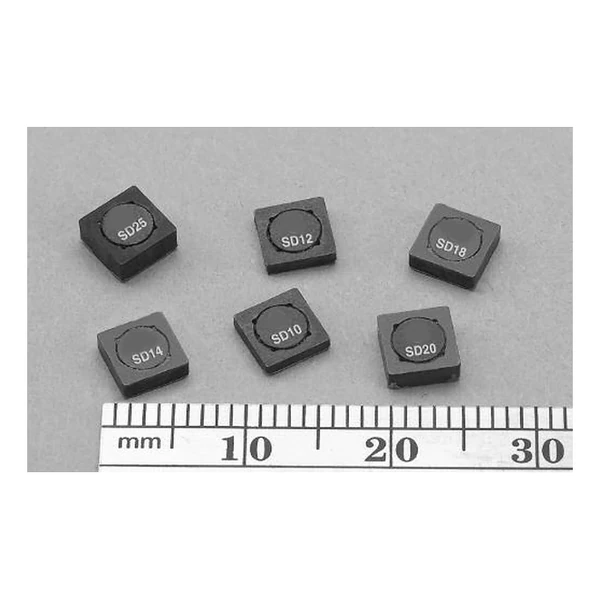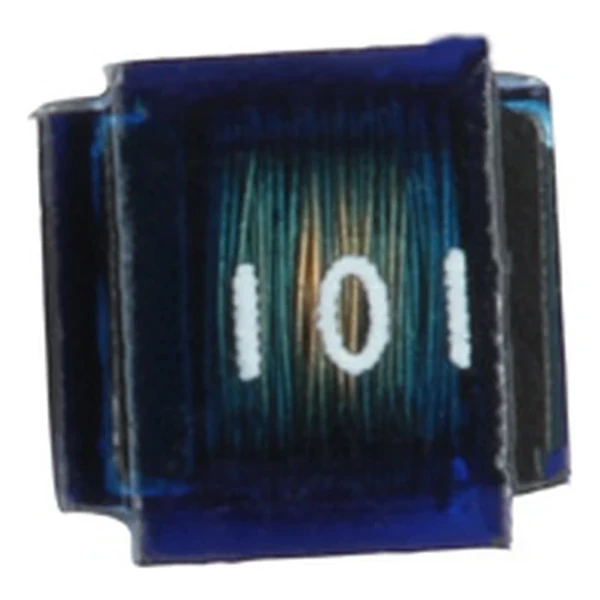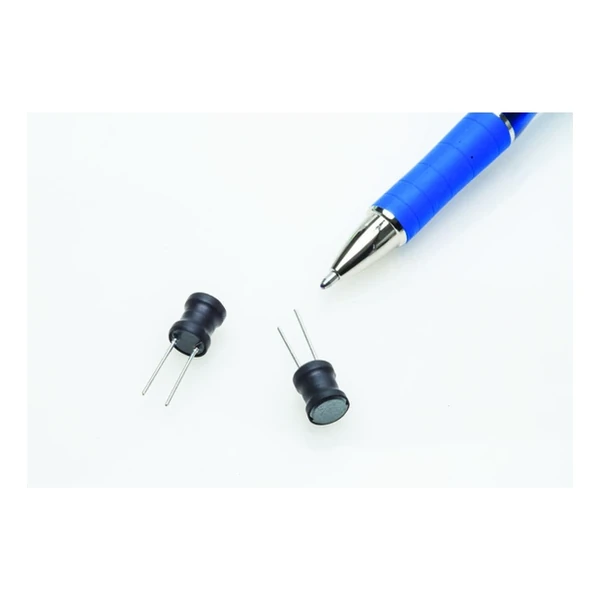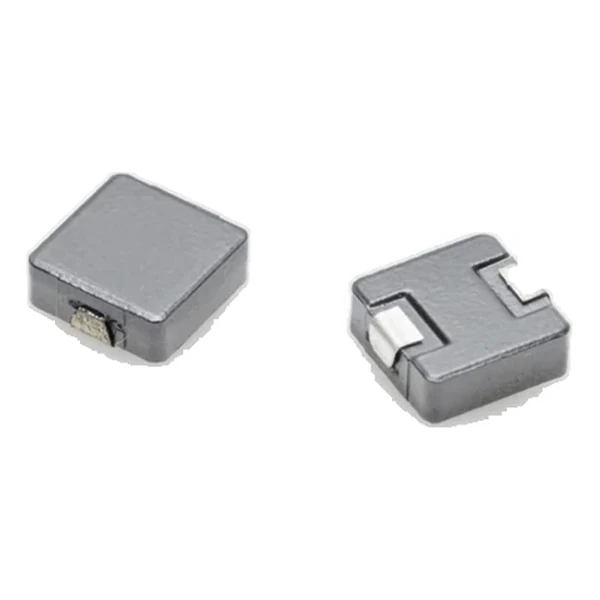
Eaton HCMA1305-7R8-R 7.80 uH Molded Automotive Inductor
- Product Details
- Download
Eaton HCMA1305-7R8-R 7.80 uH Molded Automotive Inductor
Electrical Specifications
| Parameter | Value |
|---|---|
| Orderable part number | HCMA1305-7R8-R |
| OCL (open circuit inductance) | 7.80 uH ±20% |
| FLL minimum, at Isat | 4.99 uH |
| Irms (DC, 40 °C rise) | 10 A |
| Isat (20% rolloff @ +25 °C) | 18.5 A |
| DCR typical @ +20 °C | 16.8 mOhm |
| DCR maximum @ +20 °C | 19.4 mOhm |
| K-factor (Bp-p = K x L x dI) | 117, Bp-p in Gauss |
| Package | 13.8 x 12.5 mm |
| Height | 5.0 mm |
| Mounting | Surface mount |
| Operating temperature | -55 °C to +125 °C (ambient plus self-heating) |
| Qualification | AEC-Q200 |
| RoHS | Compliant, -R suffix |
| Data sheet | Eaton Technical Data 10277 |
Outline Drawing

Drawing reproduced from Eaton Technical Data 10277: outline with
rated mm dimensions, recommended pad layout and winding schematic. Tolerances are stated on
the drawing itself.
What the Numbers Mean
This is the high-current member of the automotive molded family. Where the standard automotive parts top out at a few tens of amps, this one is built for the main DC-DC stage: thicker winding, larger body, and a saturation current that scales with it.
The DCR figure of 16.8 mOhm is what sets the efficiency: at 10 A the winding drops about 0.168 mV and dissipates 1.68 W. On a low-voltage rail that drop is a measurable fraction of the output, so the DCR column deserves as much attention as the inductance.
The saturation rating reads 20% rolloff @ +25 °C. Treat it as the edge of the linear region: below it the inductance is within tolerance, above it the value droops. For a current-mode converter that means the peak current at the worst-case load step is what must fit under this number.
Energy storage at the saturation current is around 1,335 uJ, the number that connects the inductance and the current rating into a single transient figure.
With K = 117, a peak-to-peak ripple of one amp produces roughly 913 Gauss of flux swing. Read the core-loss graph at that amplitude and at the switching frequency to get the core contribution to the total loss.
Positioning in the Range
The HCMA family is the automotive high-current molded range, rated to +125 °C. It shares body sizes with the commercial HCM parts but is qualified and characterised for automotive use, with the current ratings to match the larger winding section.
The HCMA1305 family spans 0.1 uH to 33 uH; this row sits at position 16 of 21.
One step down the table, HCMA1305-6R8-R, sits at 6.80 uH with 11 A and 13 mOhm – the lower inductance buys about 1.5 A of extra current in the same body.
- Core material: iron powder core, 13.8 x 12.5 mm body at 5.0 mm.
- Typical applications: body electronics; central body control module; vehicle access control system; headlamps, tail lamps and interior lighting; heating ventilation and air conditioning controllers (hvac); doors, window lift and seat control.
- Automotive derating practice: size against the saturation current at the hot corner and keep margin for the load transient, not just the steady-state current.
Sizing and Layout Notes
Copper resistance rises with temperature, so at the +125 °C limit the maximum DCR of 19.4 mOhm becomes roughly 27.4 mOhm. That is the figure to put into a hot-enclosure loss calculation; the +20 °C column is a bench number.
Design note: the AEC-Q200 grade covers the construction, not the thermal design of your board. The loss calculation is still the engineer’s job.
- Confirm the terminal spacing against the rail voltage.
- Confirm the terminal spacing against the rail voltage.
- Confirm the terminal spacing against the rail voltage.
Frequently Asked Questions
Is it shielded?
Yes – the winding is enclosed in the molded powder core, which keeps the external field low enough for dense automotive boards.
Can it be used on a 48 V rail?
The inductance and current ratings suit 48 V converters, but the insulation system and creepage are board-level concerns. Check the terminal spacing and conformal coating against the rail voltage.
Can it be used on a 48 V rail?
The inductance and current ratings suit 48 V converters, but the insulation system and creepage are board-level concerns. Check the terminal spacing and conformal coating against the rail voltage.
Shenzhen Gaorunxin Technology Co., Ltd
Online message
Shenzhen Gaorunxin Technology Co., Ltd