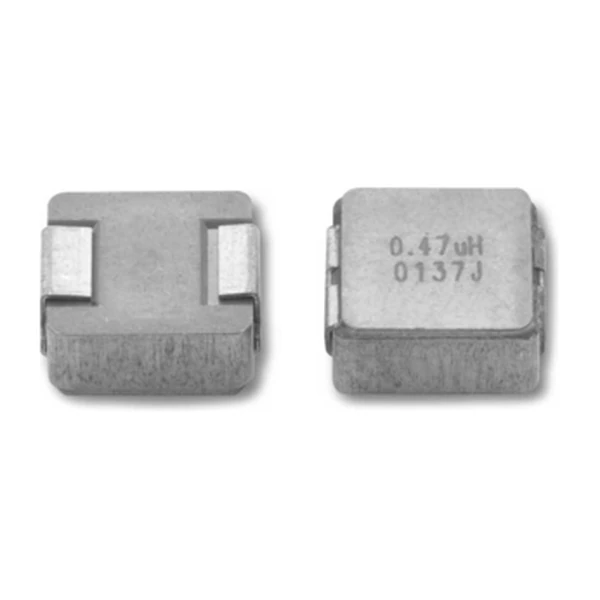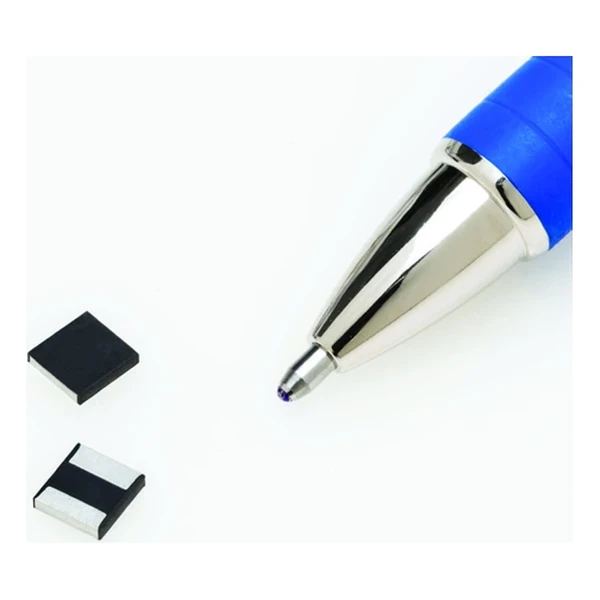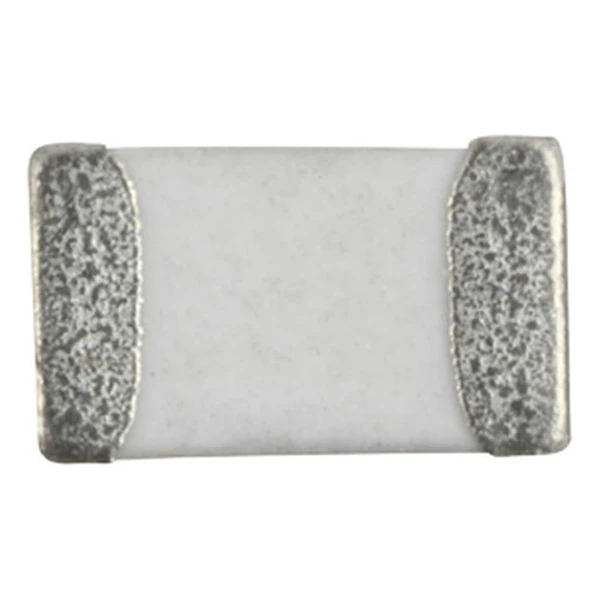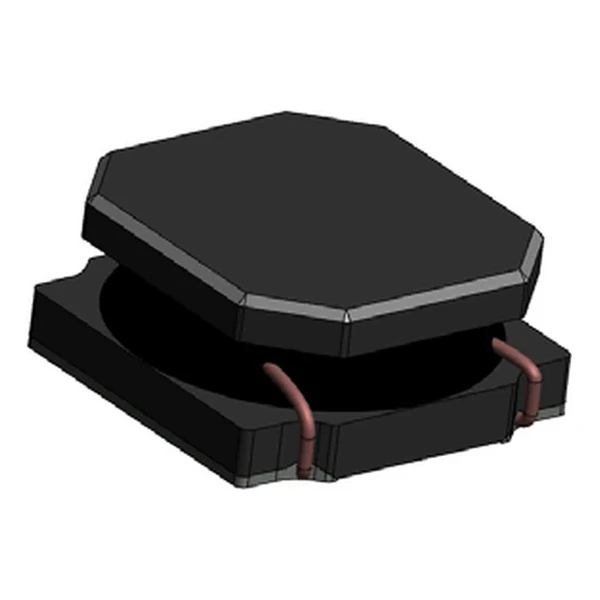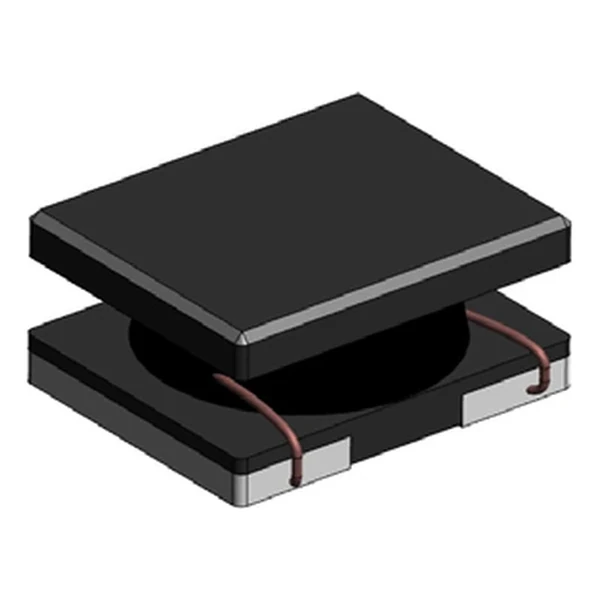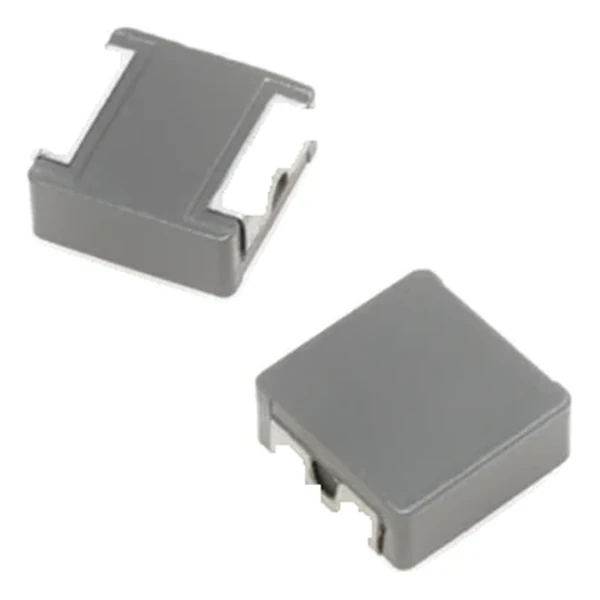
Eaton HCMA1707-1R5-R 1.5 uH Automotive High-Current Inductor
- Product Details
- Download
Eaton HCMA1707-1R5-R 1.5 uH Automotive High-Current Inductor
Key Specifications
| Parameter | Value |
|---|---|
| Orderable part number | HCMA1707-1R5-R |
| OCL (open circuit inductance) | 1.5 uH ±20% |
| FLL minimum, at Isat | 0.96 uH |
| Irms (DC, 40 °C rise) | 40 A |
| Isat (20% rolloff @ +25 °C) | 40 A |
| DCR typical @ +20 °C | 1.85 mOhm |
| DCR maximum @ +20 °C | 2.15 mOhm |
| K-factor (Bp-p = K x L x dI) | 124, Bp-p in Gauss |
| Package | 17.5 x 17.2 mm |
| Height | 7.0 mm |
| Mounting | Surface mount |
| Operating temperature | -55 °C to +125 °C (ambient plus self-heating) |
| Qualification | AEC-Q200 |
| RoHS | Compliant, -R suffix |
| Data sheet | Eaton Technical Data 10296 |
Dimensions and Pad Layout

Drawing reproduced from Eaton Technical Data 10296: outline with
rated mm dimensions, recommended pad layout and winding schematic. Tolerances are stated on
the drawing itself.
Reading the Data Sheet
Molded powder core, shielded, AEC-Q200, +125 °C: the part is aimed at automotive DC-DC converters and motor-drive front ends where the inductor carries the full load current and the board has to pass EMC without a shield can.
At the rated 40 A the winding dissipates about 2.96 W in copper alone, using the typical DCR of 1.85 mOhm. That figure is the floor of the loss budget: it assumes the current is pure DC, and any ripple adds to it.
Isat is specified as 20% rolloff @ +25 °C, so the number is a rolloff criterion rather than an absolute maximum. The useful working range extends a little beyond it on a soft saturation core, but the loop compensation has to be designed for the inductance that remains.
Energy storage at the saturation current is around 1,200 uJ, the number that connects the inductance and the current rating into a single transient figure.
The K-factor of 124 converts inductance and ripple into flux swing: each amp of peak-to-peak ripple moves the core through about 186 Gauss of Bp-p, the figure the core-loss curve is plotted against.
Where This Series Fits
The HCMA family is the automotive high-current molded range, rated to +125 °C. It shares body sizes with the commercial HCM parts but is qualified and characterised for automotive use, with the current ratings to match the larger winding section.
The HCMA1707 family spans 1.5 uH to 68 uH; this row sits at position 1 of 11.
One step down the table, HCMA1707-2R2-R, sits at 2.2 uH with 37 A and 2.15 mOhm – the lower inductance buys about 0 A of extra current in the same body.
- Core material: iron powder core, 17.5 x 17.2 mm body at 7.0 mm.
- Typical applications: body electronics; central body control module; headlamps, tai lamps and interior lighting; heating ventilation and air conditioning controllers (hvac); doors, window lift and seat control; advanced driver assistance systems.
- Automotive derating practice: size against the saturation current at the hot corner and keep margin for the load transient, not just the steady-state current.
Sizing and Layout Notes
Copper resistance rises with temperature, so at the +125 °C limit the maximum DCR of 2.15 mOhm becomes roughly 3.04 mOhm. That is the figure to put into a hot-enclosure loss calculation; the +20 °C column is a bench number.
Design note: the AEC-Q200 grade covers the construction, not the thermal design of your board. The loss calculation is still the engineer’s job.
- Confirm the terminal spacing against the rail voltage.
- Verify the shielding against the EMC plan for the board.
- Size the saturation margin at the maximum ambient the module will see.
Frequently Asked Questions
Is it shielded?
Yes – the winding is enclosed in the molded powder core, which keeps the external field low enough for dense automotive boards.
Is this part suitable for a 48 V rail?
The electrical ratings suit it, but isolation and creepage are board-level decisions. Check terminal spacing and any coating against the rail voltage.
What current can it carry continuously?
The Irms column, which is the DC current for the stated temperature rise without core loss. Continuous operation also depends on board copper and airflow, so the data sheet derating curves apply.
Shenzhen Gaorunxin Technology Co., Ltd
Online message
Shenzhen Gaorunxin Technology Co., Ltd