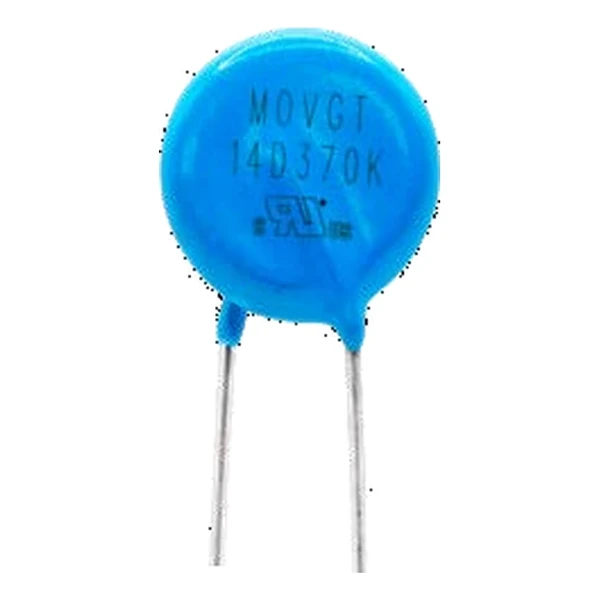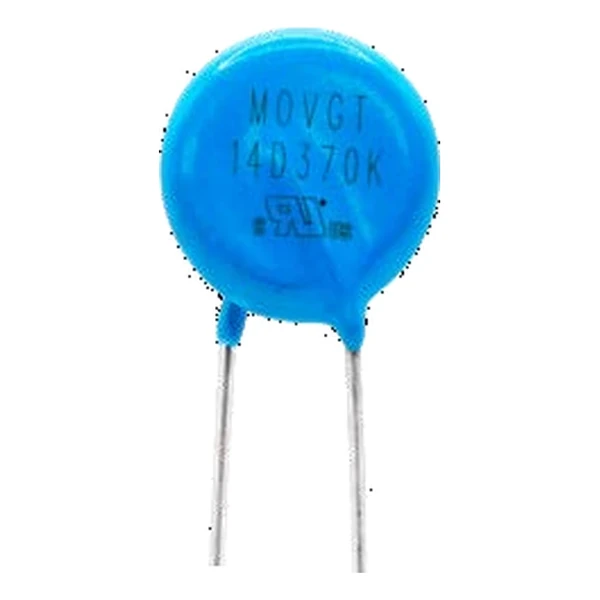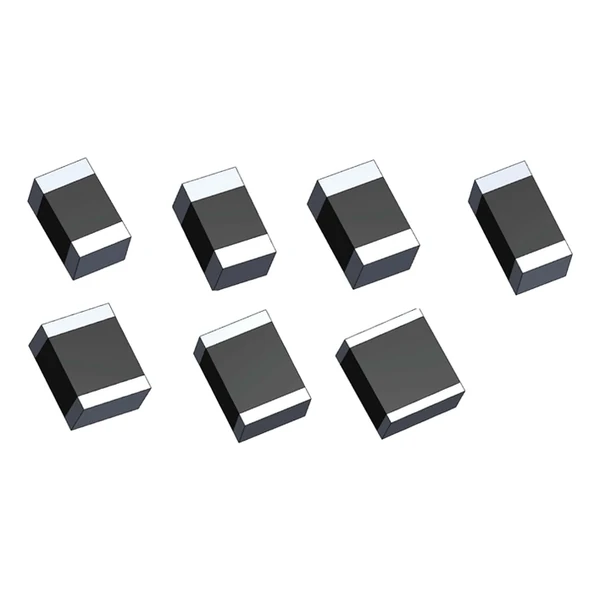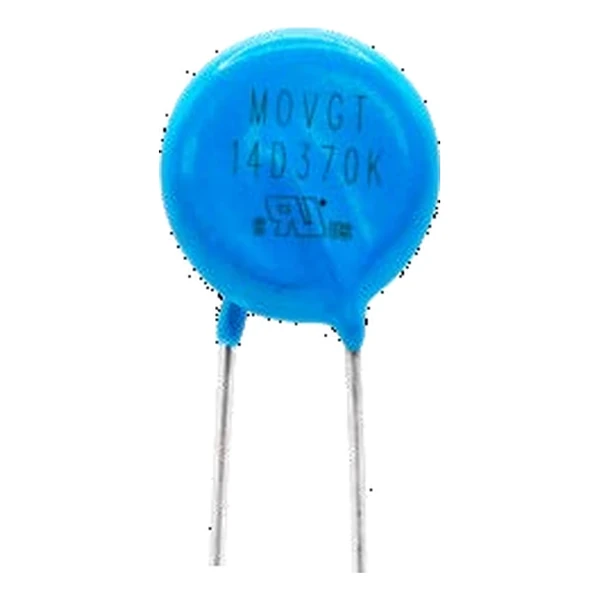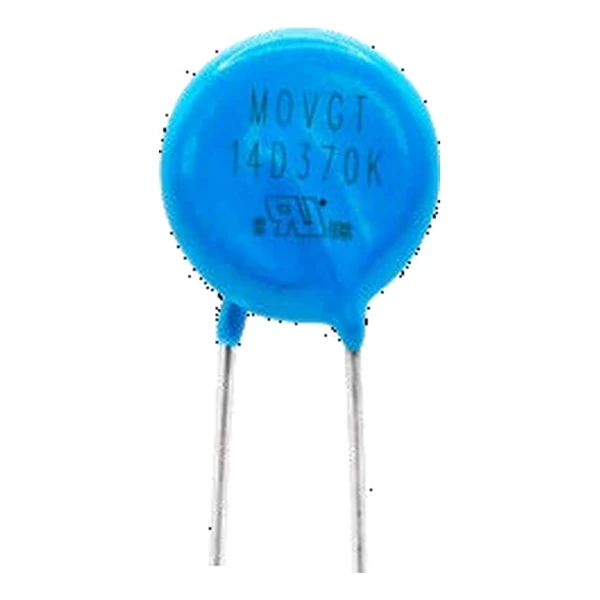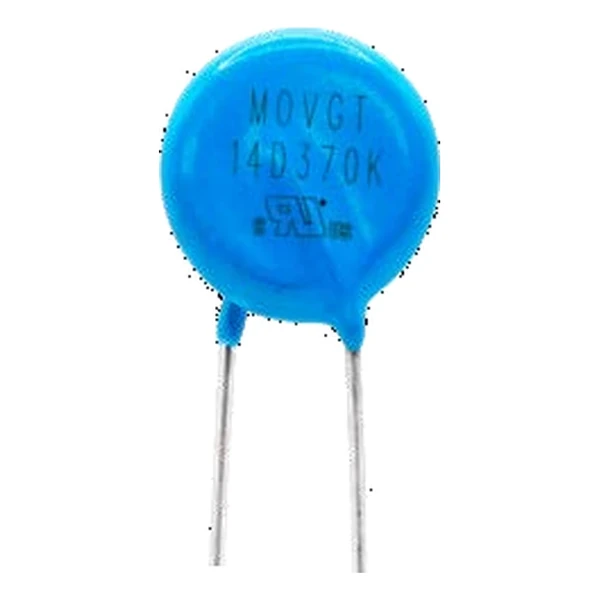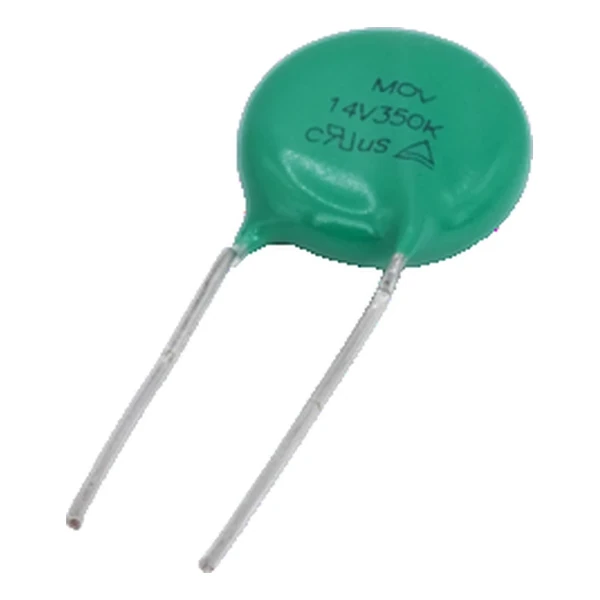
Eaton MOV20V150 Metal Oxide Varistor 240 V
- Product Details
- Download
Eaton MOV20V150 Metal Oxide Varistor 240 V
Key Specifications
| Parameter | Value |
|---|---|
| Orderable part number | MOV20V150 |
| Varistor voltage at 1 mA | 240 V |
| Maximum continuous AC voltage | 150 Vrms |
| Maximum continuous DC voltage | 200 Vdc |
| Clamping voltage | 395 V |
| Clamping current | 100 A |
| Maximum surge current, 8/20 us | 6500 A |
| Rated power | 1 W |
| Typical capacitance at 1 kHz | 1650 pF |
| Maximum energy, 10/1000 us | 108 J |
| Maximum body diameter | 5 mm |
| Agency recognition | cURus (UL 1449) and TUV |
| Package | 20 mm disc |
| Mounting | Radial, through-hole |
| Operating temperature | -40 °C to +125 °C |
| Qualification | Commercial grade |
| RoHS | Compliant, halogen free |
| Data sheet | Eaton Technical Data ELX1287 |
Dimensions, recommended pad or hole pattern and the derating curves are
on the data sheet pages; the package line above gives the body size as Eaton states it.
The Figures Explained
For AC mains service the continuous rating is given as an RMS voltage, and the DC rating is that value multiplied by roughly 1.41. Sizing the part at or near the nominal line voltage leaves no room for regulation tolerance or a prolonged overvoltage, so the usual rule is 10 to 20 percent headroom.
The clamp column works out at 1.65 times the varistor voltage: 395 V at the rated current against 240 V at 1 mA. That ratio is what the downstream part has to survive, not the 240 V figure on the label.
The disc absorbs 108 J in a 10/1000 us pulse and carries 6500 A in an 8/20 us pulse. Those are single shot figures: the same part will take a fraction of the energy repeatedly.
At 1 W continuous rating the body can sit at the working voltage indefinitely. A 20 mm disc handles roughly 1650 pF across the line, which matters on a signal-carrying pair but not on a mains input.
Within the MOV family this is item 54 of 71 in the Eaton catalogue.
Series Positioning
The varistor sits across the input after the fuse and before the rectifier, with short, thick traces or a direct lead-to-terminal connection. A long return path turns the trace inductance into a voltage spike that the varistor cannot clamp.
- The energy rating is for a single 10/1000 microsecond pulse. Repeated surges add up, and a part that absorbs its full rating once will not do it twice without a voltage shift.
- The derating curve starts at 85 °C for most discs: above that the rated power falls linearly to zero at the maximum temperature.
Frequently Asked Questions
What is the rated power for?
It is the continuous dissipation the disc can take at 85 °C ambient. It matters when the varistor sits at a voltage close to its knee, not during the surge.
Are these parts UL recognised?
Yes, the data sheet lists cURus to UL 1449 and TUV. The file numbers are on the agency page of the data sheet, and they cover the whole family.
How do I size the disc diameter?
From the energy, not the current. Estimate the joule content of the surge your source can deliver, add margin for repeated events, and pick the smallest disc that covers it; a larger disc also raises the capacitance across the line.
Shenzhen Gaorunxin Technology Co., Ltd
Online message
Shenzhen Gaorunxin Technology Co., Ltd