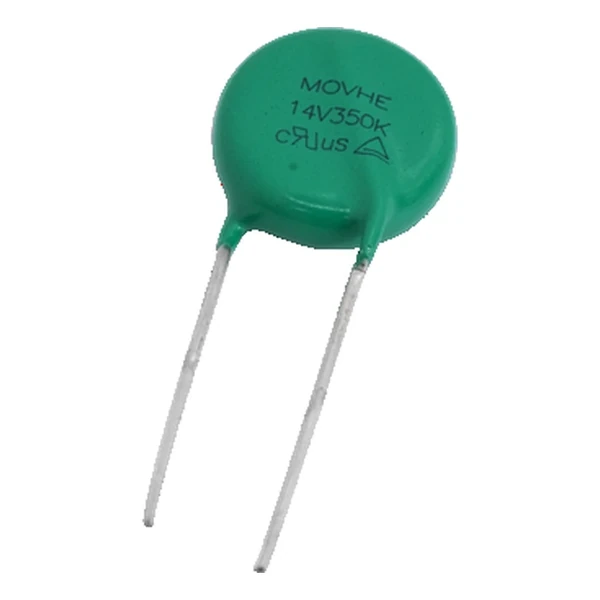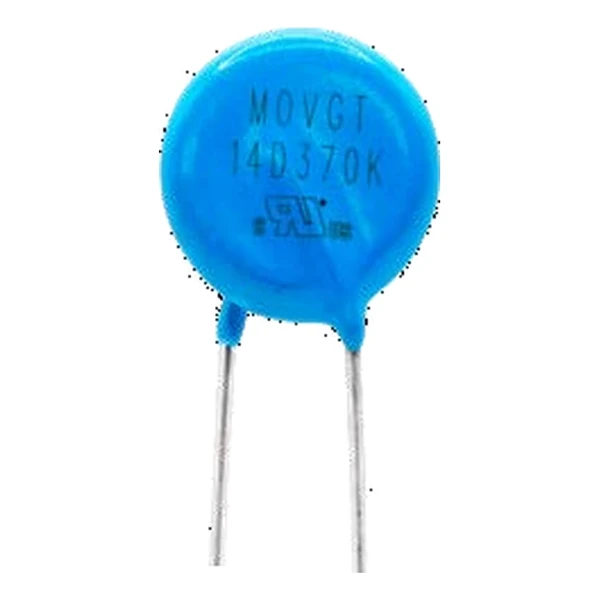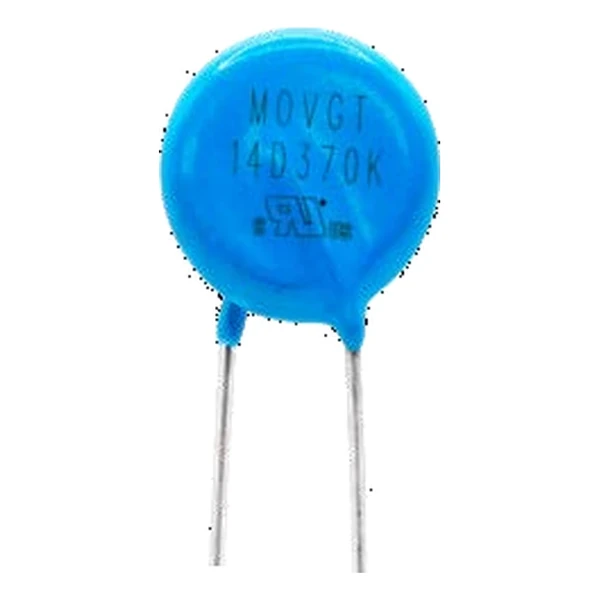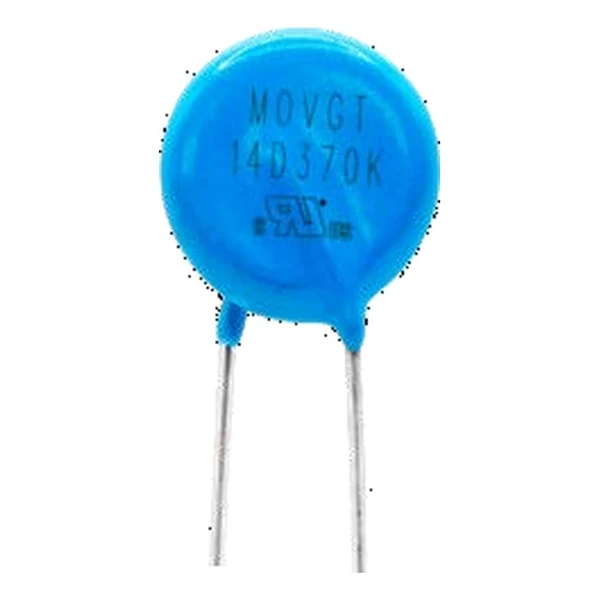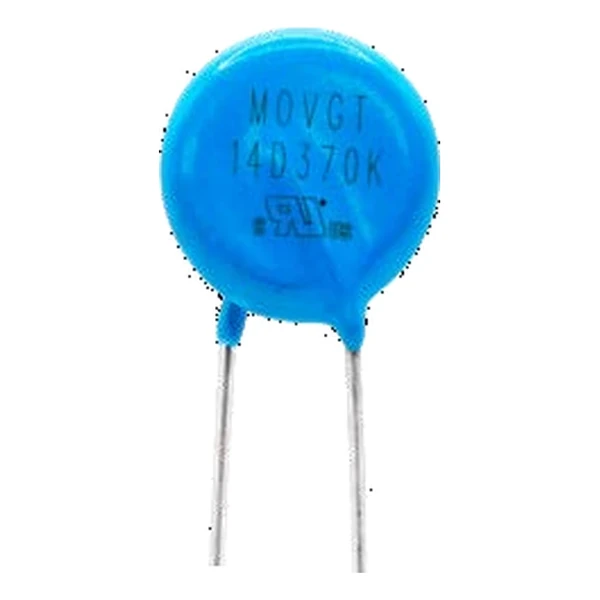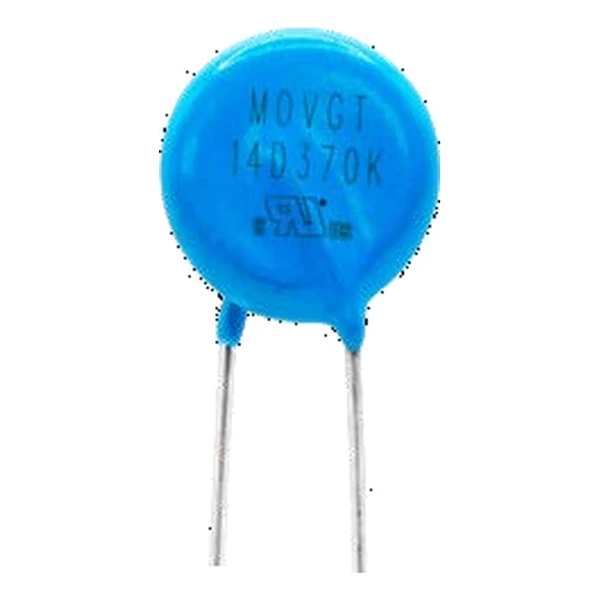
Eaton MOVGT14V220K MOV / GDT Device 220 Vac
- Product Details
- Download
Eaton MOVGT14V220K MOV / GDT Device 220 Vac
Electrical Specifications
| Parameter | Value |
|---|---|
| Orderable part number | MOVGT14V220K |
| UL volts | 210 Vac |
| Recommended MCOV | 220 Vac |
| UL MCOV | 280 Vac |
| MOV voltage at 1 mA | 330(297~363) V |
| GDT voltage at 100 V/s | 350(280~420) V |
| Platform voltage at 1000 V/us | max. 580 V |
| Peak voltage at 1000 V/us | max. 1020 V |
| Withstand count at 2 kV / 1 kA | 40 shots |
| MOV withstand current, 8/20 us | 6000 A |
| Maximum energy, 10/1000 us | 115 J |
| Capacitance at 1 kHz | 5 pF |
| Package | 14 mm disc |
| Mounting | Radial, through-hole |
| Operating temperature | -40 °C to +105 °C |
| Qualification | Commercial grade |
| RoHS | Compliant, halogen free |
| Data sheet | Eaton Technical Data ELX1161 |
Dimensions, recommended pad or hole pattern and the derating curves are
on the data sheet pages; the package line above gives the body size as Eaton states it.
Reading the Data Sheet
Because the GDT carries the follow current once it has fired, the combination survives repeated surges that would erode a MOV alone. The column to read is the withstand count at 2 kV / 1 kA rather than the single-shot peak current.
The MOV inside is a 330(297~363) V part and the GDT is a 350(280~420) V tube. In series the pair holds the surge at the platform voltage of 580 V, well under the peak 1020 V it would reach alone at a 1000 V/us edge.
Withstand is quoted as 40 shots at 2 kV / 1 kA. Because the GDT carries the follow current, the MOV is not eroded by the long tail of the pulse the way a stand-alone varistor is.
Within the MOVGT family this is item 100 of 160 in the Eaton catalogue.
Positioning in the Range
The series combination goes across the input at the first stage, ahead of the filter, with the GDT on the line side. Both devices carry the surge current, so the trace between them has to be as short and as wide as the incoming conductor.
- The series stack needs the MOV to hold off the line at the end of life as well. If the MOV degrades low in voltage the GDT starts to see the line, which is why the withstand count matters.
- The capacitance is a few picofarads, which is low enough for a mains input and low enough not to load a signal pair.
Frequently Asked Questions
What is the platform voltage?
It is the voltage the pair holds while the surge current flows, measured at a 1000 V/microsecond edge. It sits between the MOV clamp and the GDT arc voltage, and it is the number the downstream insulation has to survive.
What is the difference between UL volts and MCOV?
UL volts is the maximum line voltage the part is listed for under UL 1449; MCOV is the maximum continuous operating voltage the MOV element can hold. The two are related but not identical, and both are listed.
Does the GDT need a separate fuse?
The follow current is limited by the source impedance and the upstream fuse. Check that the fuse clears the follow current, otherwise the tube keeps conducting after the surge.
Shenzhen Gaorunxin Technology Co., Ltd
Online message
Shenzhen Gaorunxin Technology Co., Ltd