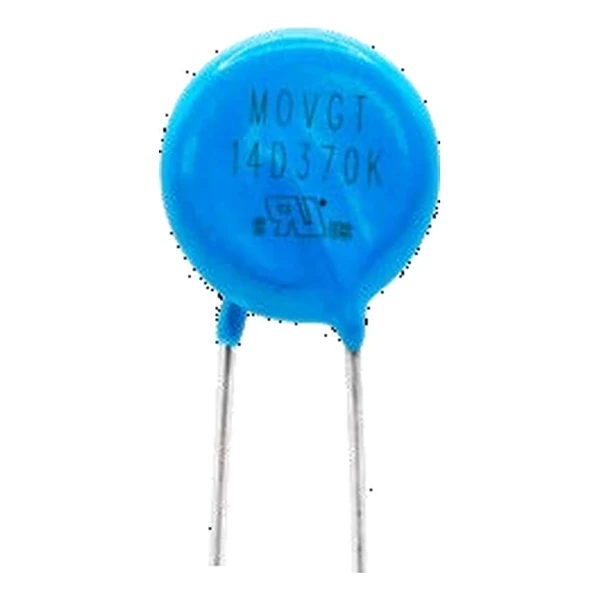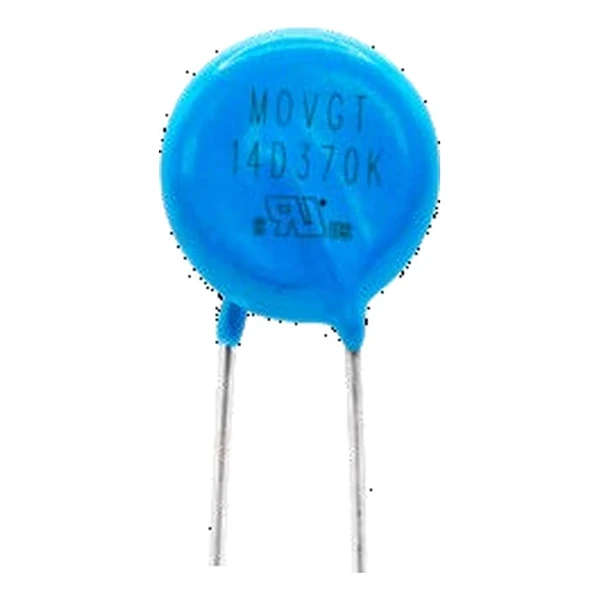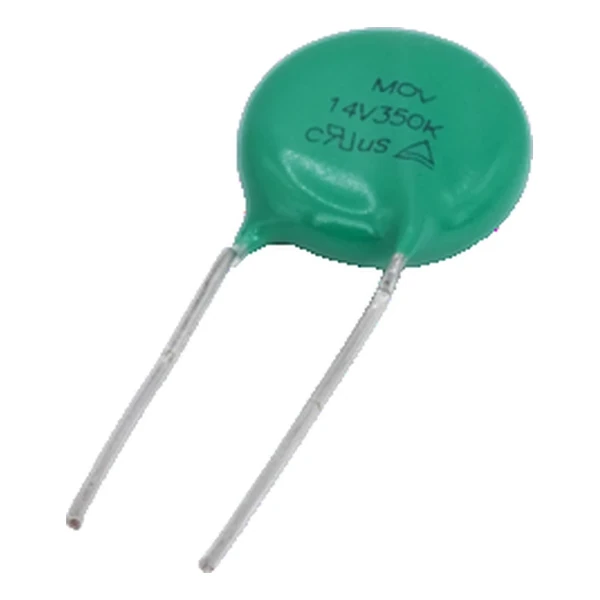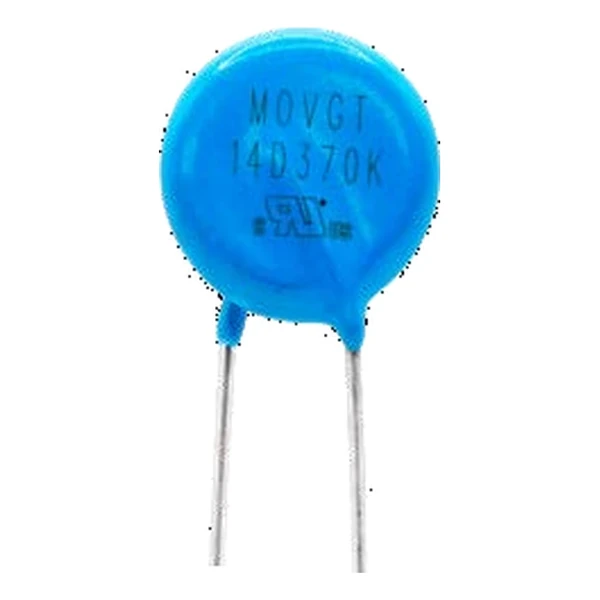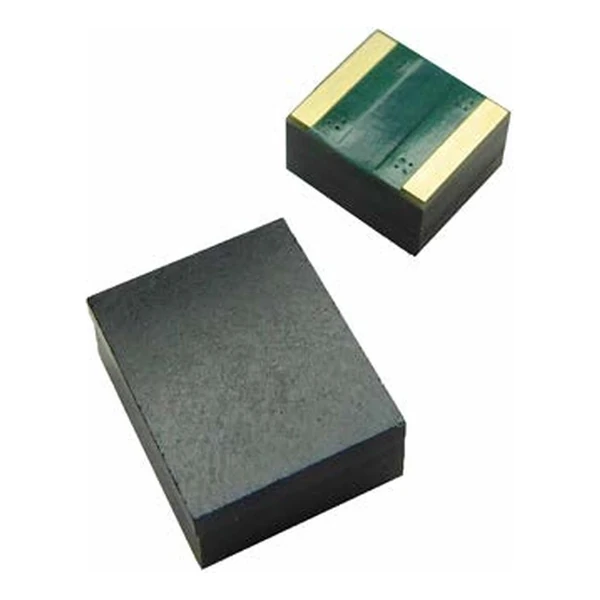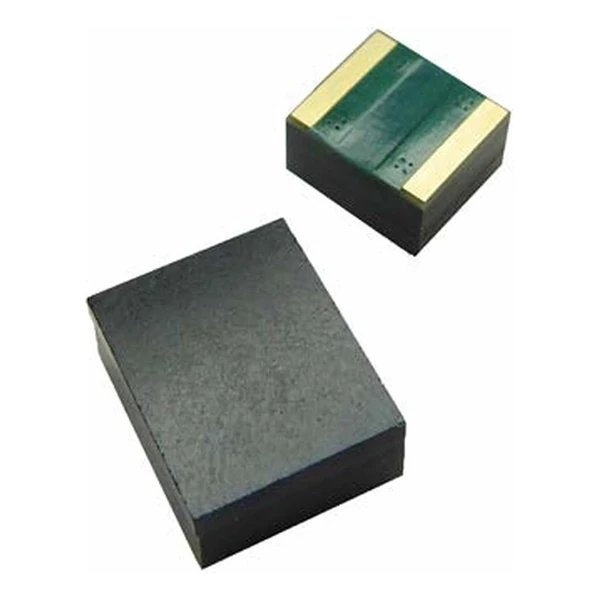
Eaton MOVS4032V150 Surface Mount MOV 4032
- Product Details
- Download
Eaton MOVS4032V150 Surface Mount MOV 4032
Ratings at a Glance
| Parameter | Value |
|---|---|
| Orderable part number | MOVS4032V150 |
| Working voltage, RMS | 150 Vrms |
| Working voltage, DC | 200 Vdc |
| Varistor voltage at 1 mA | 216-264 V |
| Leakage current at 0.8 Vv | max. 50 uA |
| Clamping voltage, 8/20 us | 395 V at 10 A |
| Peak current, 8/20 us | 1200 A |
| Maximum energy, 10/1000 us | 15 J |
| Rated power | 0.25 W |
| Typical capacitance at 1 kHz | 145 pF |
| Component thickness | 4.2 mm |
| Package | 4032 |
| Mounting | Surface mount |
| Operating temperature | -40 °C to +85 °C |
| Qualification | Commercial grade |
| RoHS | Compliant, halogen free |
| Data sheet | Eaton Technical Data ELX1004 |
Dimensions, recommended pad or hole pattern and the derating curves are
on the data sheet pages; the package line above gives the body size as Eaton states it.
The Figures Explained
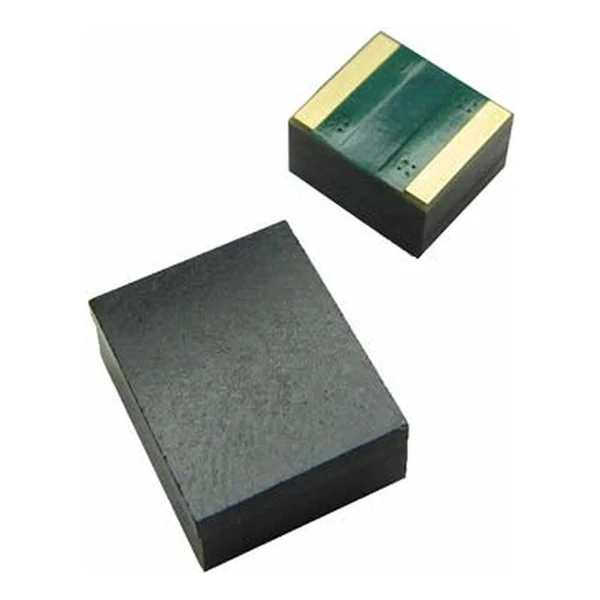
A surface mount varistor puts the same zinc oxide body into a leadless chip so the protection sits next to the connector on an automated line. The absence of leads removes the inductance that slows a radial part, which matters when the transient has a fast edge.
The clamp column works out at 1.83 times the varistor voltage: 395 V at the rated current against 216~264 V at 1 mA. That ratio is what the downstream part has to survive, not the 216~264 V figure on the label.
Standing at 200 V the leakage is at most 50 uA, which is 10 mW of continuous dissipation. Small, but it is why a varistor on a battery rail has to be chosen on leakage and not only on voltage.
At 4.2 mm tall this is the part that has to fit under the enclosure. The 15 J rating and the 1200 A peak come from a body that size, so a lower profile in the same footprint would mean less energy.
Within the MOVS4032 family this is item 16 of 30 in the Eaton catalogue.
What This Family Is For
Put it before the series ferrite or inductor, on the side that faces the cable. The order of the two components decides which one takes the surge.
- Do not stack a chip varistor on a via-in-pad without filling it: the solder wicking changes the joint and the thermal path at the same time.
- The termination is silver-nickel, so the parts are compatible with lead-free and tin-lead processes, but not with a second reflow at the same profile.
Frequently Asked Questions
Can two parts be paralleled for more energy?
Only if they are matched, which they are not. The varistor voltage tolerance means one part takes most of the current, so the pair behaves like the weaker one plus a little.
What is the operating temperature range?
The table states it for each family; the upper limit is the point where the rated power falls to zero, not the point where the part stops working.
Is the part halogen free?
Yes, the data sheet states halogen free and RoHS compliance without exemptions for the whole family.
Shenzhen Gaorunxin Technology Co., Ltd
Online message
Shenzhen Gaorunxin Technology Co., Ltd