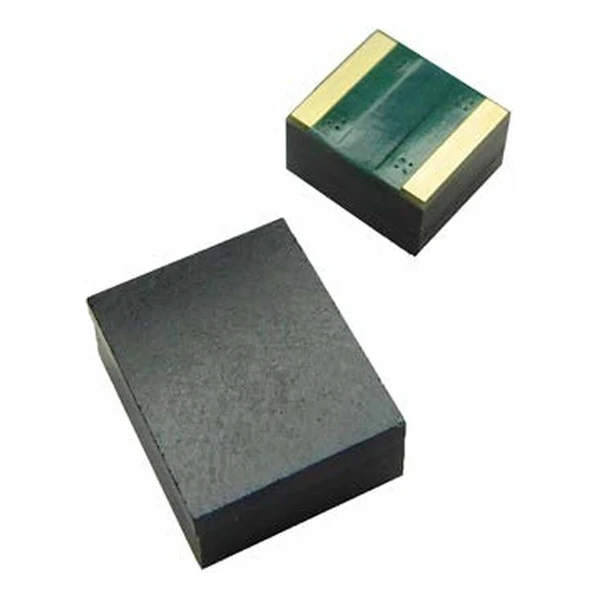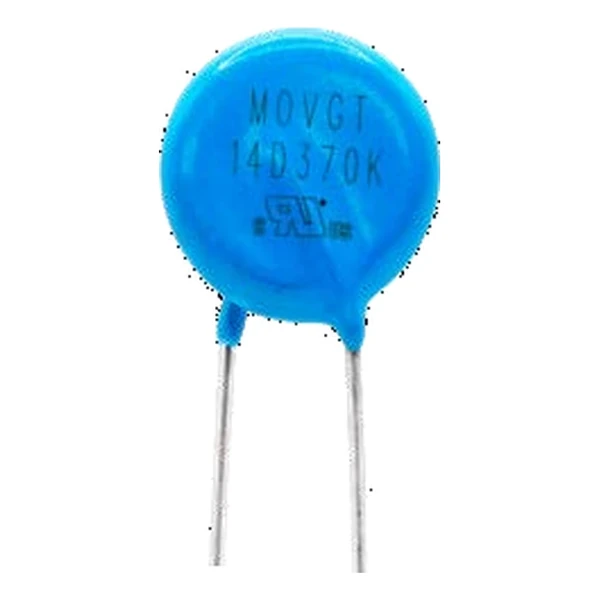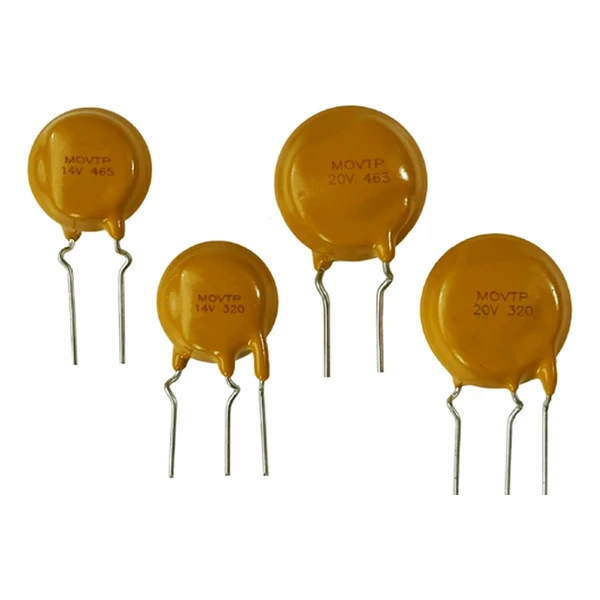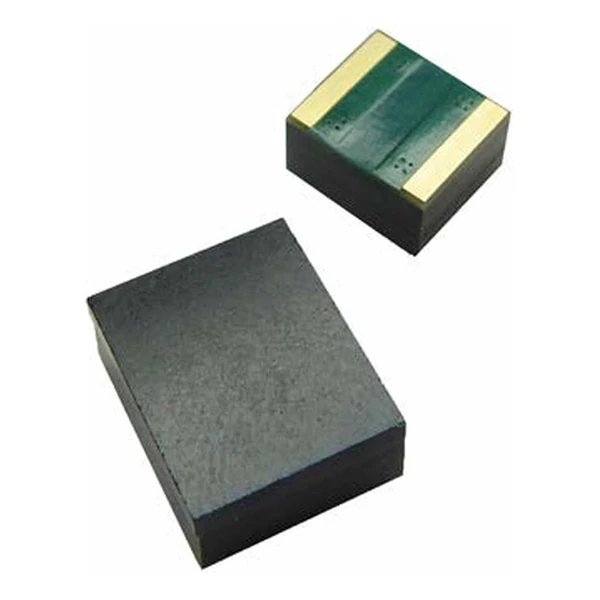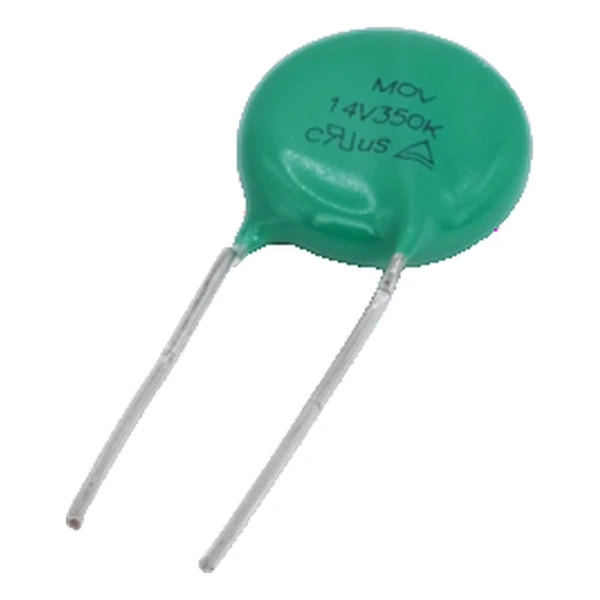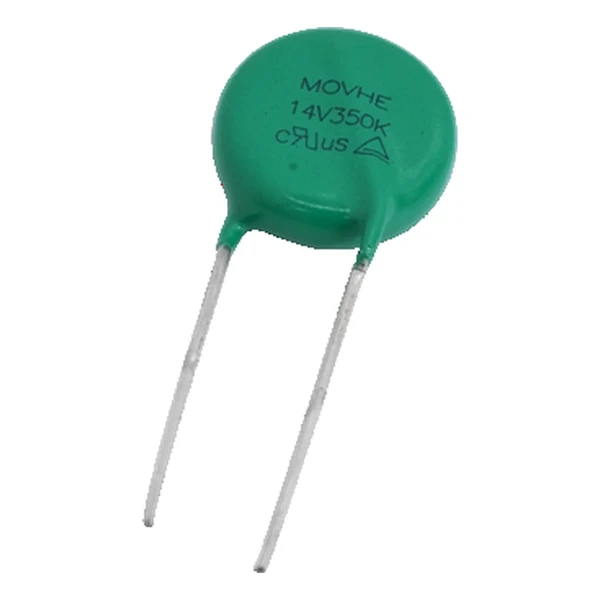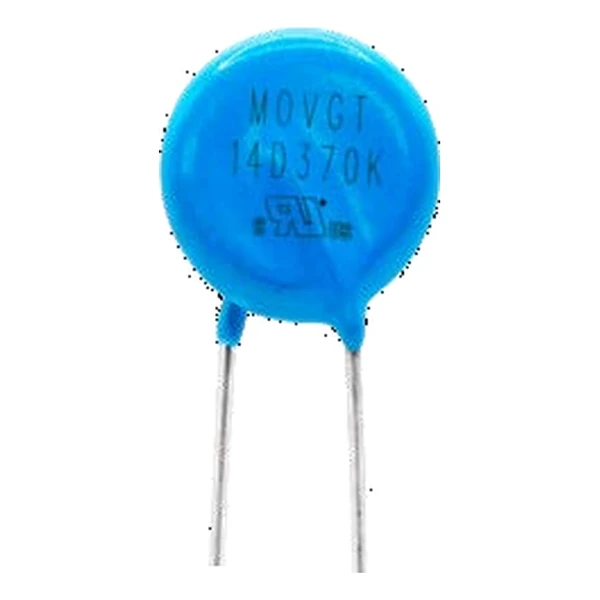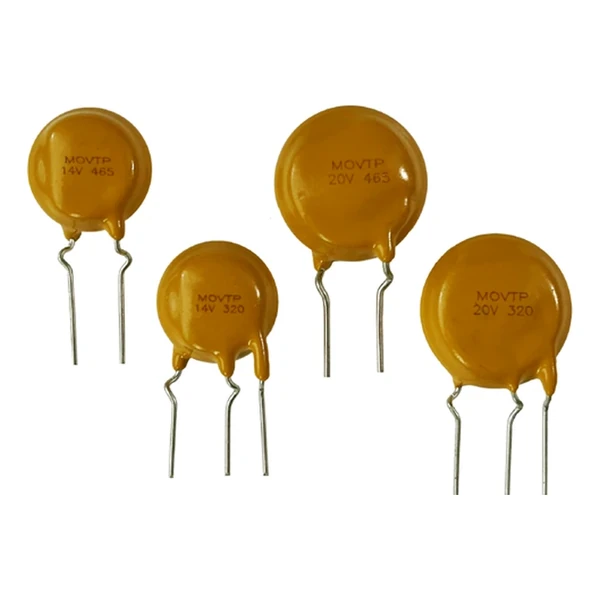
Eaton MOVTP20V465N Protected MOV 20 mm, 2-Lead
- Product Details
- Download
Eaton MOVTP20V465N Protected MOV 20 mm, 2-Lead
Specification Table
| Parameter | Value |
|---|---|
| Orderable part number | MOVTP20V465N |
| Working voltage, DC | 615 Vdc |
| Working voltage, AC | 465 Vac |
| Varistor voltage at 1 mA | 675 V to 825 V |
| Clamping voltage, 8/20 us | 1240 V at 100 A |
| Energy absorption, 10/1000 us | 509 J |
| Rated power | 1 W |
| Peak current, 8/20 us | 10000 A |
| Impulse response time | under 25 ns |
| Leakage current at 0.75 V1mA | max. 20 uA |
| Pin form | 2-lead, no status contact |
| Package | 20 mm disc |
| Mounting | Radial, through-hole |
| Operating temperature | -40 °C to +105 °C |
| Qualification | Commercial grade |
| RoHS | Compliant, halogen free |
| Data sheet | Eaton Technical Data ELX1079 |
Dimensions, recommended pad or hole pattern and the derating curves are
on the data sheet pages; the package line above gives the body size as Eaton states it.
Reading the Data Sheet
Two pin forms are available from the same rating. The two-lead version replaces a plain disc directly; the three-lead version brings the thermal contact out to a third pin so the status can be wired to an indicator or a safety loop.
The clamp column works out at 1.65 times the varistor voltage: 1240 V at the rated current against 750 V at 1 mA. That ratio is what the downstream part has to survive, not the 750 V figure on the label.
Standing at 615 V the leakage is at most 20 uA, which is 12.3 mW of continuous dissipation. Small, but it is why a varistor on a battery rail has to be chosen on leakage and not only on voltage.
The thermal element is the difference from a plain disc of the same rating. If the body overheats the element opens at 1 W of continuous overload, before the epoxy and the board around it are damaged.
The 2-lead form is the mechanical difference: two leads replace a plain disc one for one. The electrical table is identical for both.
Within the MOVTP family this is item 27 of 28 in the Eaton catalogue.
Series Positioning
The protected part goes across the input downstream of the fuse, with the body clear of other heat sources. In the three-lead version the third pin is a signal, not a current path, and should be routed to the monitoring circuit rather than tied to ground.
- The thermal element protects against a shorted varistor, not against overvoltage. It does not replace the fuse, and it does not reset: once it opens the part is finished.
- The two-lead and three-lead versions share the electrical table, so the ordering code suffix is the only difference between them.
Frequently Asked Questions
Does the third lead carry current?
No. It is a signal contact rated for a monitoring circuit, typically a few milliamps at low voltage. It should not be used to carry the load current.
Can it be used on a DC input?
The varistor part can, within its DC rating. The thermal element does not care about the waveform, so the DC limitation is the same as for any MOV: the follow current has no zero crossing.
What approvals does it carry?
The data sheet lists the agency file for the family. The thermal element is covered by the same approval as the varistor inside.
Shenzhen Gaorunxin Technology Co., Ltd
Online message
Shenzhen Gaorunxin Technology Co., Ltd