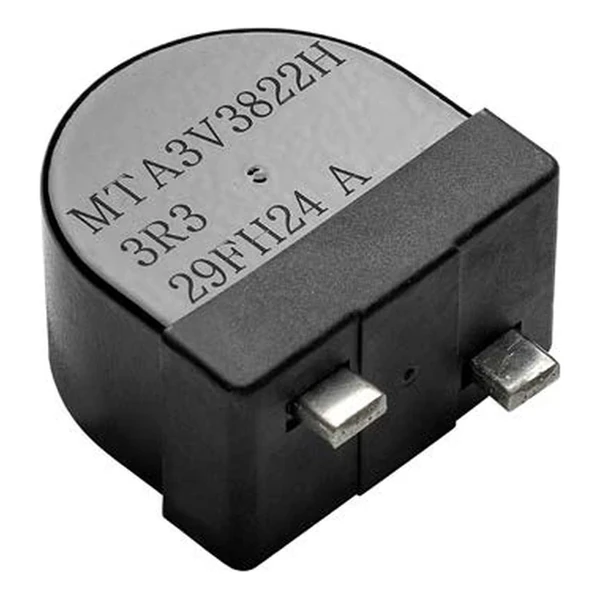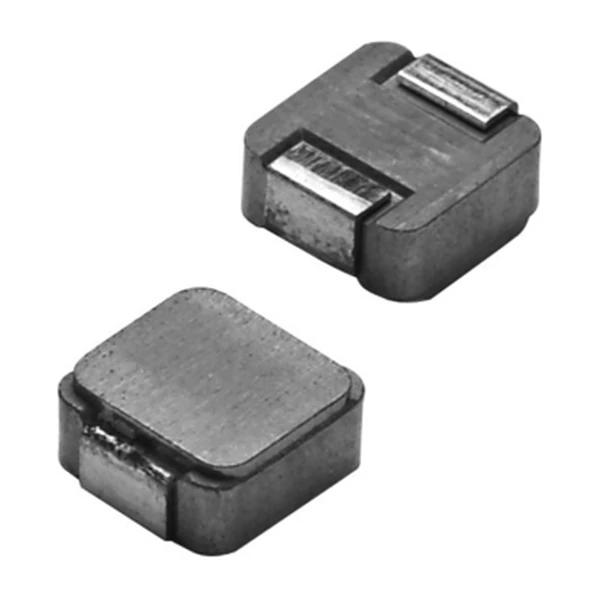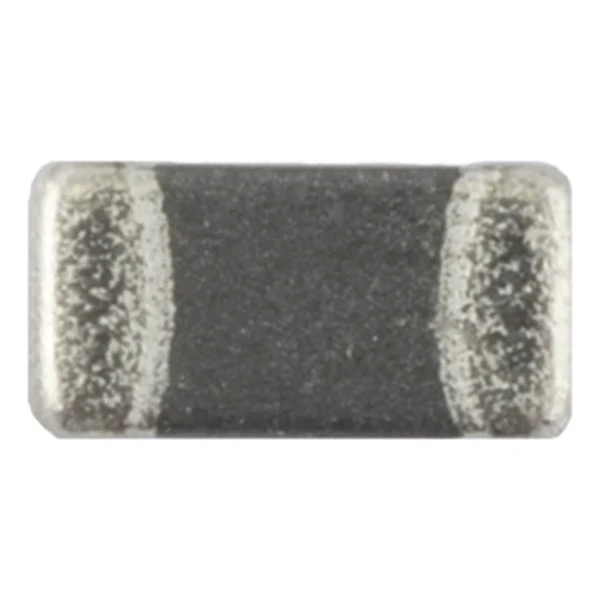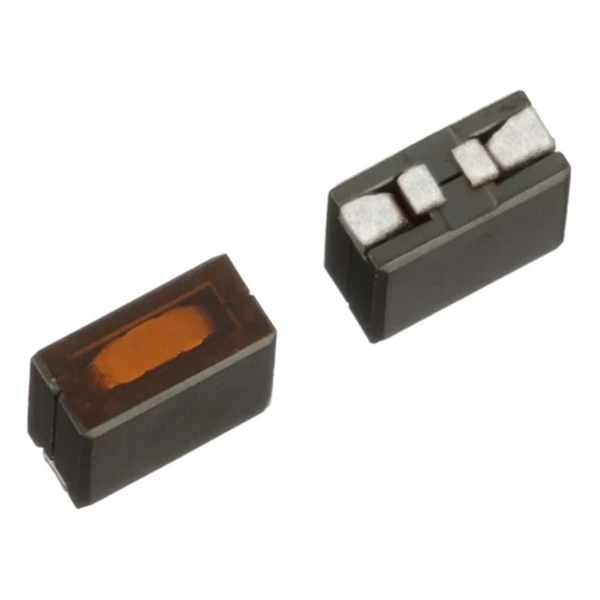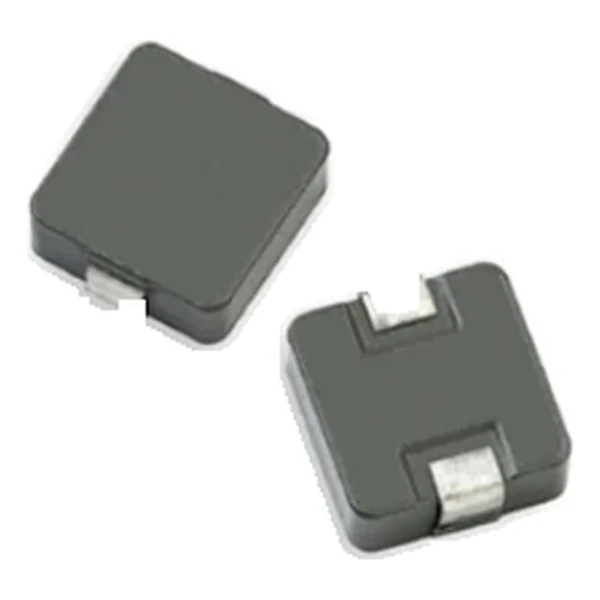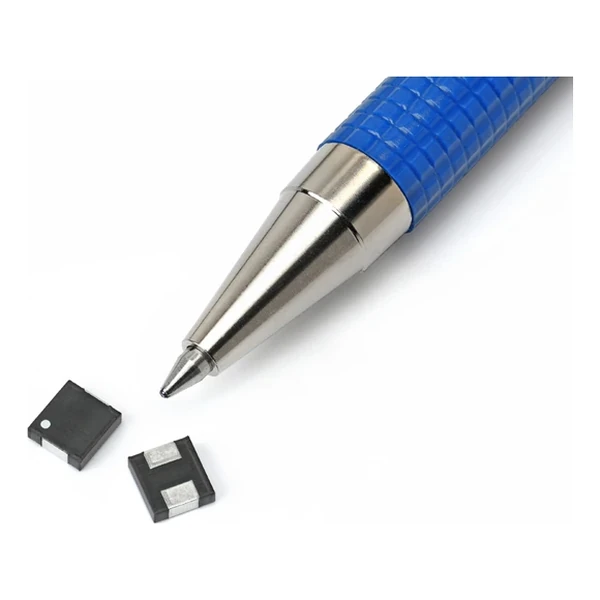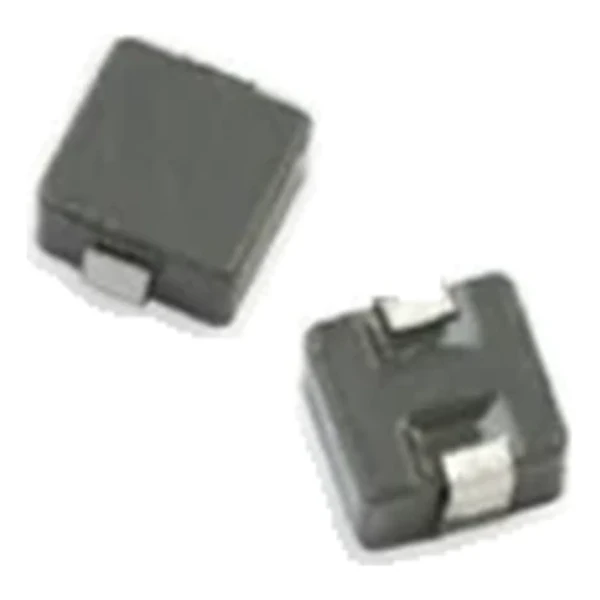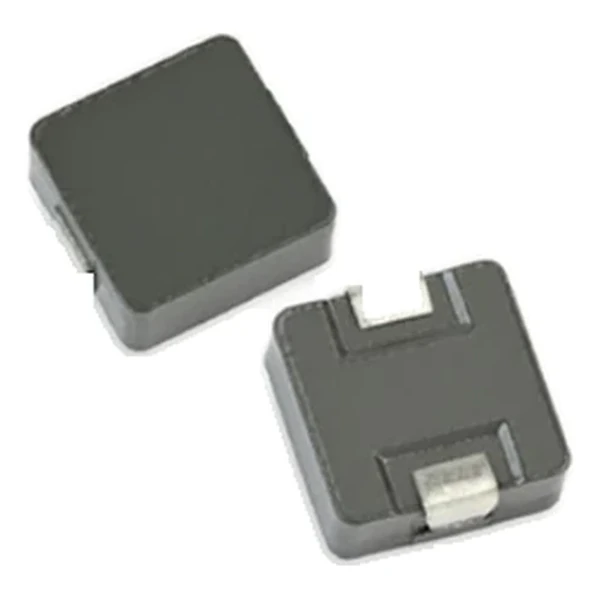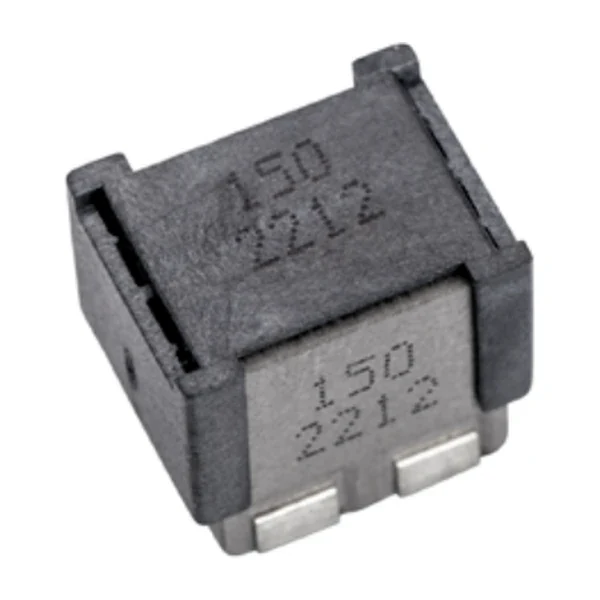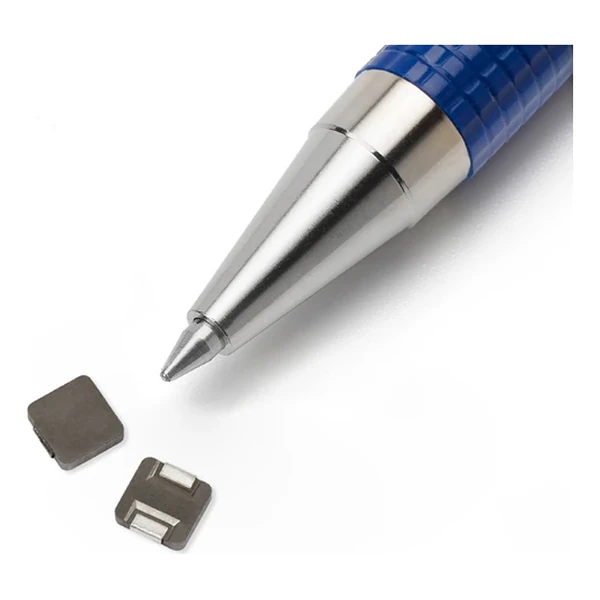
Eaton MPIA4015V2-4R7-R 4.7 uH Shielded Power Inductor
- Product Details
- Download
Eaton MPIA4015V2-4R7-R 4.7 uH Shielded Power Inductor
Electrical Specifications
| Parameter | Value |
|---|---|
| Orderable part number | MPIA4015V2-4R7-R |
| Inductance | 4.7 uH |
| DCR typical @ +20 °C | 108 mOhm |
| Irms (DC, 40 °C rise) | 2.2 A |
| Isat | 3 A |
| SRF typical | 130 MHz |
| K-factor | 22 |
| Mounting | Surface mount |
| Operating temperature | -55 °C to +125 °C |
| Qualification | AEC-Q200 |
| RoHS | Compliant, -R suffix |
| Data sheet | Eaton Technical Data 10652 |
Mechanical Drawing

Drawing reproduced from Eaton Technical Data 10652: outline with
rated mm dimensions, pad layout and marking.
What the Numbers Mean
A molded automotive power inductor with a soft saturation curve: as current rises the inductance droops instead of collapsing, so a converter keeps control through a load step. The body is molded around the winding, which contains the field.
At 2.2 A the winding dissipates about 0.523 W in copper using the typical DCR of 108 mOhm. That is the DC floor of the loss budget – ripple and core loss come on top.
The core stores about 21.2 uJ at the saturation point, which is the energy available to bridge a load step.
Self-resonance is 130 MHz typical. Keep the operating band, and the harmonics that carry energy, below it.
The K-factor of 22 converts inductance and ripple into flux swing; read the core-loss curve at that amplitude.
Within the MPIA4015V2 family this is value 10 of 12, in a range from 0.22 uH to 10 uH.
Positioning in the Range
The MPIA family is the automotive miniature power range: AEC-Q200 qualified, low profile, in sizes from 2 mm to 4 mm, with both typical and maximum DCR quoted for every row.
- DCR is quoted at +20 °C; copper rises about 0.4 % per °C, so the hot loss is higher than the cold figure.
- Typical applications: body electronics; central body control module; vehicle access control system; headlamps, tail lamps and interior lighting; doors, window lift and seat control.
- Design note: ripple from OCL, thermal from Irms, transient from Isat. Three numbers, three checks.
Frequently Asked Questions
What is the difference between Irms and Isat?
Irms is the DC current for the rated temperature rise; Isat is the peak current at a defined inductance rolloff. A converter can exceed Irms briefly but must stay inside Isat.
How much inductance is left at rated current?
The FLL column gives the inductance at saturation current. Ripple at full load should be calculated with FLL.
Is the part shielded?
The molded body encloses the winding, so the external field is small enough for dense layouts.
Shenzhen Gaorunxin Technology Co., Ltd
Online message
Shenzhen Gaorunxin Technology Co., Ltd